


Our best tips for getting your project done right.
10 Easy Ways to Cut Metal Fast
1
/
11
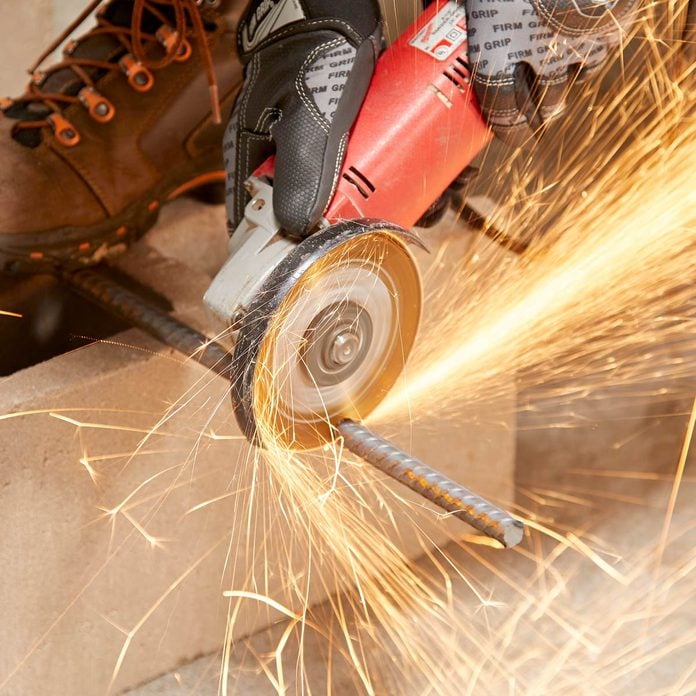
Cut Metal Fast
There’s nothing wrong with using a good, old-fashioned hacksaw, but there are faster, easier ways to cut metal. We’ll show you power tool tips and techniques for cutting the types and thicknesses of metal that DIYers handle the most.
And whether you’d like to build custom cars or just fix a cracked lawn mower deck, learning to weld gives your DIY game a serious boost.
2
/
11
Ditch the Abrasive Grinder Discs
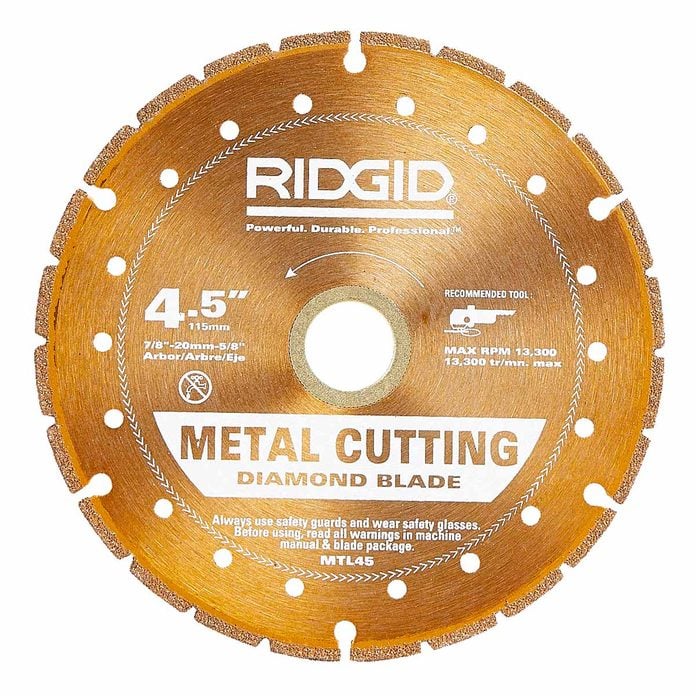
An angle grinder fitted with an abrasive metal-cutting disc works well to cut all kinds of metal, including bolts, angle iron, rebar and even sheet metal. But the discs wear down quickly, cut slowly and shrink in diameter as you use them. Instead, we recommend using a diamond blade that’s rated to cut ferrous metal. These will last much longer, cut faster and cleaner, and wear down much slower than abrasive discs.
3
/
11
Cut Metal with Your Circular Saw
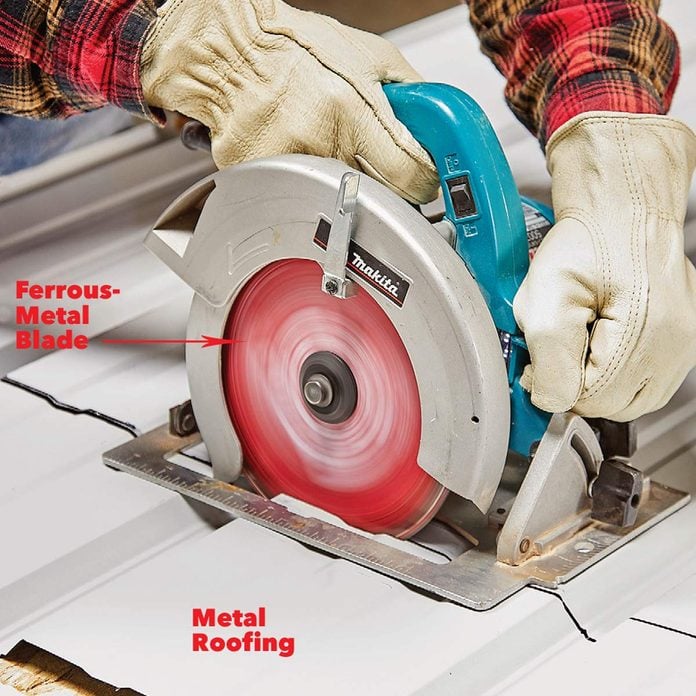
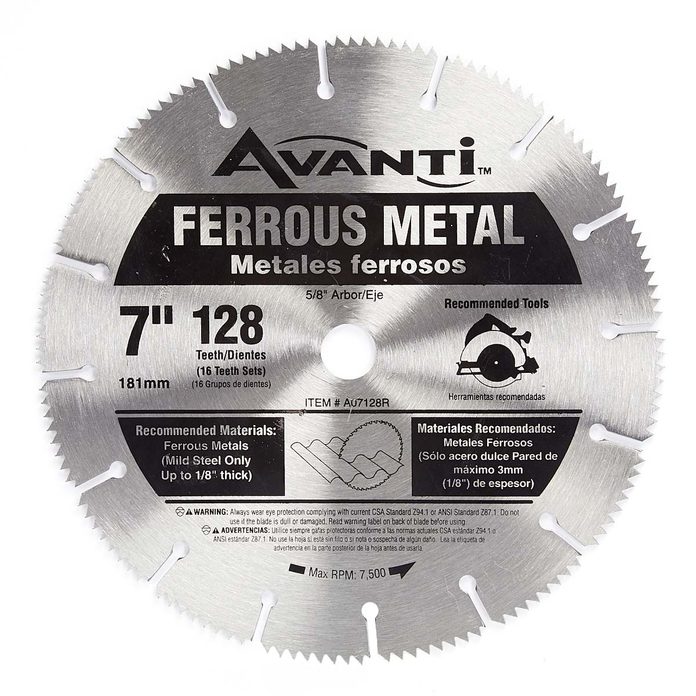
It may not be an obvious choice, but fitted with the right blade, a circular saw is a great metal-cutting tool. In our test, it cut through rebar like a hot knife through butter. You can cut mild steel up to about 3/8 in. thick using a ferrous-metal-cutting blade. Be careful, though! Hot metal chips will fly everywhere. Put on your safety gear, keep bystanders away, and cover anything you don’t want coated with metal chips. There are two types: inexpensive steel-tooth blades and carbide-tooth blades. Carbide-tooth blades are more expensive but will last longer.
It doesn’t matter if you’re a long-time DIYer or just starting out on some projects, there are some tools of the trade that are crucial in getting jobs done.
4
/
11
Cut Aluminum with Your Miter Saw
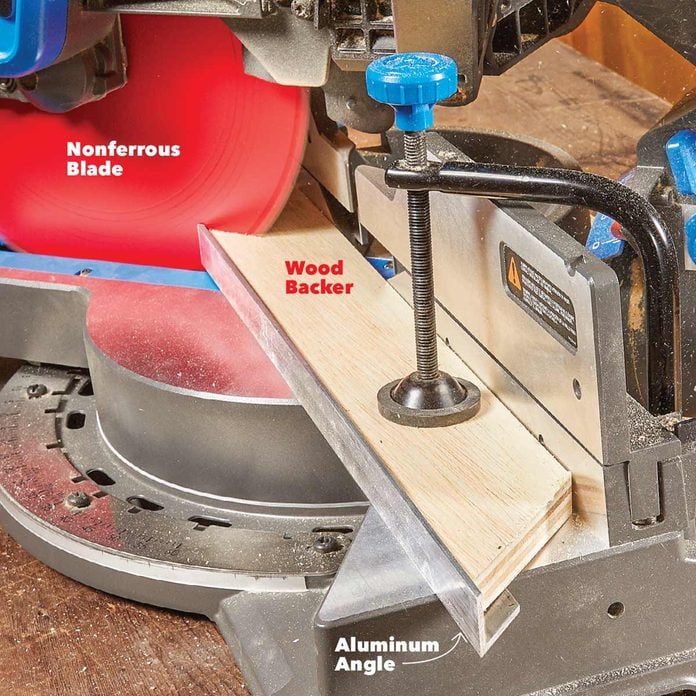
Making accurate cuts on aluminum rods, tubes and angles is easy with a miter saw and a blade designed to cut nonferrous metal (check the label). If the motor housing on your saw is open and could collect metal chips, tape a piece of cloth over the openings to protect the motor windings and bearings while you cut the aluminum. (Remember to remove it when the saw goes back into regular service or the motor will overheat.) Trapping the aluminum with a wood backer as shown reduces the danger of flying metal shards and makes it easier to hold the metal in place for cutting. This tip is especially important when you‘re cutting thin-walled pieces. Without the backing board, the blade will often catch on the metal and distort it and make it unusable.
5
/
11
Tips for Cutting Metal Safely
Cutting or grinding metal sends tiny chips or shards of metal everywhere. And they can be hot and sharp. To avoid eye injuries, cuts, burns and other injuries from cutting metal, follow these rules:
- Read and observe safety precautions printed on metal-cutting discs and blades.
- Wear safety glasses, a face shield and hearing protection.
- Cover all exposed skin with gloves, long-sleeve shirt and pants.
- Allow freshly cut metal to cool before touching it.
- Wear gloves when handling metal that could have sharp edges.
- Securely clamp metal before cutting it.
- Never allow anyone near you while you’re cutting metal unless they’re wearing hearing and eye protection.
6
/
11
Cut Stainless Steel with a Grinding Disc
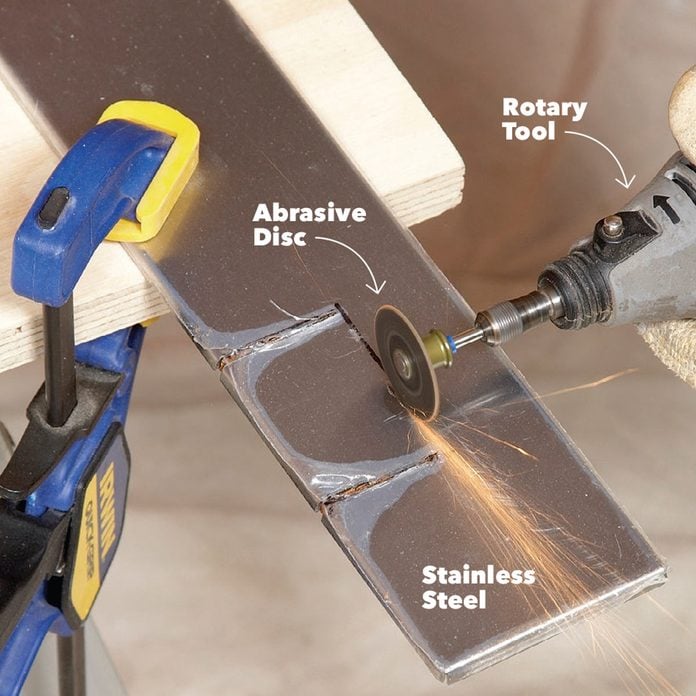
There are many types of stainless steel, and some hard varieties are challenging to cut. For small jobs like cutting stainless steel backsplash tiles, a rotary tool fitted with an abrasive metal-cutting disc works fine. For larger jobs, mount an abrasive disc in an angle grinder.
7
/
11
Simple Score and Snap
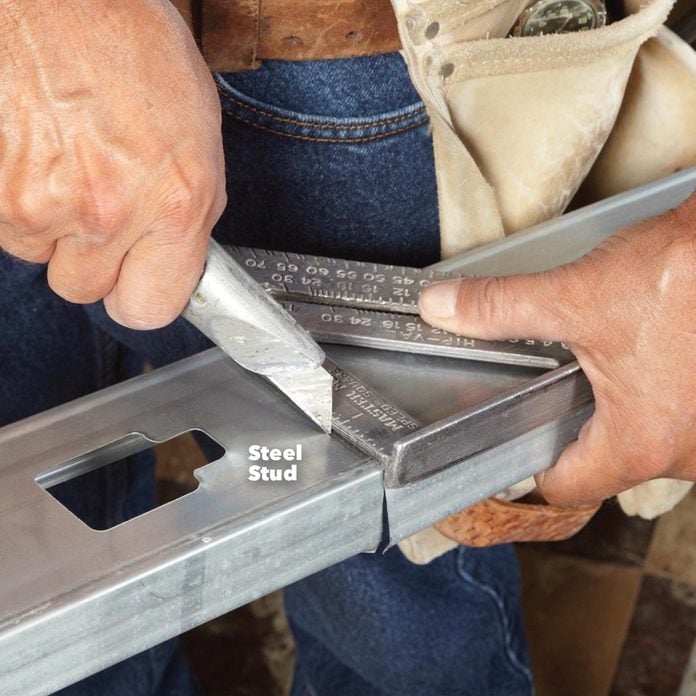
Siding contractors and roofers routinely score and snap aluminum siding and flashing to create straight, precise cuts. And you can use the same technique anytime you need a straight cut on aluminum or other light-gauge sheet metal, even steel. Clamp or hold a straightedge or square along the cutting marks and score a line with the tip of a sharp utility knife blade. Then bend the sheet back and forth a few times to snap it. You can use the same trick to cut metal studs. Snip the two sides. Then score a line between the cuts and bend the stud to break it.
8
/
11

Get into Tight Spots with an Oscillating Tool
When access is tight, or you need to make a flush cut, an oscillating tool fitted with a metal-cutting blade will solve the problem. Corroded mounting nuts on toilets and faucets are easy to cut off with an oscillating tool. You can also use an oscillating tool to cut plumbing pipes, automotive bolts, nails and other metal objects in places where a larger tool wouldn’t fit. Just make sure the blade is intended to cut metal.
9
/
11

Match the Blade to the Metal
With the right blade or grinding disc, you can cut almost any kind of metal. The key is to match the blade to the material. There are two types of metal: ferrous and nonferrous. (The term “ferrous” is derived from the Latin word “ferrum,” which means iron.) Any metal that contains iron is a ferrous metal and requires a ferrous-metalcutting blade. Steel angle iron, steel roofing, rebar and steel bolts are examples of ferrous-metal building materials. Most metal-cutting blades and discs are labeled for cutting either nonferrous or ferrous metal.
The two most common nonferrous metals DIYers need to cut are aluminum and copper. Nonferrous metals are usually softer and easier to cut than ferrous metals.
10
/
11
Cut Smarter: Use a Reciprocating Saw
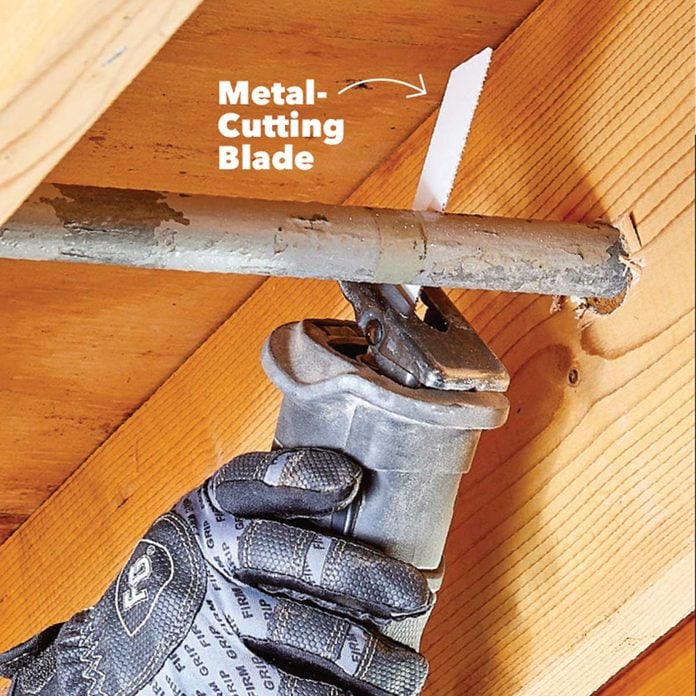
The next time you reach for your hacksaw, grab your reciprocating saw instead. Mount a metal-cutting blade in your reciprocating saw and you’ve got the ultimate power hacksaw for cutting bolts, rods, pipes and angle iron. A recip saw with a metalcutting blade also works great for remodeling demolition when there are nails and pipes to cut off. Here are a few tips for cutting metal with a recip saw:
- Set your saw to straight rather than oscillating if there’s a choice.
- Extend blade life by keeping the saw’s speed slow.
- Choose a blade with 20 to 24 TPI (teeth per inch) for thin metal, 10 to 18 TPI for medium-thickness metal, and about 8 TPI for thick metal.
- Buy bimetal or carbide-tooth blades for longer blade life.
11
/
11
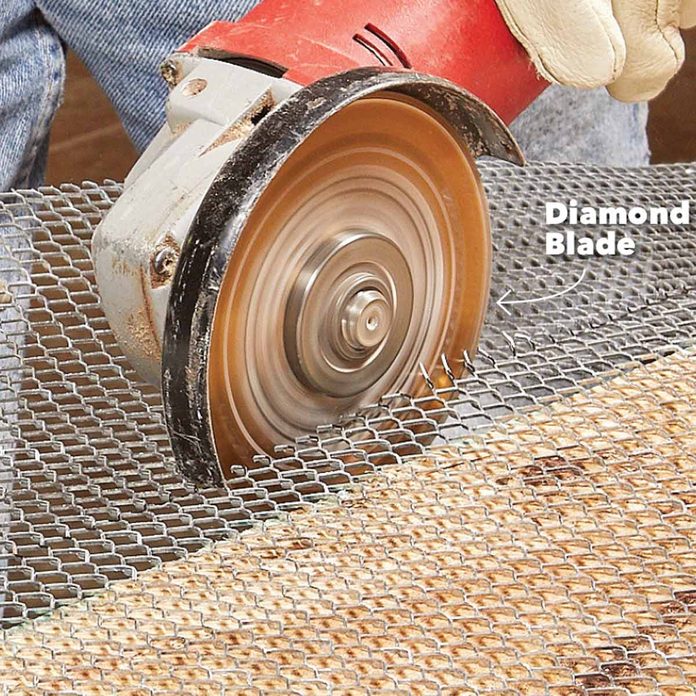
Cut Metal Lath and Mesh with a Grinder
Metal lath and hardware cloth can be cut with a tin snips, but there’s an easier way. Mount a diamond blade in your angle grinder and use it like a saw to cut the mesh. We recommend using a diamond blade that’s labeled as a ferrous-metal-cutting blade, but many tradespeople use a regular masonry diamond blade with good results.
