

10 Pretty Purple Flowers That’ll Make Your Garden Pop

Updated: Apr. 02, 2024





Add a splash of purple to your landscape with some bountiful blooms. Whether you're looking for annuals or perennials, here are 10 pretty purple flowers that are sure to make your garden pop with color.
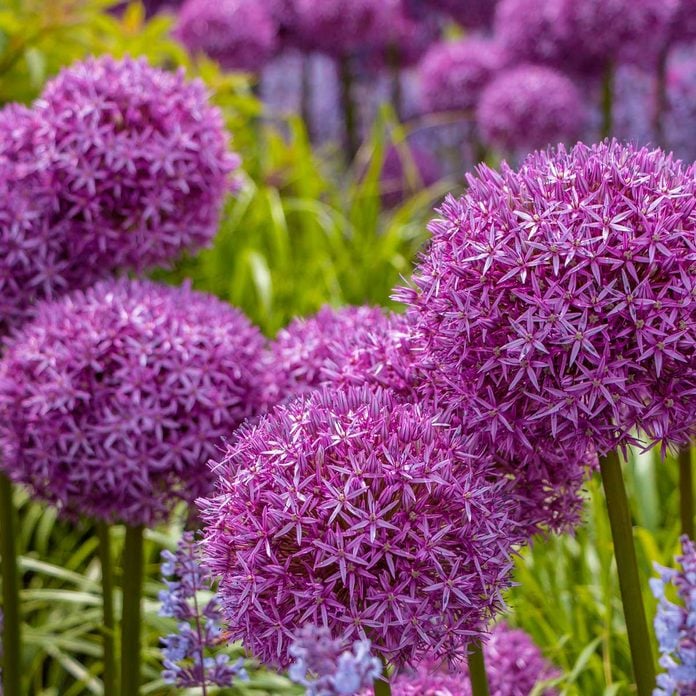
Allium
Allium, also known as flowering onion, includes many varieties grown from bulbs or bulb-like rhizomes. They have long stems and a large ball of purple petals, making them a great candidate for fresh cut flowers. White Flower Farm notes these purple flowers grow best in full sun with well-drained soil. “Some varieties have scented blooms, but their perfume is usually pleasant and not the least oniony.” Here are 10 wildflowers that do well in the suburbs.
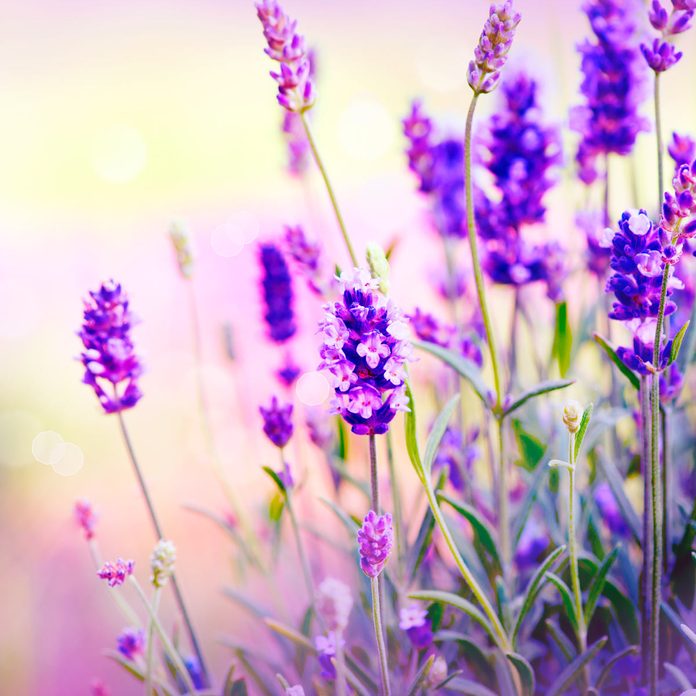
Lavender
Looking for a purple flower that is not only a great perennial that attracts bees and butterflies, but also has a pleasant scent and culinary uses? Try lavender! American Meadows notes lavender is hardy in USDA zones 5 to 10, depending on the type. Lavender needs full sun and well-drained soil, and plants should be spaced 1 to 3 feet apart. These are the best flowers for bees and other pollinators.
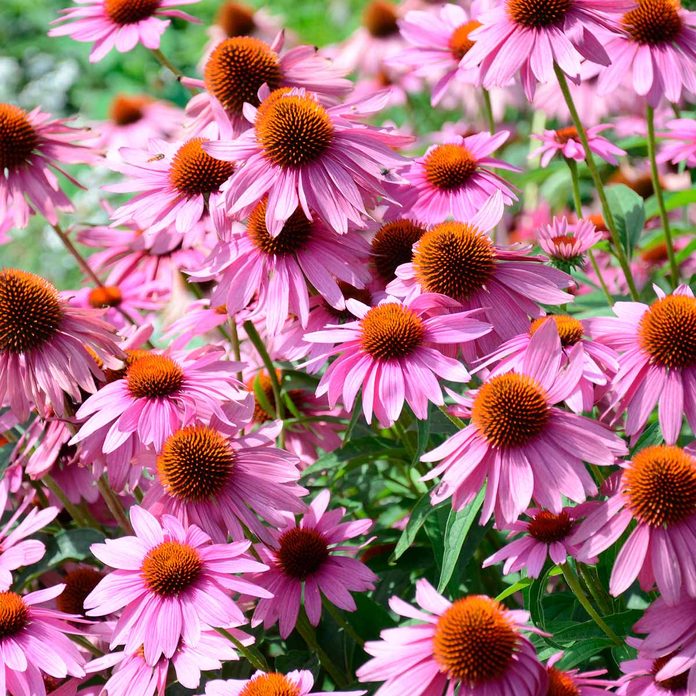
Purple Coneflower
A favorite of many native-plant gardeners, coneflowers are easy to grow and do well in many soil types, notes Grow Native. Purple coneflowers can grow up to 36 inches high and are a nectar source for butterflies, while songbirds feed on their seeds. These flowers do best in full sun, but can handle some shade and make a great fresh cut flower.
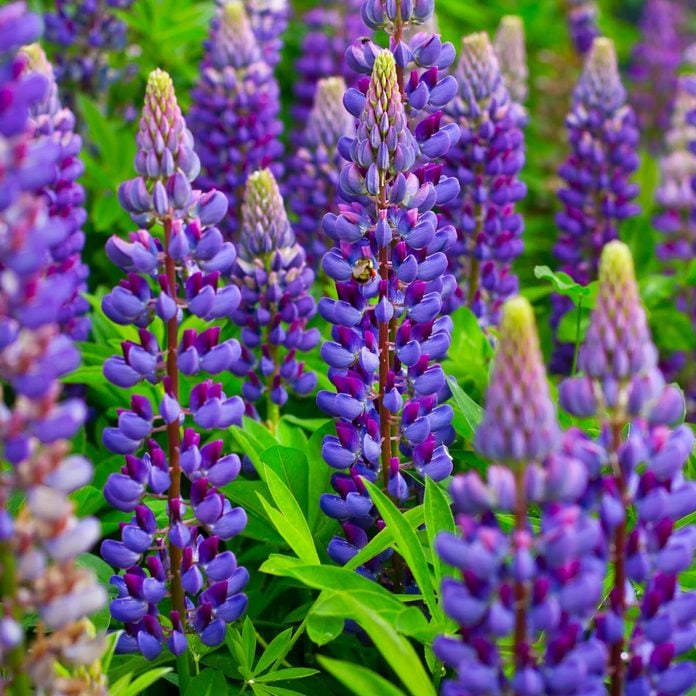
Lupine
You’ll get an eye-catching bold pop of purple when you plant lupine in your flower garden. These pollinator-friendly flowers come in a wave of colors, including shades of purple, according to American Meadows, and they can be grown as an annual or perennial. Lupine prefers full sun, but can handle part shade. They do best in well-drained soil. Learn how to prevent weeds from taking root in your flower beds.
Next, check out our favorite yellow flowers for your home landscape.
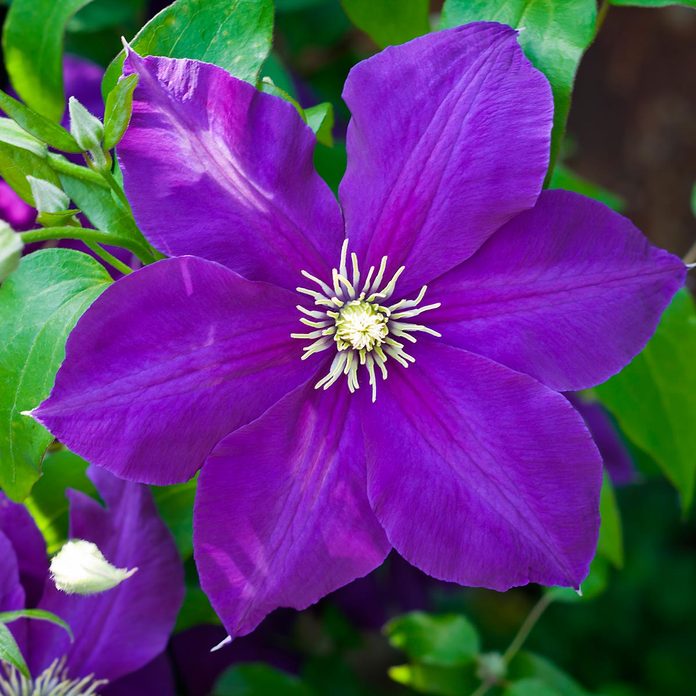
Clematis
If you’re looking for purple flowers on a vine, try clematis Jackmanii. According to the Missouri Botanical Garden, these flowers do best in USDA Zones 4 to 8 where the flowering parts of the vine are in sun to part shade, while the roots remain shaded. They can grow up to 10 feet high and have flat, cupped or bell-shaped flowers. “Clematis can be trained to climb a wall, trellis, fence, arbor, porch, lamppost or other stationary structure. They provide good architectural height and framework for small gardens. They can also be planted to sprawl over and through shrubs, scramble over old stumps or simply as a ground cover in conjunction with other flowering perennials.” Here are 49 colorful plants to brighten up your landscape.
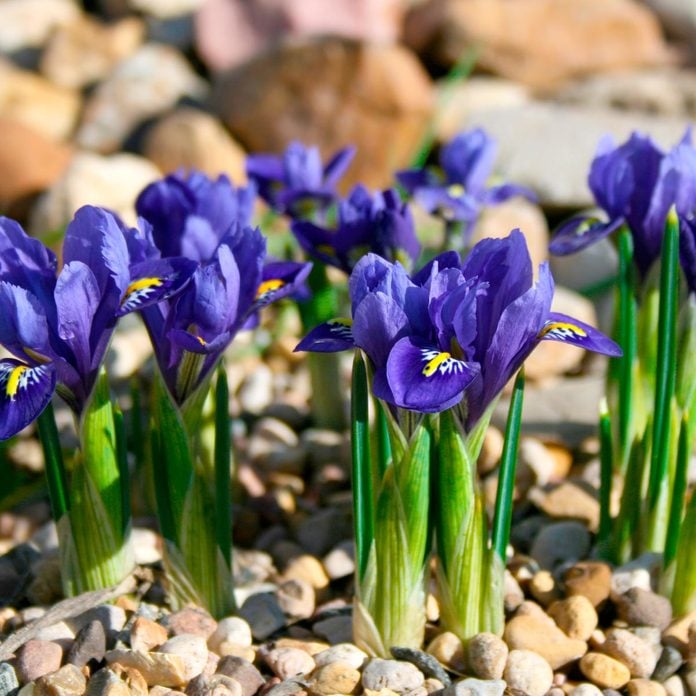
Mini Iris
For a burst of purple in the spring, try growing mini iris. These bulb flowers are among the earliest bloomers, according to High Country Gardens. They are only 4 to 6 inches tall and are deer resistant, yet provide nectar for early season pollinators. They do best in well-drained soil, in a sunny to part-shade spot in your garden.
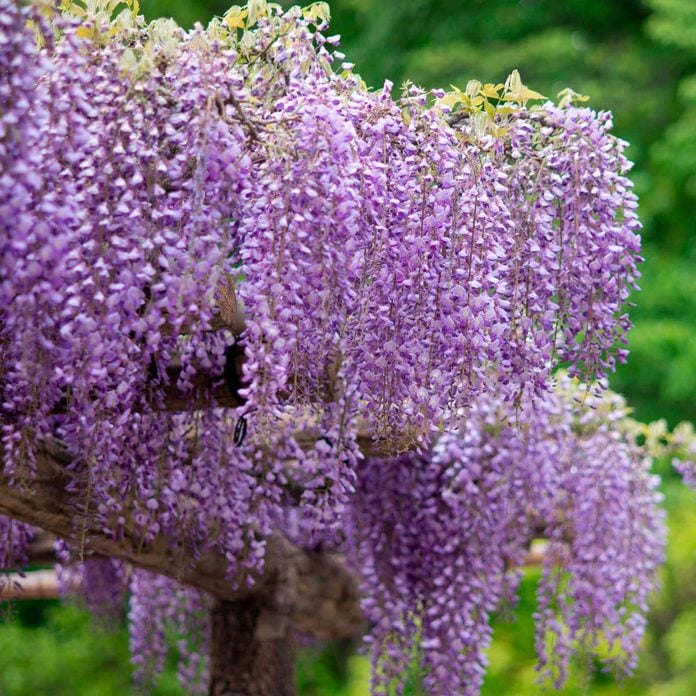
Wisteria
Wisteria is a vigorous vine that offers a blanket of purple in the spring. Wisteria needs to be planted in full sun and in well-drained soil, according to the Oregon State University Extension Service. However, planter beware: these plants may take over your space and need upkeep. “Wisteria are very vigorous vines and can climb easily to 30 to 40 feet,” said Neil Bell, a horticulturist with Oregon State University Extension Service. “They can be quite heavy and should be grown on a strong structure.” These are our favorite flower bed ideas for full sun.
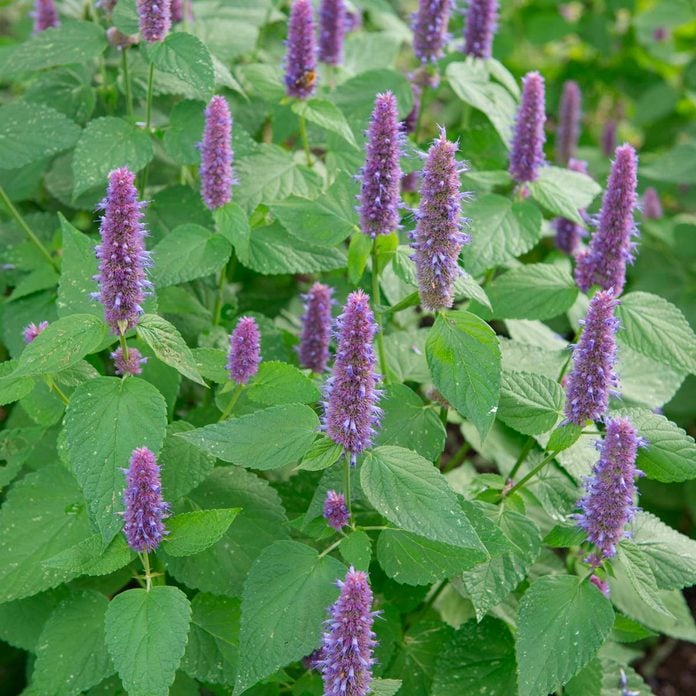
Anise Hyssop
You’ll attract plenty of bees to your landscape when you grow anise hyssop. These purple flowers are aromatic and produce abundant blooms, according to Johnny’s Selected Seeds. This perennial likes sun and can grow up to 36 inches high. They prefer a sandy, moist, but well-drained soil. Their leaves can also be used fresh or dried to add flavor to salads, soups, drinks and desserts. Check out these 12 DIY flower towers.
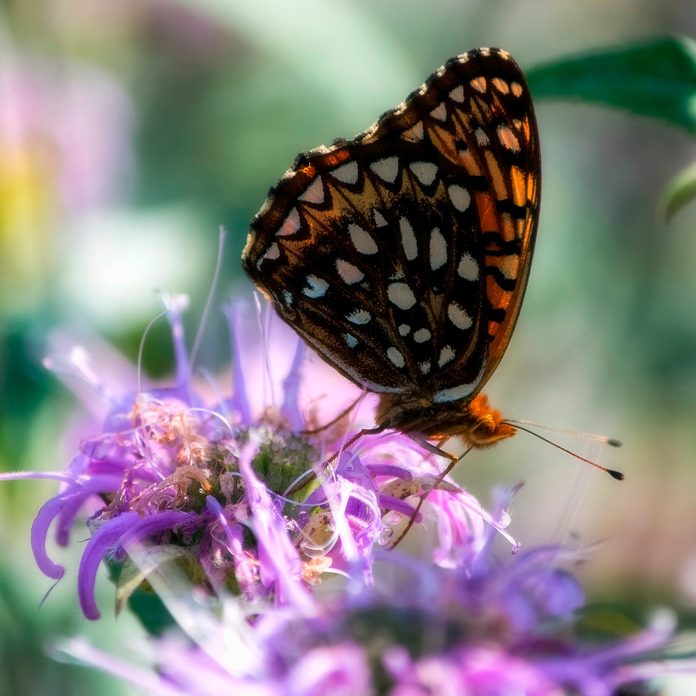
Purple Bee Balm
While red bee balm is a favorite in many perennial pollinator gardens, these flowers also come in various shades of purple, making them a showy, mid-summer favorite. High Country Gardens notes purple bee balm does best in full sun and can grow up to 48 inches high. And, it attracts not just bees and butterflies, but hummingbirds, as well. Try growing these 10 bee friendly plants in your yard.
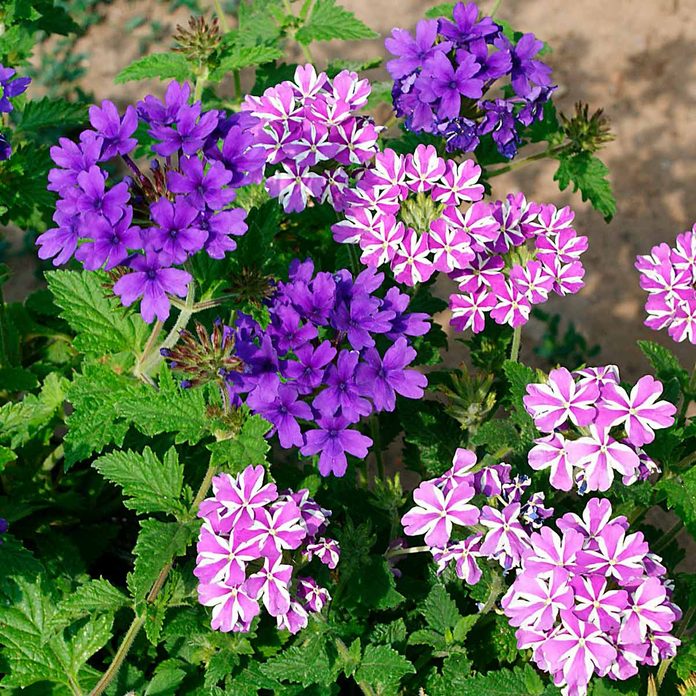
Verbena
A popular purple flower in southern gardens, verbena offers vibrant, abundant blooms that aren’t impacted by intense heat. White Flower Farm notes these flowers—which can be grown as a perennial or an annual—are long-blooming, flowering continuously from late spring into the fall. They work great for edging or for filling flower pots. Just give them full sun and average garden soil.
From rustic to modern, here are some flower bed decor ideas that are anything but tacky.
Originally Published: August 08, 2019

