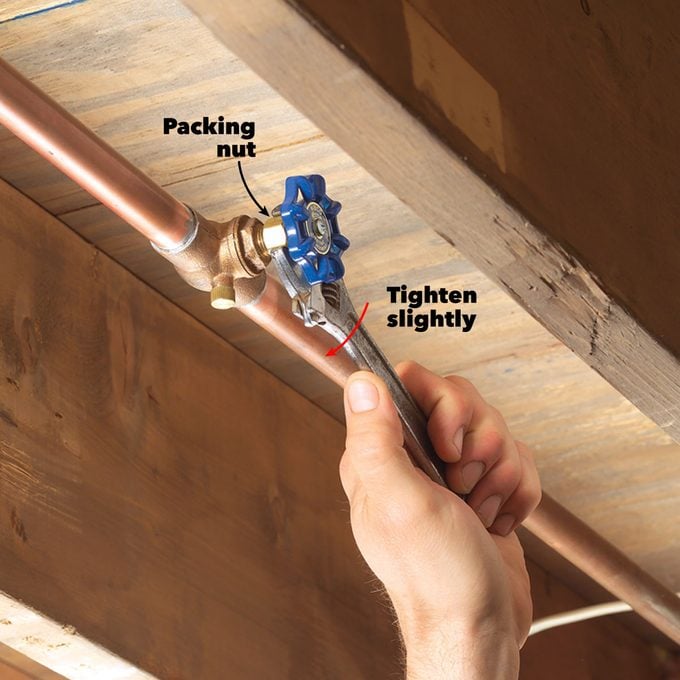
Leaky shut-off handle? Here’s how to fix it in minutes.
Leaky Shut-Off Valve? Here’s How to Fix It
Some plumbing problems definitely call for pro-grade expertise, but fixing a water shut-off valve leak isn’t one of them. Here, we aren’t talking about leaking from the connection between the valve and the water line (although you don’t need to be a pro to fix that, either), but from the valve itself.
When a shut-off valve leaks, you’ll usually see water dripping or spraying from the handle, and no matter how much you tighten the handle, you can’t get the water to stop. Whether the valve is old or one you’ve just installed, the problem and solution are the same: water is seeping past the packing, and all you have to do is tighten the packing nut, replace the washer, or both.
On This Page
Water Shut-Off Valve Leak Repair
You expect old and rusted valves to leak, but it’s not uncommon for a brand-new water shut-off valve to leak around the handle area whenever you turn on the water. The leak almost always occurs around the valve stem, and here’s why:
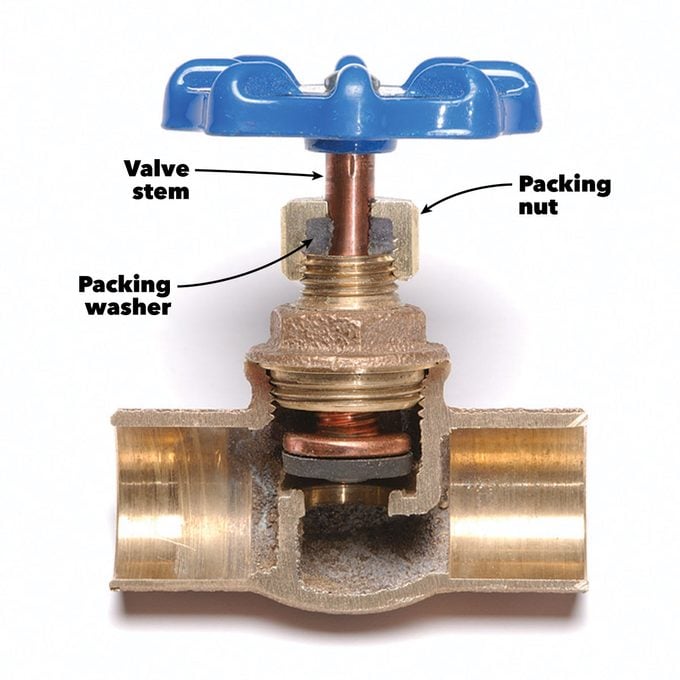
The valve stem passes through a “packing” nut and washer, which together provide a watertight seal. In the past, plumbers packed fibrous material tightly around the stem—hence the name—but nowadays, they use a rubber or plastic washer instead. For the packing to provide a complete seal, the nut has to be tight, but not too tight.

Tighten the packing nut
First, try tightening the packing nut one-eighth to one-quarter turn, using a wrench. Don’t overdo it, says plumbing/HVAC pro Danny Pen: “When you are fixing a leaky shutoff valve, it’s tempting to just crank down on that nut as hard as you can — but don’t. Over-tightening can crack the valve or crush the washer inside, resulting in a worse leak. A good rule is tighten it until the drip stops, then give it a small extra nudge if needed, no more.”
This almost always stops the leak, but f it doesn’t, the packing washer is probably damaged, and you’ll need to replace it. Here’s the procedure:
Replace the packing washer
- Shut off the water to the leaking water valve.
- Unscrew the handle from the stem, lift the handle off, then loosen and remove the packing nut.
- Slide the old washer off the valve stem, apply plumbing grease to the stem and slide on the new one.
- Reinstall the packing nut, tighten lightly with a wrench (don’t over-tighten at this or any other point) and reattach the handle.
- Turn the water back on, open the repaired water valve and check for leaks. If it’s leaking, tighten the packing nut one-eighth of a turn at a time until the leak stops.
What to do after repairing a water shut-off valve leak
Pen offers this advice for ensuring you’ve done the job right and the leak won’t recur:
“Turn the water back on slowly and watch the valve for a minute or two. Even if it appears to be leak-free, gently feel around it with a dry paper towel to catch any hidden drips. And check again later that day because a slow leak can show up after the pipes have been under pressure for a bit.”
Tools and Materials You’ll Need
Have the necessary tools for this DIY project lined up before you start—you’ll save time and frustration.
- 4-in-1 screwdriver
- Two adjustable wrenches
Avoid last-minute shopping trips by having all your materials ready ahead of time. Here’s a list.
- Packing washer
- Plumbing grease
Pro tip: The packing nut seals by compression, so you don’t need plumbing tape or thread seal.
FAQ
How can I prevent future valve problems?
One potential problem when repairing a water shut-off valve leak is that the pressure you put on the packing nut to turn it can cause leaks in other parts of the valve or in the pipe connections. Prevent this by using two wrenches—one to hold the valve and one to turn the nut.
“If your valves are old,” says Pen, “just keep an eye out for signs of rust or green buildup — that’s your clue to replace them before they fail.”
How do I know if I need a plumber?
Pen lists three situations that could require a plumber’s help:
- The valve keeps leaking after you tighten it;
- It’s badly corroded or won’t turn at all;
- The pipe connection looks damaged or loose.
About the Expert
- Danny Pen has over 12 years of experience in plumbing, heating, and cooling. He currently leads New Era Plumbing & HVAC, a Massachusetts company specializing in inspection, repair, and replacement services.