


A Full Guide to Car Pressure Washing

Updated: May 31, 2023
Here's how to pressure wash your car without damaging it.
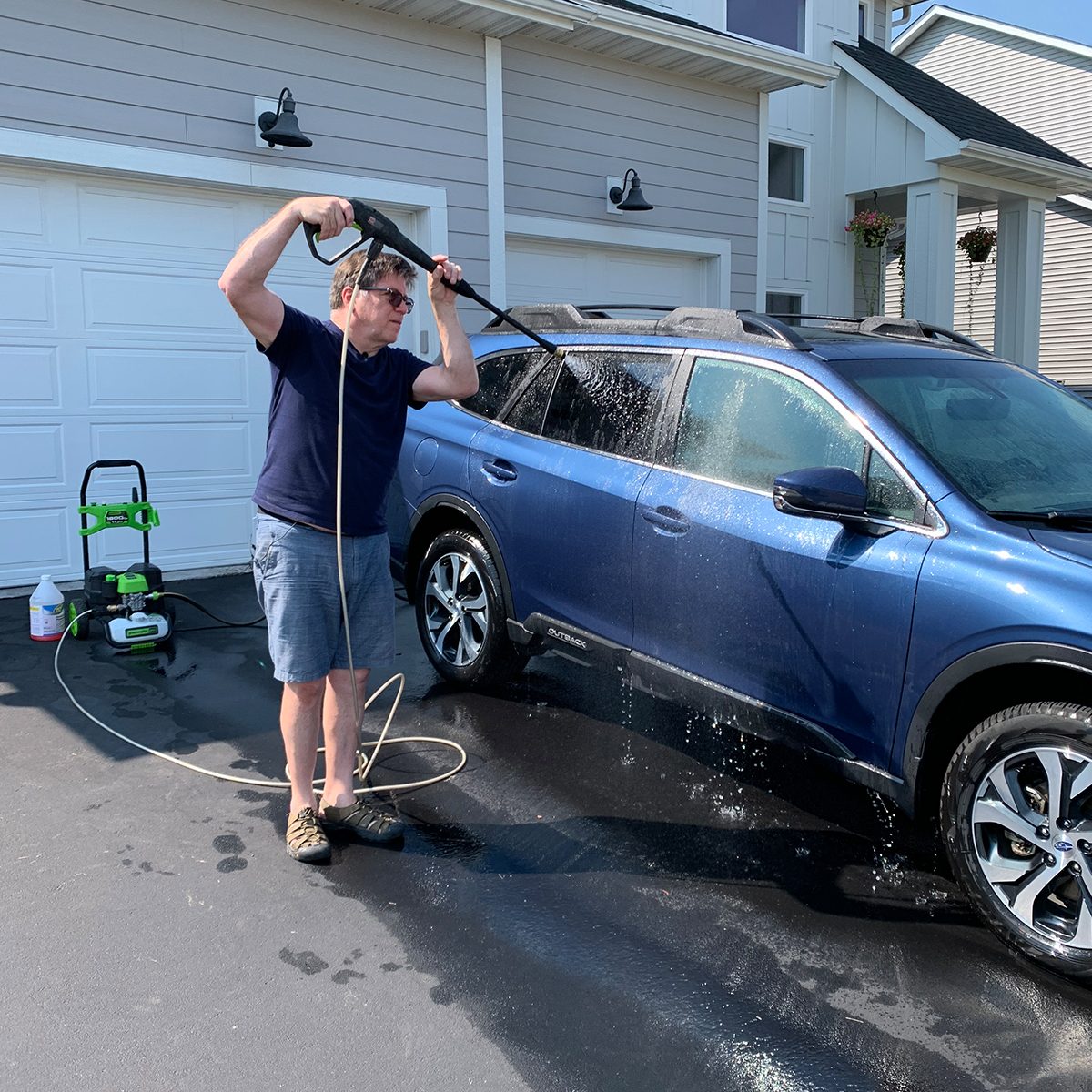






 Time
Time A few hours
 Complexity
Beginner
 Cost
Cost$5–10
Introduction
We all love a clean, spotless car, and we also love using our pressure washer. So why not combine the two?
Before you do major damage to your paint job, there are two important things to know before firing up the pressure washer: pressure level and nozzle tip size. Choose a pressure washer with settings from 1200 to 1900 pounds per square inch (PSI).
Nozzle tips are color-coded to size. Choose a 25 degree (green) tip for cleaning wheels and caked-on mud. A 40 degree (white) tip is ideal for all the surfaces of your vehicle.
Tools Required
- Garden hose connected to water source
- Pressure washer
- Towels
Materials Required
- Special detergent for pressure washers
Project step-by-step (4)
Step 1
Pre-wash
- Park your vehicle on a concrete or blacktop surface. Avoid gravel — you could kick up stones, damage your paint or crack a window.
- Roll up all your windows.
- Set your pressure washer to “water output” and use a 40-degree nozzle tip.
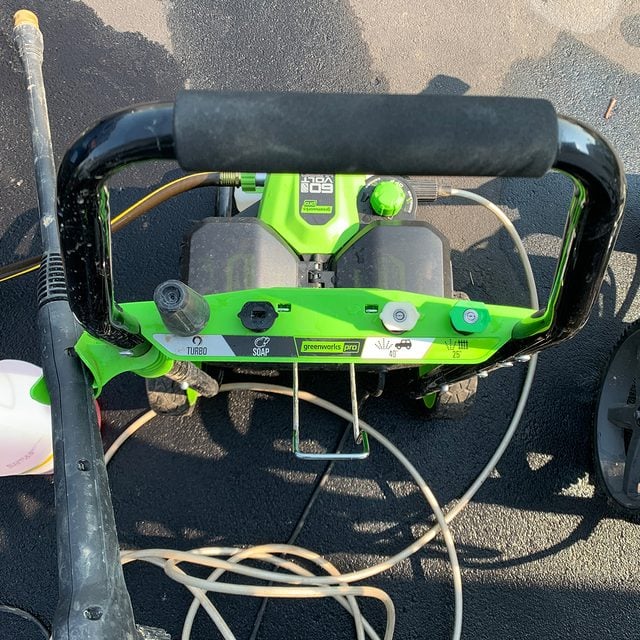
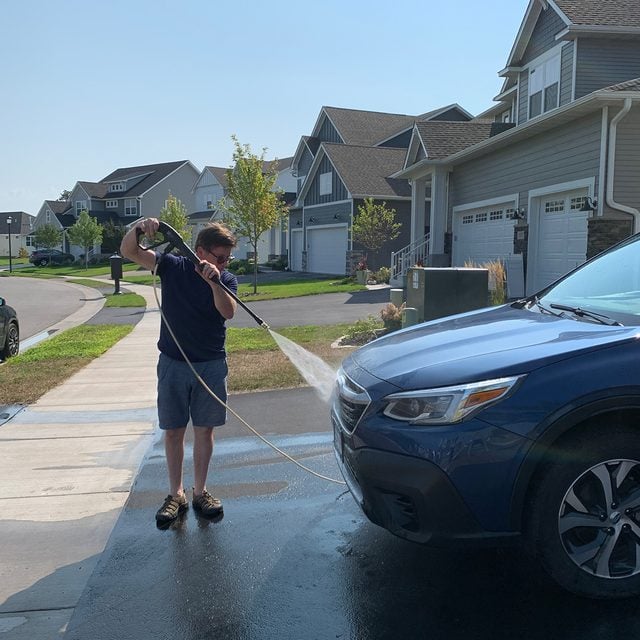
- Pre-wash by starting at the top and spraying downward, removing debris from the roof, hood and trunk. Continue spraying downward on the side panels, wheels and hubcaps, removing any stuck-on mud. You can even clean the wheel wells. However, don’t spray directly into the front grill; you could damage the radiator. Instead, spray downward at a 45-degree angle.
Step 2
Soap and Suds
- Most pressure washers feature a soap tank that needs to be filled. Be sure to check the water-to-soap-concentrate ratio. Fill the soap tank with the diluted soap solution.
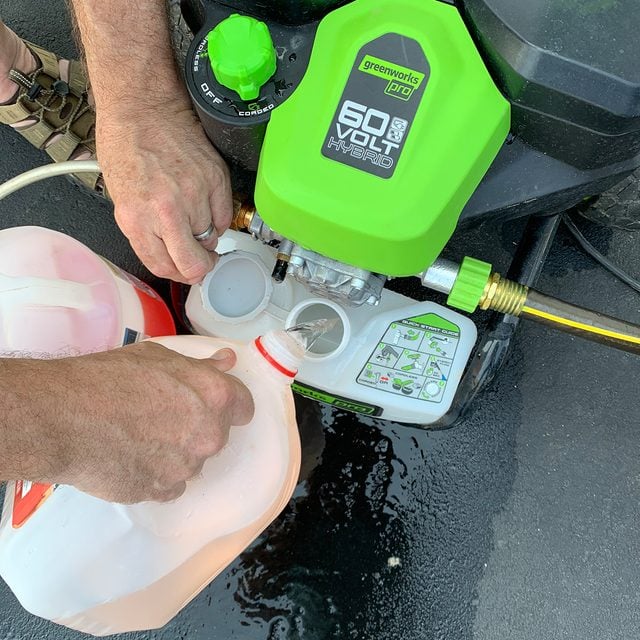
- If your pressure washer lacks a soap tank, apply the soap by hand with a rag or sponge.
- Set your pressure washer to the soap setting or swap out the nozzle tip to a soap nozzle tip.
- Again starting at the top of your vehicle, work your way down, applying soap over the whole vehicle.
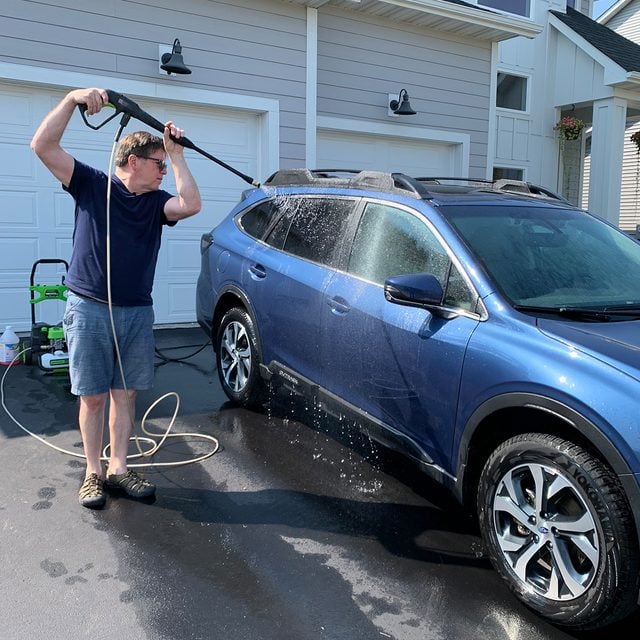
- Let the soap sit on the vehicle for at least five minutes. If you’re washing your car in direct sunlight, wash one side at a time, rinsing off the soap before it dries.

Step 3
Rinse Time
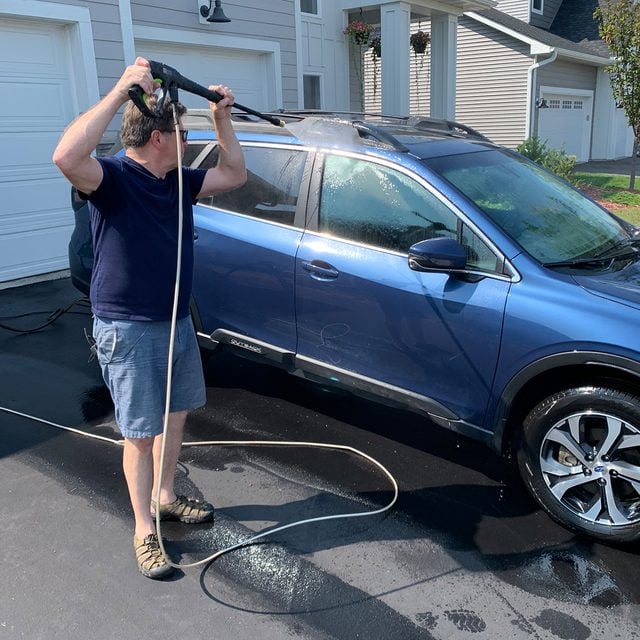
- Switch your pressure washer setting from “soap output” to “water output,” or switch the nozzle back to a 40-degree nozzle tip.
- Start on the roof and work your way to the hood, trunk and sides, rinsing off all the soap thoroughly. Repeat this two or three times until the vehicle is completely rinsed.
Step 4
Drying Time
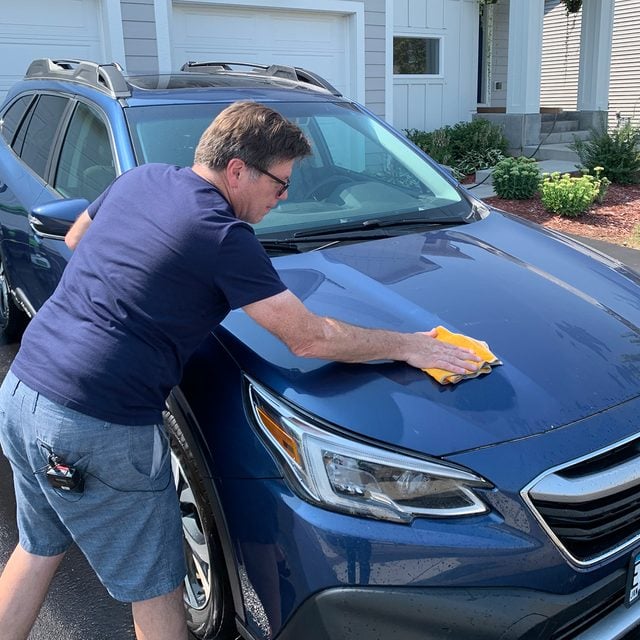
- Dry your vehicle with a hand towel, soft cloth or shammy. This will eliminate water spots when you air dry.
Originally Published: August 26, 2021
