

Round Ductwork Installation Tips
Updated: Apr. 26, 2023





Installing ductwork isn't hard when you have these expert tips.

Working with round ductwork
Whether you’re adding new heat runs in a basement or changing the layout of an existing HVAC system, you’ll probably be working with round metal ductwork pipe. We invited Bob Schmahl to give us a few pointers. Bob’s been a tin bender for more than 40 years. He insists he still doesn’t know everything about ductwork, but we weren’t convinced. These tips should help make your next job run that much smoother.
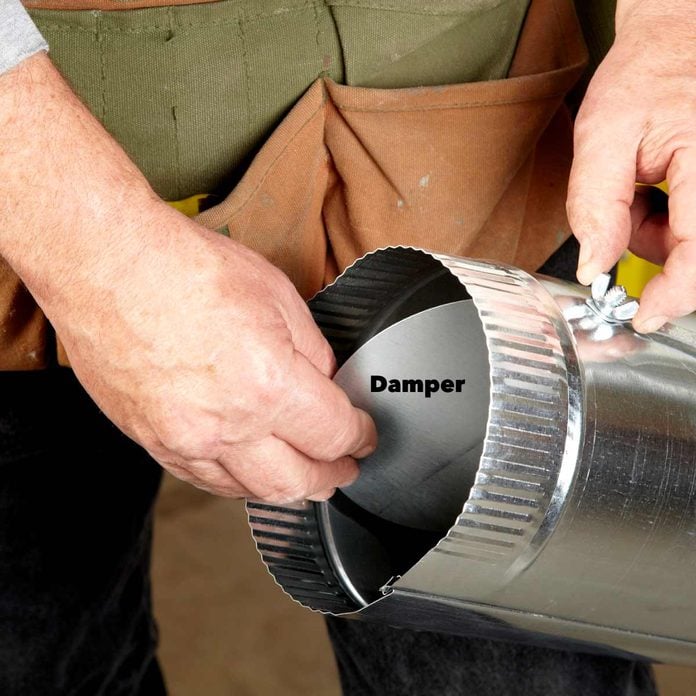
Install dampers at the registers to adjust airflow
Adding heat runs in a basement may change the airflow in the ductwork going to other rooms. Each register should have its own damper that can be accessed for adjustment in order to air balance. If those dampers can’t be accessed from below, you’ll want to install them close enough to the register so that you can reach them through the register opening. Bob likes 4 x 10-in. boots (not shown)—you can easily fit your hand in them to adjust dampers, and there are more grate cover options for that size.
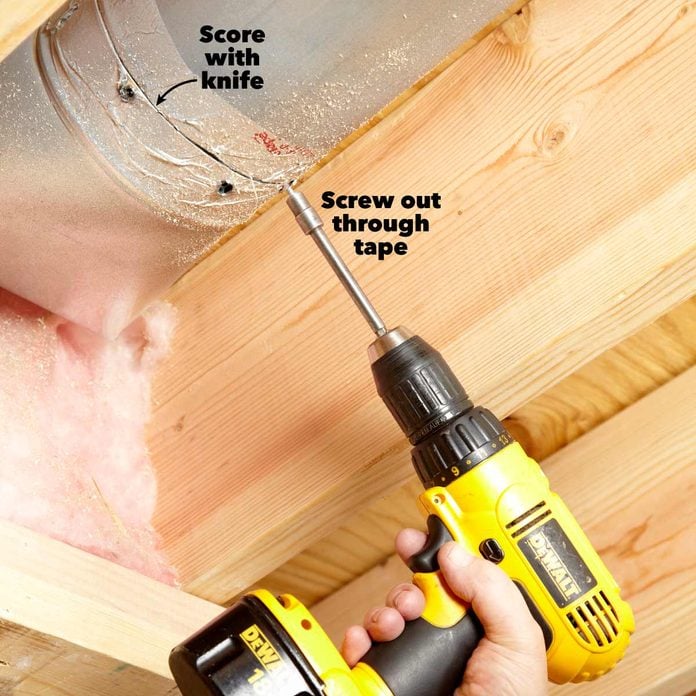
Don’t peel off old tape of metal ducting
If you have to disassemble existing ductwork fittings, there’s no need to peel off the old foil tape first. Instead, just score the tape at the seam with a utility knife and remove the screws right through the tape. When it comes time to retape, just clean off the dust and apply new tape right over the old.
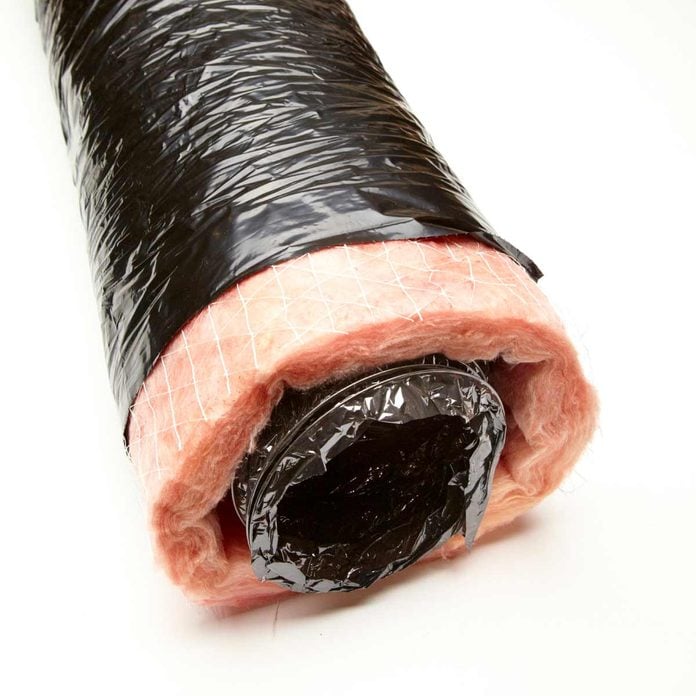
Bob’s not a fan of flexible heating ductwork
There’s no question that flexible duct is easier to install than metal ductwork, but consider this: Flexible duct can degrade over time. It collects dust and is almost impossible to clean. Flexible duct needs to be larger than pipes to allow the same amount of airflow. The most common problem Bob has seen: “People get careless and turn corners too sharp, which creates kinks that severely restrict airflow.”
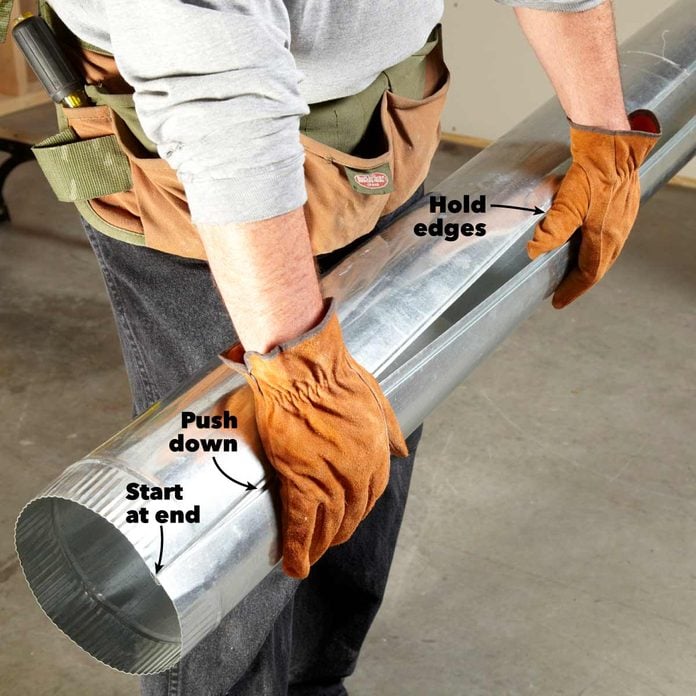
Assemble the metal ducting like a zipper
When assembling pipe, start at one end and work the seam together like a zipper. Use one hand to keep the two edges close and the other to apply downward pressure. Use your leg, a workbench or the ground to support the back side of the pipe. If you make a mistake and have to dismantle a pipe, slam it down flat on the ground, seam side up. It should pop right apart.
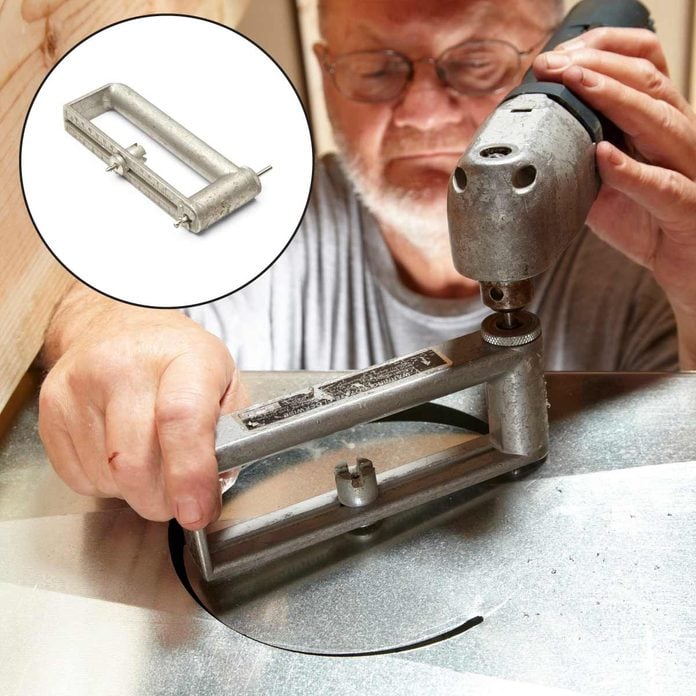
A hole cutter works great in tight spots when replacing ductwork
Aviator snips work fine to cut holes in a trunk line, but only if there’s enough space. If you’re dealing with close quarters and you own a right-angle drill or attachment, you may want to invest in a sheet metal hole cutter. Otherwise you might have to take down the trunk line.
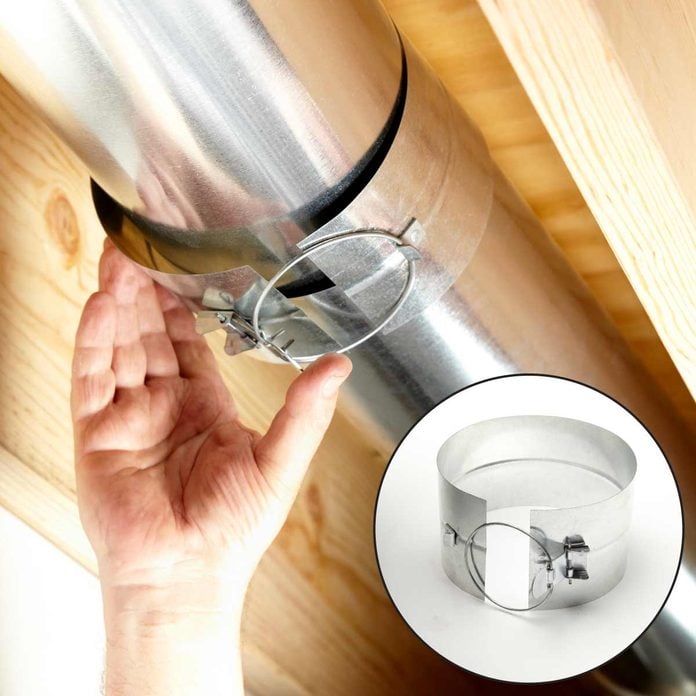
Overlap butt joints with draw band connectors
When you’re installing a pipe between two fixed parts, it’s impossible to slip in the piece using the crimped ends and still get the required 1-1/2-in. overlaps at both ends. Overlap one side as you normally would and create a butt joint on the other. Use a draw band connector to complete the butt joint.
If your supplier doesn’t carry draw band connectors, make your own by cutting a piece of pipe to overlap the ends, and then screw and tape the band into place. If you’re working with 6-in. pipe, you’ll need to use 7-in. pipe for the bands.
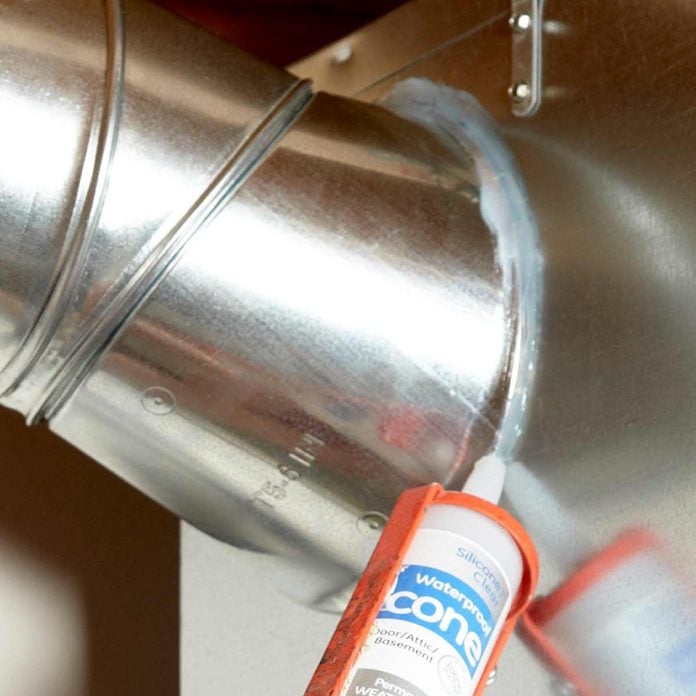
Caulk the take-offs
Caulk (don’t tape) the connection between the trunk line and a take-off (elbow) before you connect pipes to it. That way, you’ll be able to turn the take-off out of the way to caulk above it. Regular silicone is fine.
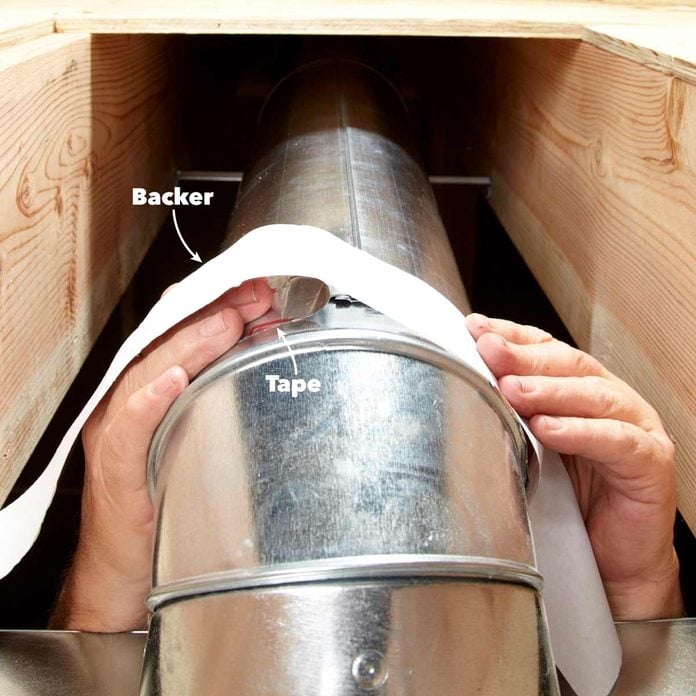
Leave backing on the tape on metal ductwork
If the ducts are going to be concealed, all seams need to be taped or caulked. Here’s Bob’s trick for taping a seam on a pipe that’s installed close to the subfloor: Cut a piece of foil tape to length. Peel off part of the backing. Slide the backing up and over the pipe. Finally, pull down on the backing, which will pull the tape along with it. Inspectors will want to know you’ve used an approved tape, so buy the stuff with writing on it, or keep the roll on-site until inspection.
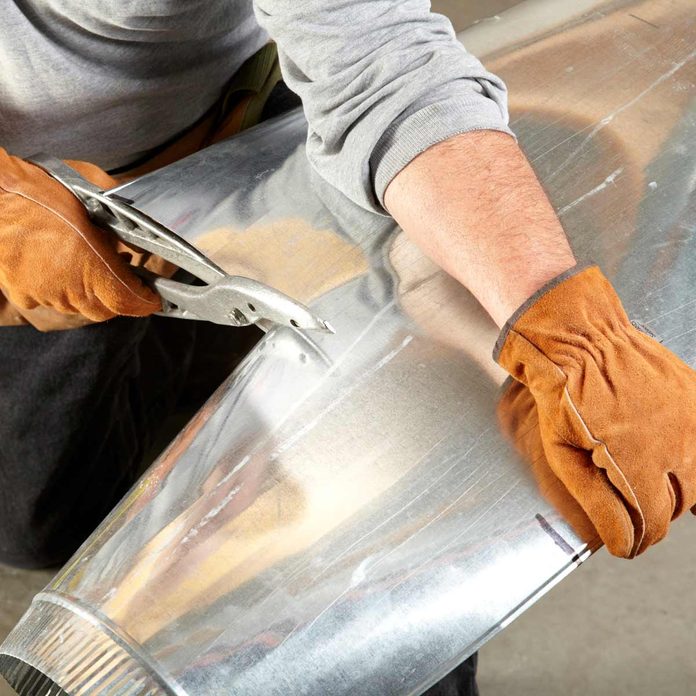
Make two marks for cutting when replacing ductwork
When cutting pipe, Bob likes to mark the size he needs on each side of the open seam with a marker. Flat metal is easier to cut than curved, so he uses his knee to support and flatten the pipe while he opens it up. Then you just sight on the far mark while you make the cut. It’ll be straight and perfect every time. Bob prefers snips made by Malco, which cost less than $35 online. Unless you enjoy trips to the ER, wear gloves when cutting pipe—the stuff is razor sharp.
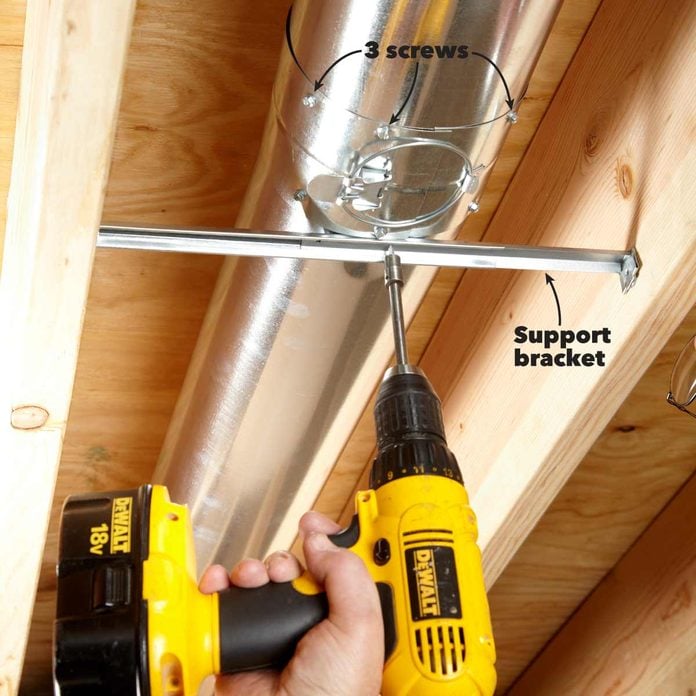
Use support brackets and three screws to reduce movement and noise
Each pipe needs support. You can use just about any support you want, but adjustable steel support brackets are quick and easy. And don’t forget to screw the pipe to the joist hanger so the pipes won’t rattle when someone stomps across the floor above. Every connection needs three screws. They don’t have to be evenly spaced. Use 1-in. galvanized zip screws designed for sheet metal.
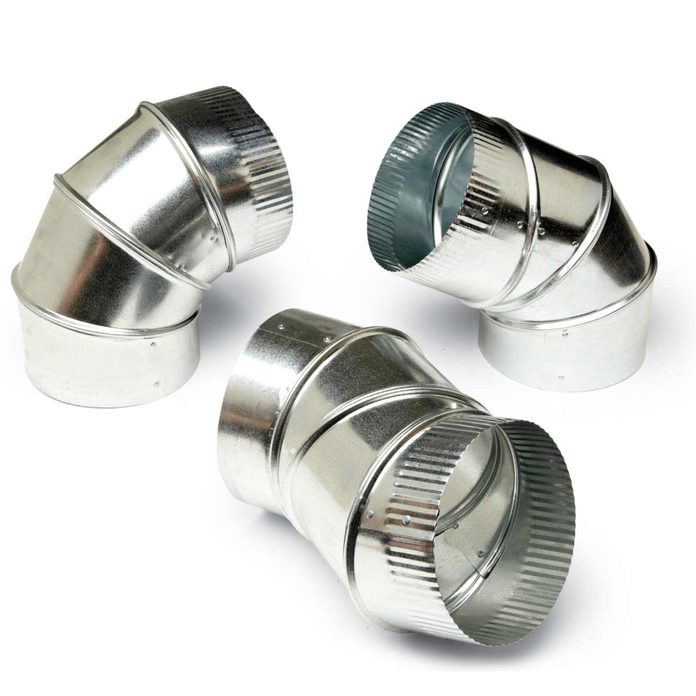
Move one ring at a time to construct curves
Figuring out the right combination of turns to get an elbow to point in the right direction can be perplexing. Bob recommends moving one “gore” (elbow ring) at a time, starting with the connected side. And don’t make 90-degree turns if you don’t have to. A 90-degree elbow creates the same resistance as adding 5 ft. of pipe.
