


We've all been there: you're driving along, minding your own business, when all of a sudden your check engine light comes on or you begin to hear a mysterious rattle that you can't quite identify. At that point, you have two choices: take your car to the repair shop or take the DIY route and figure it out yourself! If you're a DIY enthusiast hoping to troubleshoot an automotive issue before it becomes a major concern, here are 10 car diagnostic tools you shouldn't be without.
10 Car Diagnostic Tools for DIYers
1
/
10
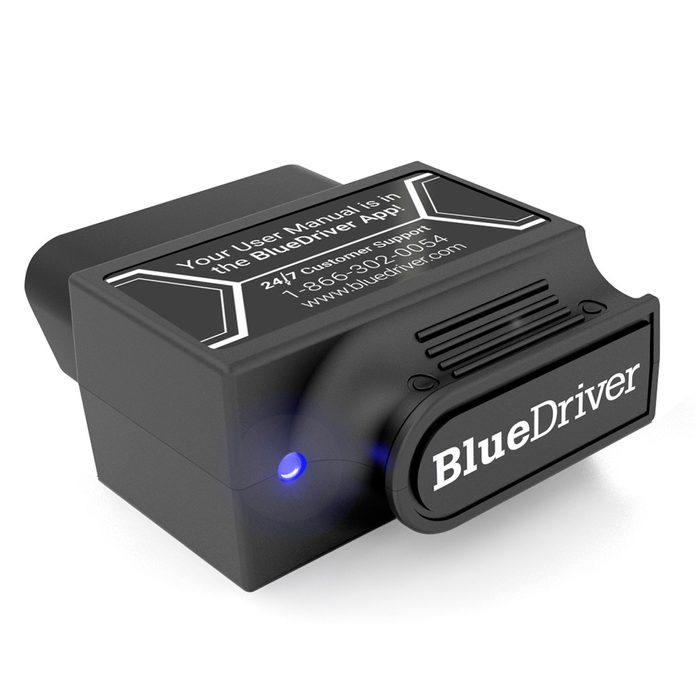
Scan Tool
The top end of the technology ladder is held by a scan tool. This car diagnostic tool plugs into the OBD-II port (“OBD” is an acronym for on-board diagnostics, and the “II” designates the second generation of these ports, in use since 1996) and delivers a wide range of information gathered from your car’s computer.
You may notice a wide range of prices on these tools. Much of the price is determined by the depth of the information in its database and the way it delivers that information to you. Scan tools may be wired or Bluetooth, and often connect to your Wi-Fi network in order to access an up-to-date online database of information. In fact, newer models often have they ability connect to your smart phone, literally putting the power of computerized diagnostics in the palm of your hand.
2
/
10
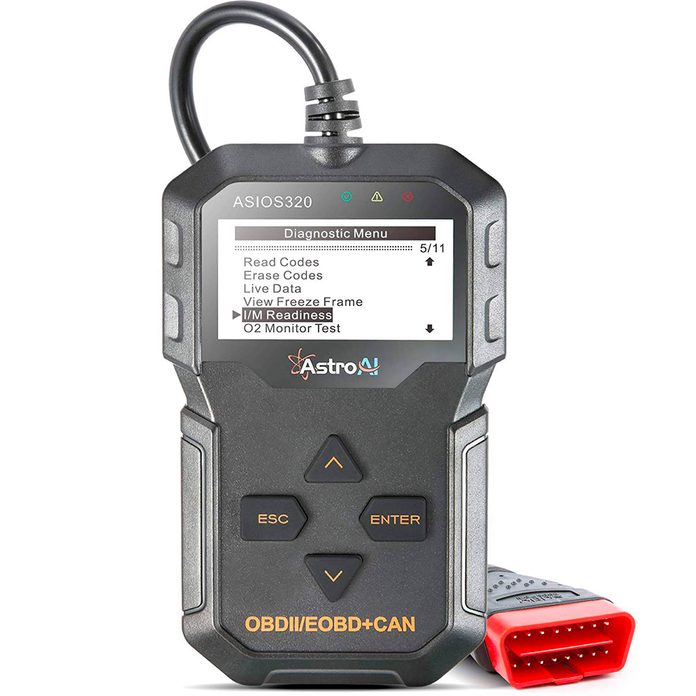
Code Reader
A code reader is a slightly lower-tech version of the scanner. It also plugs into the OBD-II port, but instead of performing a full service diagnostic, it will simply give you a numeric error code. It’s up to you to check that code against an online database or manual.
A code reader is a great car diagnostic tool for when you’d like something more helpful than a plain Check Engine light, but don’t want the detail or expense that comes along with a full scan tool.
For a good overview of what exactly a cod reader delivers and what differentiates a code reader from a scanner, refer to this informative article: Using a Diagnostic Car Code Reader.
3
/
10
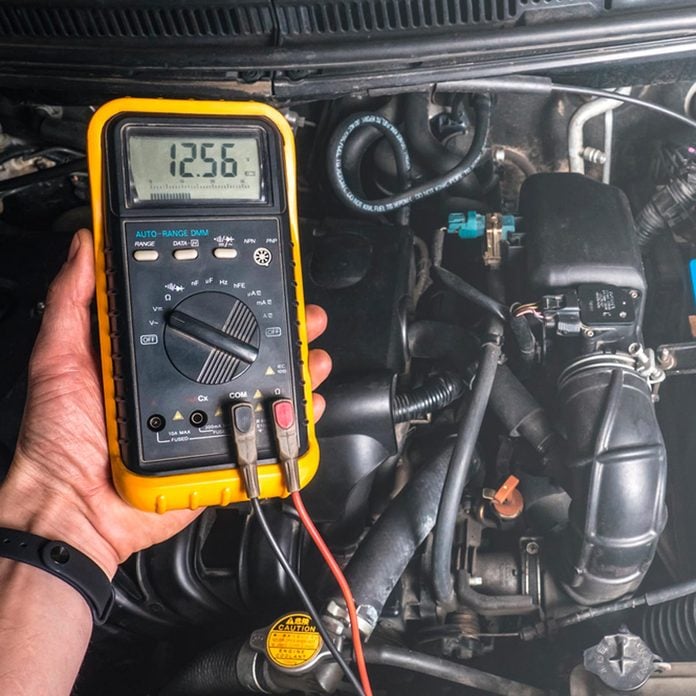
Multimeter
Okay, let’s take things a step down in terms of technology. Multimeters measure a number of different factors in your car’s electrical system. By providing information on details such as resistance and voltage, they can help you identify faulty circuits, battery charge and sensor issues.
Multimeters are affordable, and every DIY garage can use at least one. One quick tip: get a unit with a large digital readout, which will be especially easy to read during car diagnostics. And for an extra clever diagnostic trick, here’s how to test for corrosion in your car’s water pump, radiator or heater core with a multimeter.
4
/
10

Non-Contact Thermometer
It’s no secret that engines get hot while running. But each part of your automobile is designed to operate within a certain range of temperatures. When something is going wrong, such as a build-up of friction or restricted air flow, then things start to get very hot very fast! To find out if this is the case in your car, use a non-contact infrared thermometer. This handy tool will allow you to check the temperature of hard-to-reach items, or areas that you shouldn’t touch while the engine is running. Use the thermometer when you want to check for break dragging, or a failing thermostat – both issues that can cause your gas mileage to plummet. And if you’re looking for more car diagnostic tools to help get better mileage, Family Handyman has you covered!
5
/
10
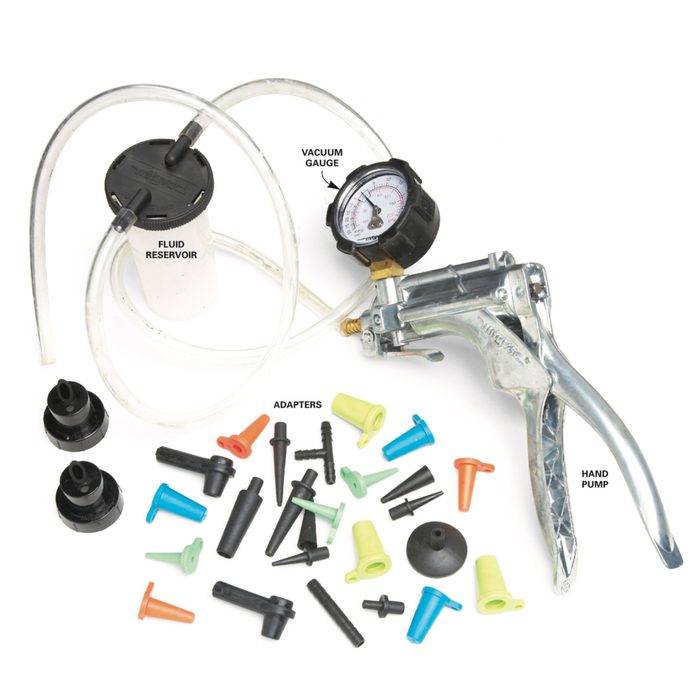
Vacuum Pump and Pressure Testing Kit
Your car’s engine is full of parts that operate using vacuum pressure, and a vacuum pump and pressure testing kit will allow you to test these vacuum lines for leaks. Whenever you have concerns about a vacuum line deteriorating, simply break out these tools. Just remember to use the pressure testing kit after your engine has warmed up to operating temperature in order to get accurate readings.
Even better, this tool isn’t just for running diagnostics. Your vacuum pump will also come in handy for projects like changing your transmission fluid.
6
/
10
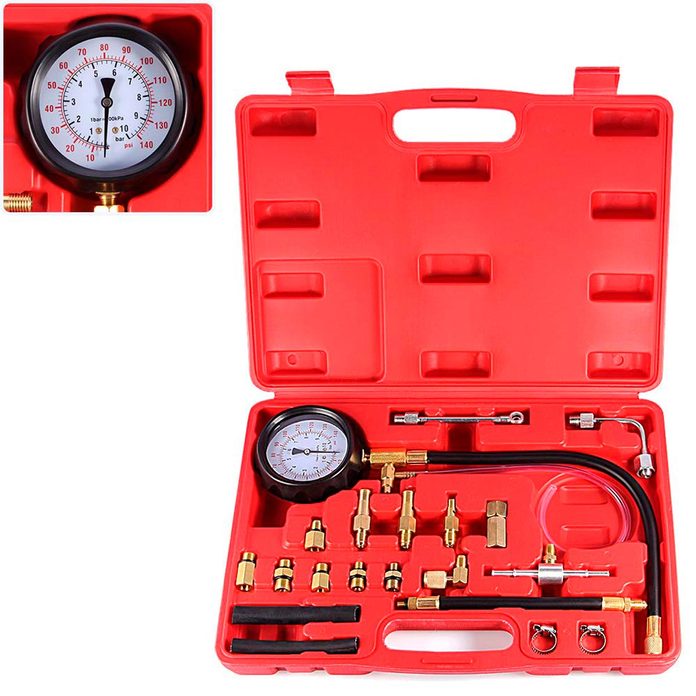
Fuel Pressure Gauge
Has your car been feeling a little sluggish lately? If so, there may be an issue in the fuel system. Debris, leaks and other potential problems can all cause a drop in fuel pressure, resulting in reduced power. With a fuel pressure gauge you’ll be able to tell whether your engine is getting the fuel it needs to perform properly.
If you do find an issue in your fuel pressure, get it repaired ASAP. To prevent future issues, one surprising trick is to never drive on less than a quarter-tank of gas. Want to know why? It’s all explained in this Family Handyman article: 10 Things You Should Never Do To Your Car.
7
/
10
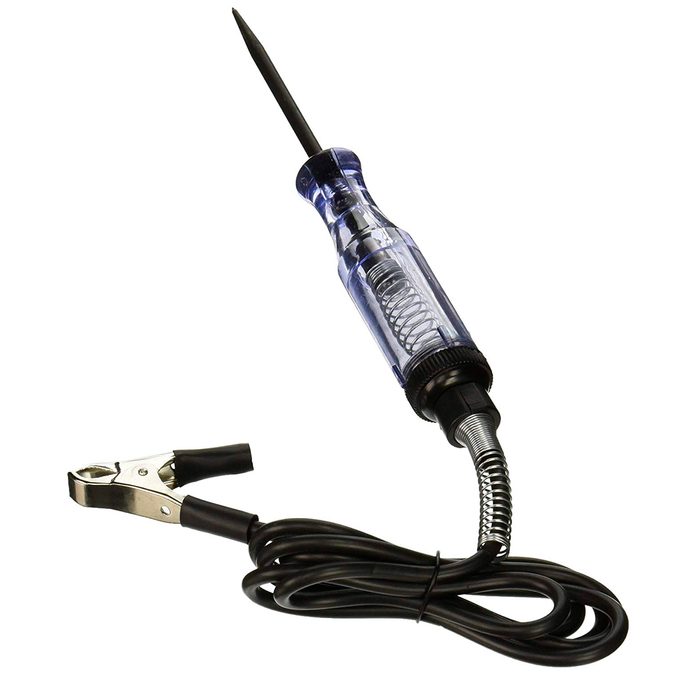
Circuit Tester Light
A test light functions as a down-and-dirty multimeter. It simply connects to a circuit and illuminates the light bulb if it gets power. The beauty of this tool is that it’s a simple binary: it either lights up or not. This makes for quick work of checking circuits. However, this simplicity is also this tools drawback. A test flight light confirms the circuit is working, but it doesn’t tell you any additional details such as the amps or volts, etc.
If you’re in the market for a test light, be sure to get an LED model, rather than one with an old-school incandescent bulb, to lower the risk of damage to your car’s computer.
8
/
10
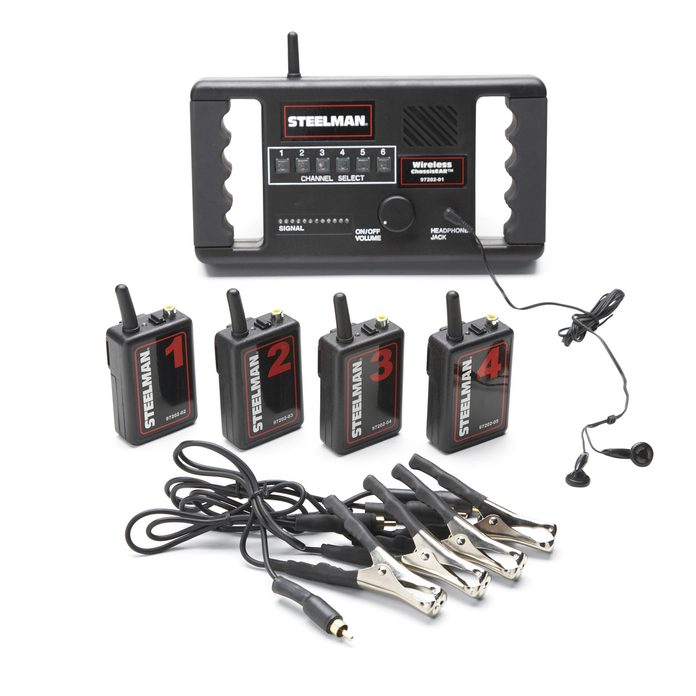
Mechanic’s Stethoscope
There’s a long tradition of car owners trying to describe those strange shakes and rattles that always seem to mysteriously disappear when the car is brought into a mechanic’s shop. One of the easiest ways to narrow down the source of those troubling noises, a mechanic’s stethoscope is a specially modified version of the medical tool.
For a good overview of a traditional mechanic’s stethoscope, see How to Diagnose Car Problems with a Stethoscope. But, car diagnostic tools continue to evolve, and wireless technology allows the modern mechanic to monitor these stethoscopes even while driving.
9
/
10

Telescoping Mirror
Modern engines are miracles of compression as it seems like every year auto manufacturers manage to pack more items in a smaller space under the hood. This may be some impressive engineering, but it can cause a real headache for the DIY mechanic. One simple car diagnostic tool that will allow you to see hard-to-find and harder-to-reach areas on your car is a telescoping mirror.
Simple but dependable, telescoping mirrors work great with telescoping magnets to find out if that troublesome rattle is nothing more than a loose screw bouncing around with each bump in the road.
10
/
10
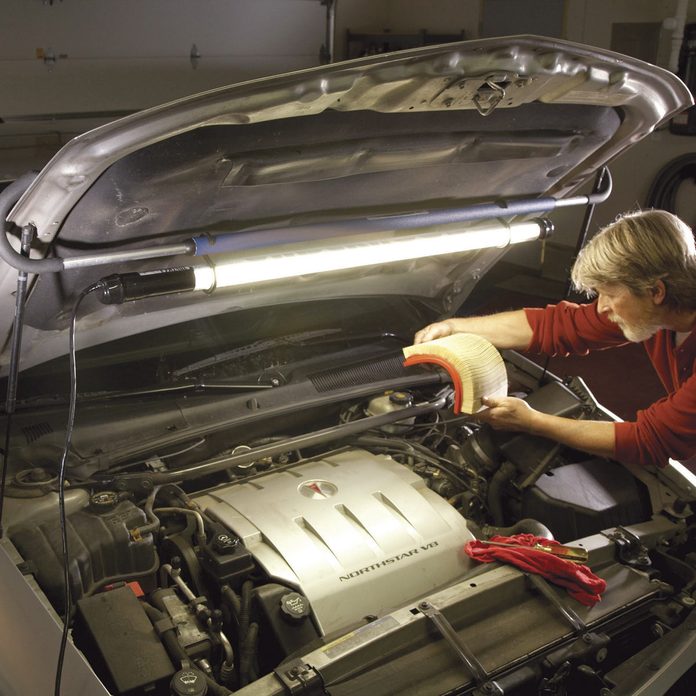
Proper Lighting
We started this list with one of the most advanced car diagnostic tools available, and we’ll end with the most basic: effective lighting. It’s hard to fix what you can’t see, and even the most useful of tools are useless if you’re missing something obvious because of poor lighting. One of the best things you can do for your garage or shop is to invest in quality, reliable, adjustable lighting. It doesn’t need to be expensive, but it does need to be there. One example is this under-hood light kit.
Every product is independently selected by our editors. If you buy something through our links, we may earn an affiliate commission.
