


You get what you pay for with jumper cables, so it's worth spending a little extra for a good set.
Our editors and experts handpick every product we feature. We may earn a commission from your purchases.Learn more.



Updated Feb. 12, 2024
You get what you pay for with jumper cables, so it's worth spending a little extra for a good set.
Our editors and experts handpick every product we feature. We may earn a commission from your purchases.Learn more.
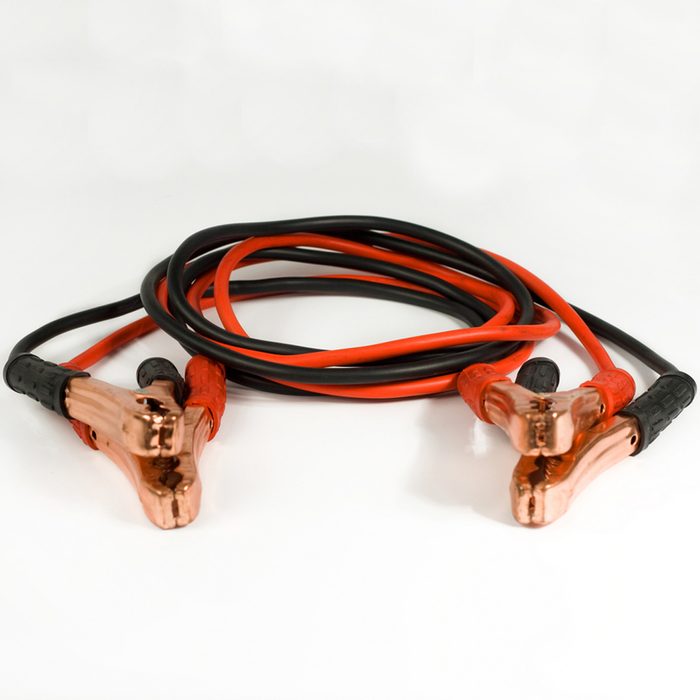
It really doesn’t take a lot to wind up with a dead battery, a dome light accidentally left on overnight, an Arctic blast, etc. That’s why you want to keep a set of jumper cables in your car, so you don’t wind up stuck in an empty parking lot or sitting in the driveway late for work. However, while jumper cables seem pretty straight forward, not all sets are created equal. There are a few things to consider before buying some to stash in the trunk.
Wire gauge and rating: That refers to how thick the cables are. The lower the number, the thicker the cable. You want heavier cables because they can handle more power passing through and get a battery started fast. That also means they’ll work for a wider variety of vehicles, from sub compact cars to one-ton pickup trucks. A 6-gauge set is recommended for most cars, trucks and SUVs. Cables are rated for a certain number of amps. A set rated for 800 to 1,000 amps are recommended as they can handle the power needed to start larger vehicles.
Insulation: As a general rule, thicker is better. Insulation protects the cables from overheating when there’s electricity running through them, which protects the vehicle and the person handling the cables. It also protects the wires from cold weather.
Clamps and length: Solid, heavy-duty clamps with grippy teeth are a must. Weak clamps can slip off the battery terminal when you’re trying to jump the car. Solid copper clamps work best. Make sure the clamps are insulated too, covered with thick rubber, to protect you when you’re using them. The minimum length for cables is 12 feet, but you can easily find a longer pair which gives you more flexibility in lining up with the other vehicle required for a jump. A set of 25-ft. cables will take up more room in your trunk, but you’ll be glad to have the additional length when you need it.
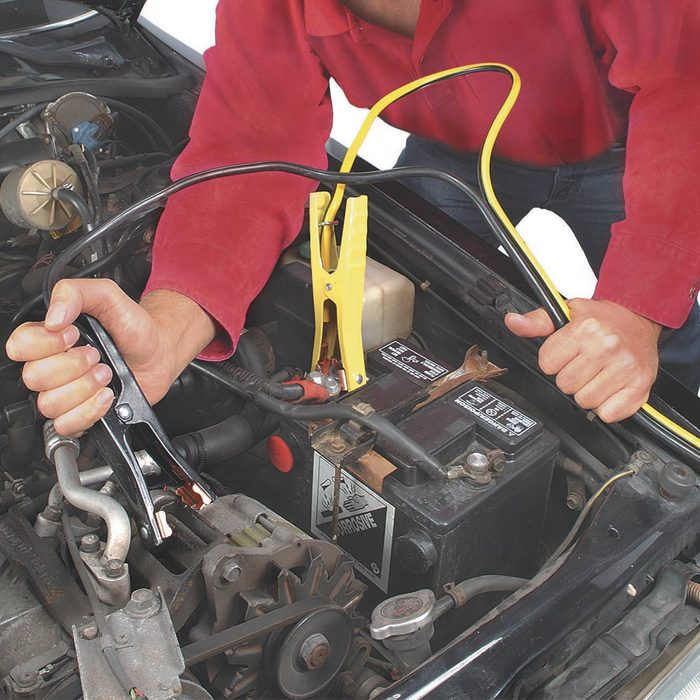
Because it’s not something most of us do on a regular basis, take some time to review how to jump start a car. It’s a process that some people can find intimidating, but once you get the hang of it, it’s easy.
After lining up the two vehicles a best you can, it’s time to connect the cables. When connecting the cables, remember to start by connected the red clamp to the positive terminal of the dead battery, setting aside the black clamp, and then connecting the red clamp on the other side of the cables to the positive terminal of the good batter. After that, connect the black clamp to the negative terminal of the good battery. Then, on the side with the dead battery, attach the black clamp to a clean piece of metal to ground it. Do not connect the black clamp to the negative terminal of the dead battery.
Once the cables are connected, start the car with the good battery and let it run for a few minutes. Then, go to the car with the dead battery and turn the key until the engine starts. After the car starts, wait half a minute or so before disconnecting the cables to make sure it doesn’t stall. If it doesn’t start, turn off both vehicles and check the jumper cable connections.
With both cars running, disconnect the jumper cables in reverse order.
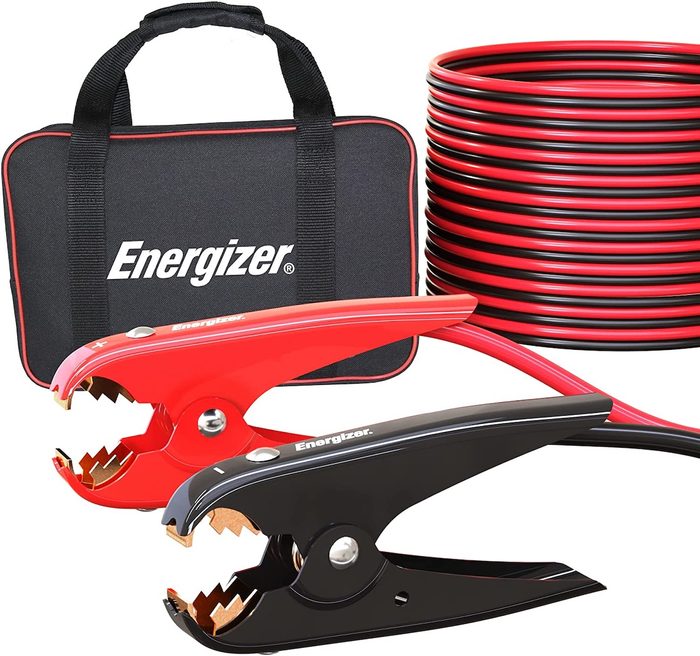
Like the rabbit, these Energizer cables juts keep going and going, even when the mercury dips down to 40 below. The 1-gauge, 25-ft. cables can jump just about any type of vehicle and still reach between two even in the most awkward parking situations. Thick vinyl coating on the cables and the handles makes them safe and comfortable to use. They’re also tangle-free, which comes in really handy in extremely cold temperatures. There’s a carrying case included, and the cables come with a two-year warranty.
“The only jumper cables you will ever need,” says Amazon verified purchaser Cress. “The clamps are top grade and have a SUPER GRIP. The coating on the cables is the best I have ever seen! They are a lifesaver being 25 ft! Thankfully you will be able to reach pretty much anywhere. The Case that comes with the cables seems to be pretty sturdy too.”
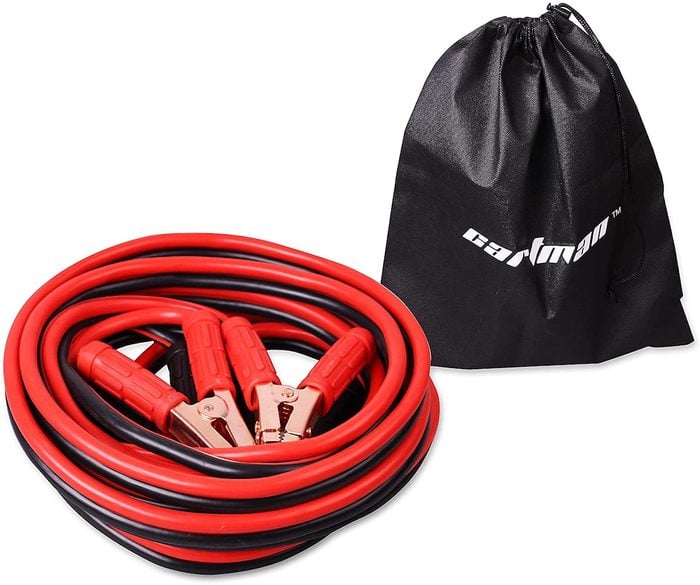
The 1-gauge, 20-ft. heavy duty booster cables from Cartman are not light, weighing more than nine pounds. But they can handle just about any vehicle on the road. If you drive a pickup to a job site in the winter, you’ll be glad you have a pair of these on hand for emergencies. These cables are made from copper coated aluminum wire and feature thick insulation that means they’ll work when when the temperature dips below zero. The jagged teeth on the clamps can latch onto terminals on the top or side of a battery. And with nearly 12,000 Amazon reviews, they’ve earned a 4.8 stars.
“These are the highest-quality jumper cables I’ve ever owned,” said Ken, a verified purchaser on Amazon. “There’s no doubting the connection to whatever it’s attached to. What’s very important to me is the quality of the cables themselves. They are not stiff; they don’t get tangled every time you go to use them, yet they are resilient and tough.”
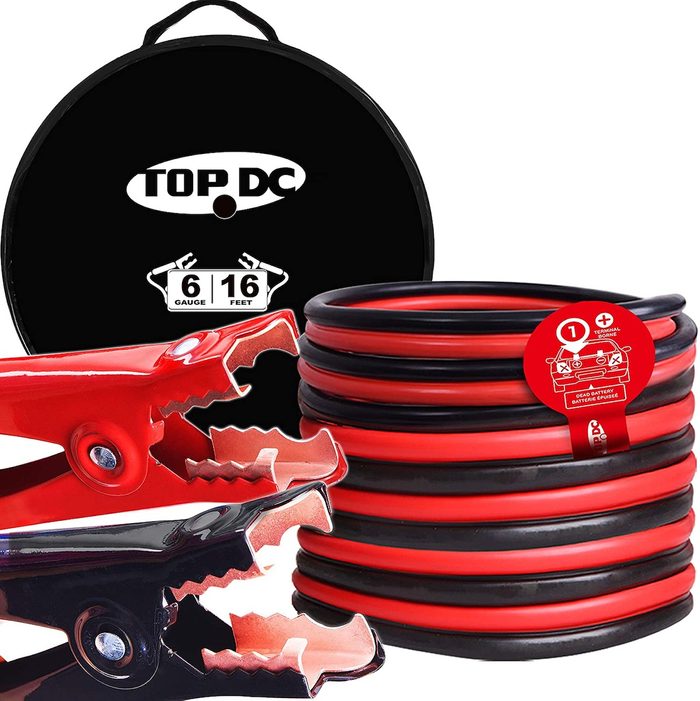
These 16-ft., 6-gauge jumper cables from TOPDC are heavy duty enough for most cars and SUVs. Sturdy springs in the clamps mean you don’t have to worry about them slipping off a battery terminal either. The cables and the clamps are vinyl coated, and they’re flexible enough to work in seriously cold weather too, just in case you leave the lights on after packing up the tailgate party and heading into the game. Best of all, you can get them for less than $20, so there’s no excuse not have a good pair in your car at all times.
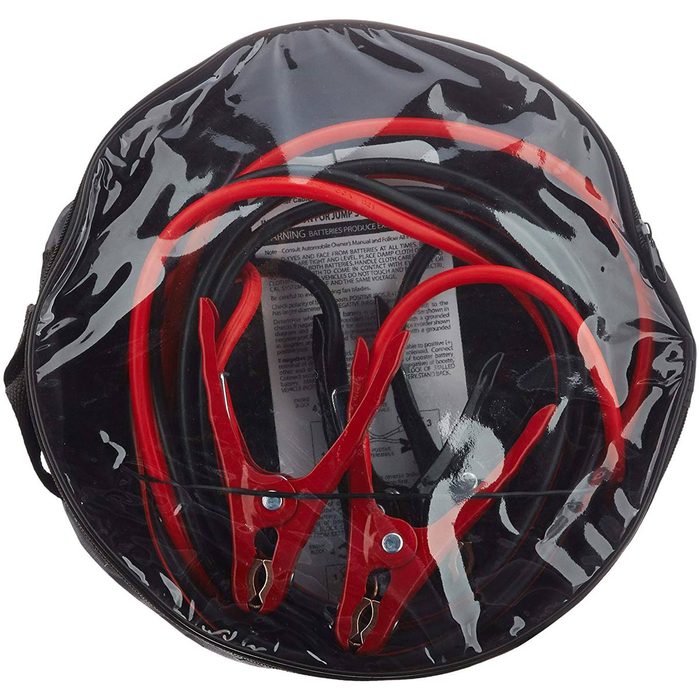
While you wouldn’t usually want 10-gauge cables, this set from Amazon Basics will work just fine for compact cars or smaller models. And even a small set of jumper cables is better than no set of jumper cables in your car when the battery goes dead. You can get these in longer lengths and heavy gauges, but this 12-ft. set is worth stashing in the back if you drive a small car or if you’re putting together an emergency kit for your kid’s car.
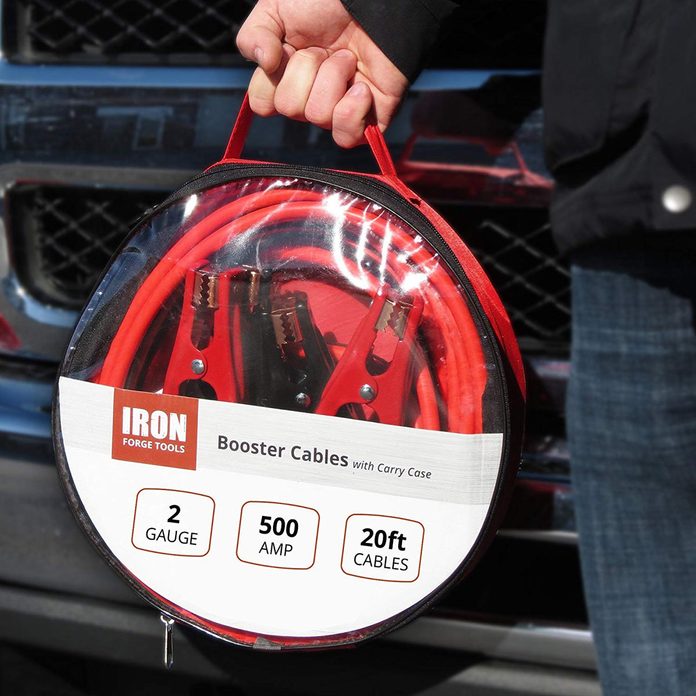
Iron Forge Tools sets itself apart from the others with its offer of a lifetime warranty for its products. The cables will work great in any weather and they come with a handy carrying case.
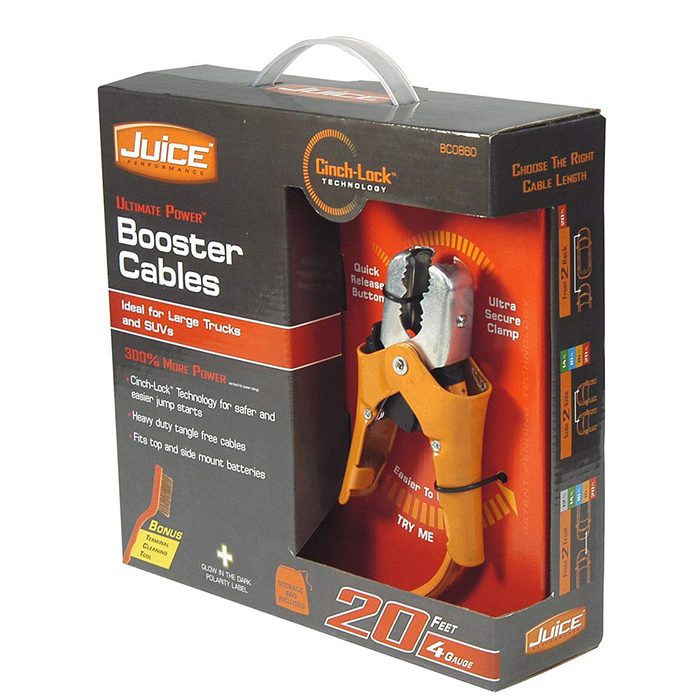
A bit on the expensive side, Juice Performance cables a professional quality cables with a thick gauge (available in 4- or 6-gauge.) These cables even boast a special technology that helps to cinch to battery terminals with a more powerful clamping force. They’re also 20-ft. long, which comes in handy.
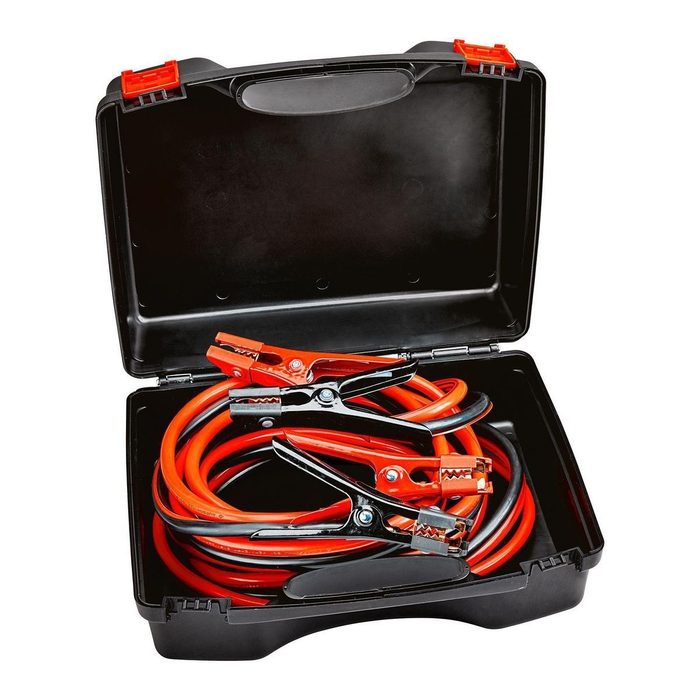
Harbor Freight is a great place to get tools, and they have a lot of automotive gear too. These 20-ft., 2-gauge jumper cables with copper jaws and plastic-coated clamps are a bargain for a heavy duty set. The tough construction resists damage from battery acid as well as the elements.
Every product is independently selected by our editors. If you buy something through our links, we may earn an affiliate commission.
Originally Published: June 14, 2019
