

Add ambiance, color and fragrance to your pool surroundings. These plants help make any poolscape attractive and inviting.
Best Landscaping Plants for Around a Pool
1
/
10
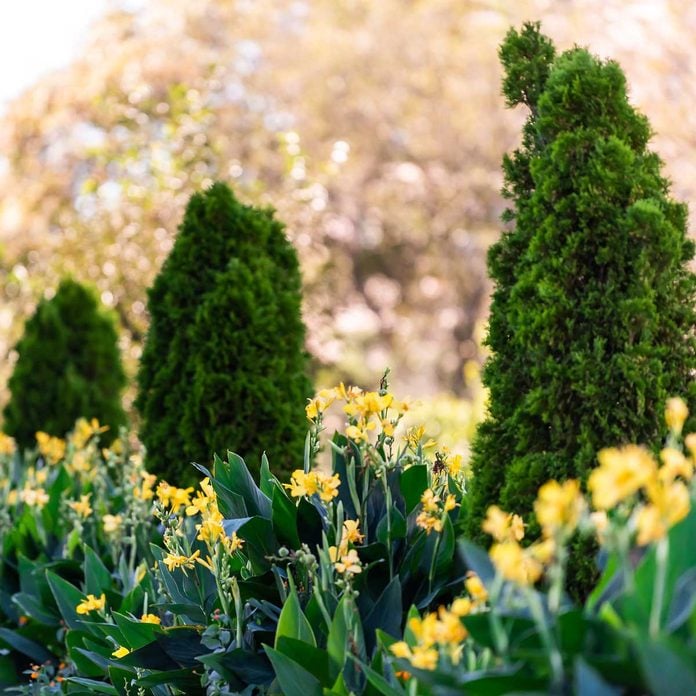
Best Pool Plant for Privacy: Arborvitae
These thickly-attired evergreen shrubs stand upright and withstand neglect. Sounds like the perfect pool plant, especially when you want privacy. Height generally ranges from eight to 12 feet, depending on cultivar, although some can grow twice that height unless topped.
You can quickly create a wall of privacy with a row of these columnar shrubs. If deer or rabbit browsing is a concern, try an upright juniper instead. Grow in U.S. Department of Agriculture Plant Hardiness Zones 3 through 7.
2
/
10
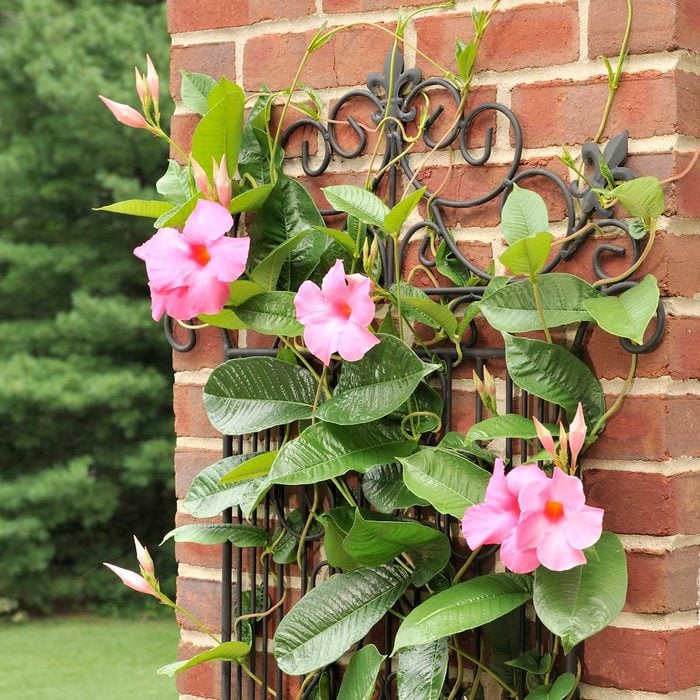
Best Pool Plant for a Trellis: Mandevilla
This twining vine adds a tropical flare wherever it’s planted. Mounded forms can grow in pots or hanging baskets, while more vigorous cultivars can climb an obelisk, trellis or fence. The brightly colored climbing flowers come in hues of red, pink and white, appearing all summer.
Mandevilla is hardy in Zones 10 and 11. Elsewhere, you can grow it as an annual or cut it back in fall and let it overwinter in a cool basement, where it will go dormant until spring.
3
/
10
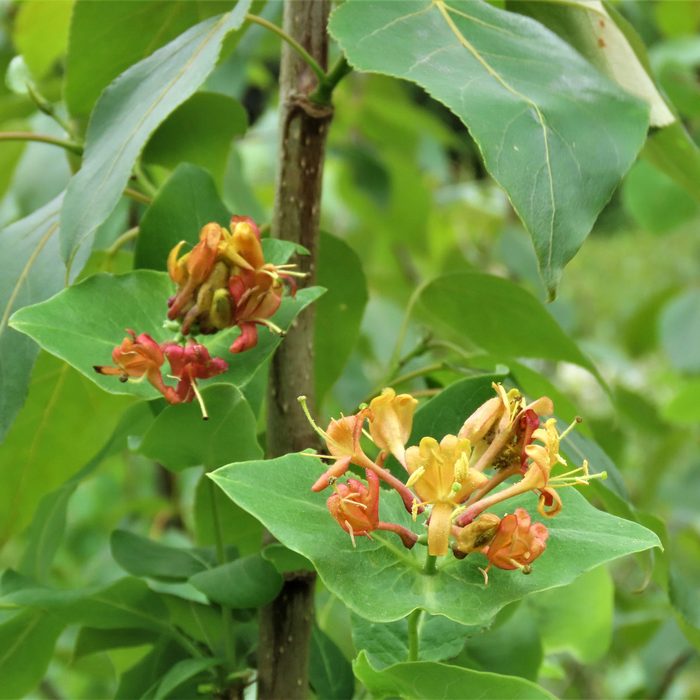
Best Pool Plant for Durability: Diervilla
This tough flowering shrub is resilient, taking dry weather in stride and even bouncing back from accidental trampling. It’s also about as adaptable as shrubs come, accepting anything from full sun to full shade, although foliage color and flowering are better with more sunlight.
Kodiak is a popular line of diervilla in various colors, reaching three to four feet tall and slightly wider. Grow in Zones 4-7.
4
/
10
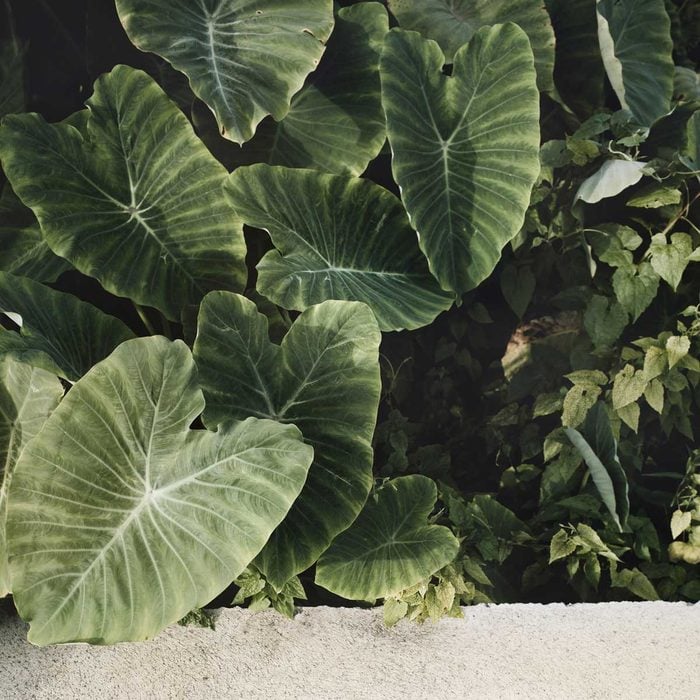
Best Pool Plant for a Tropical Look: Elephant Ear
Also known as taro or Colocasia, elephant ear has overly large, heart-shape leaves reminiscent of that familiar pachyderm. The tropical jungle-like leaves really stand out, especially in newer cultivars that feature unique colors and variegation.
In Zones 8-10, elephant ear can be grown in the ground as a landscape plant. In colder regions, treat it as an annual or potted plant and bring it inside before frost. Alternately, you can dig up the tubers and store them in sawdust in a cool, dry basement for the winter, replanting in spring.
5
/
10
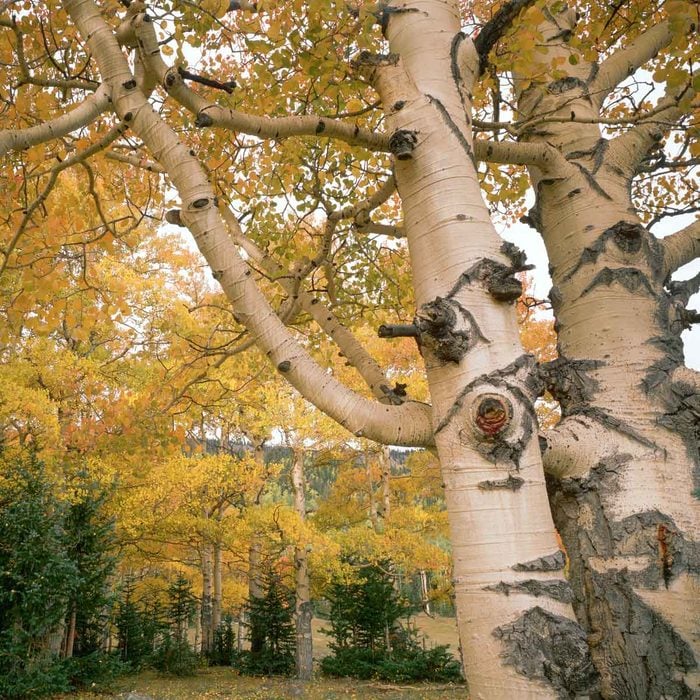
Best Pool Plant for Sound: Quaking Aspen
The spade-shape leaves flutter in the slightest breeze — hence the name — adding a pleasant sound and one that has a psychologically cooling effect. Also called trembling aspen, this beautiful poplar isn’t messy like its cousins. And it has a special beauty, with smooth, pale bark and outstanding golden fall foliage.
If space is at a premium, there are columnar aspen cultivars available. Grow in Zones 1-7. Quaking aspen is a great tree to consider for any yard.
6
/
10
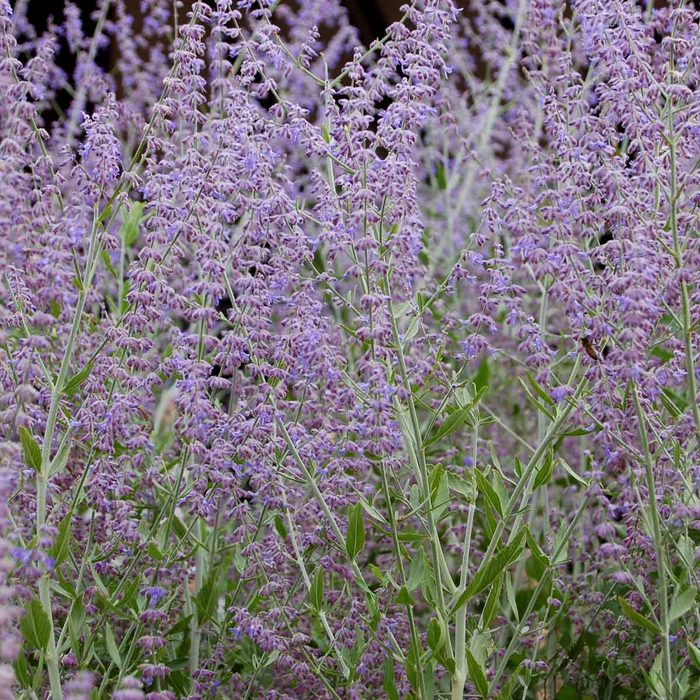
Best Pool Plant for Fragrance: Russian Sage
It’s big, it’s bold and it’s fragrant to boot! As the name suggests, Russian sage has silvery gray foliage that has a fresh, sage-like scent. The light purple flowers are lovely and long-lasting.
Although it grows four to five feet tall and sometimes flops without support, ‘Little Spire’ is just two feet tall and will remain upright without help. Either way, you get the nice fragrance and the cold hardiness one might expect of a plant with “Russian” in its name — in this case, Zones 5-9.
7
/
10
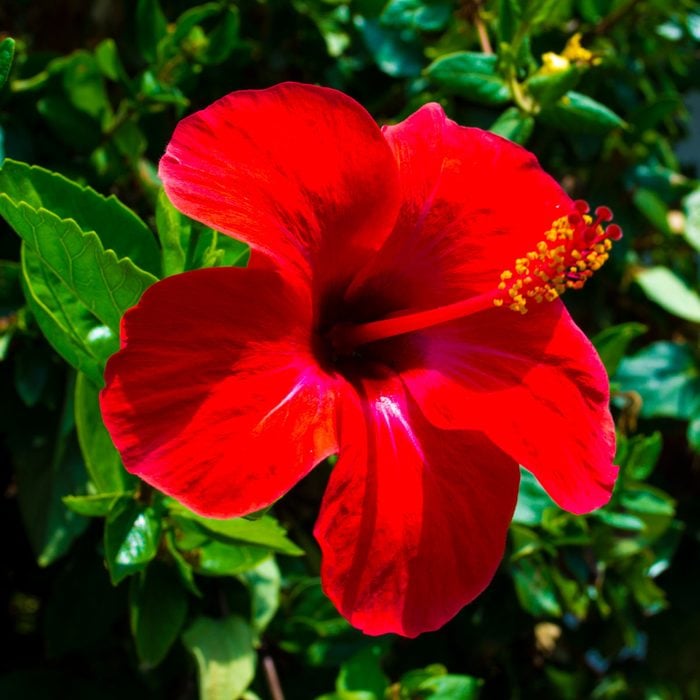
Best Pool Plant for Show: Hibiscus
There’s tropical hibiscus for Zones 9-11 and perennial hibiscus for Zones 4-9, and both boast large, bright, tropical-looking flowers in showy, bright colors throughout summer. Even better, Northern gardeners can grow the tropical hibiscus in a container and take it inside when nighttime temperatures go below 50 F.
There’s even a shrub hibiscus that can reach 12 feet tall — perfect for those who want showy flowers and privacy.
8
/
10
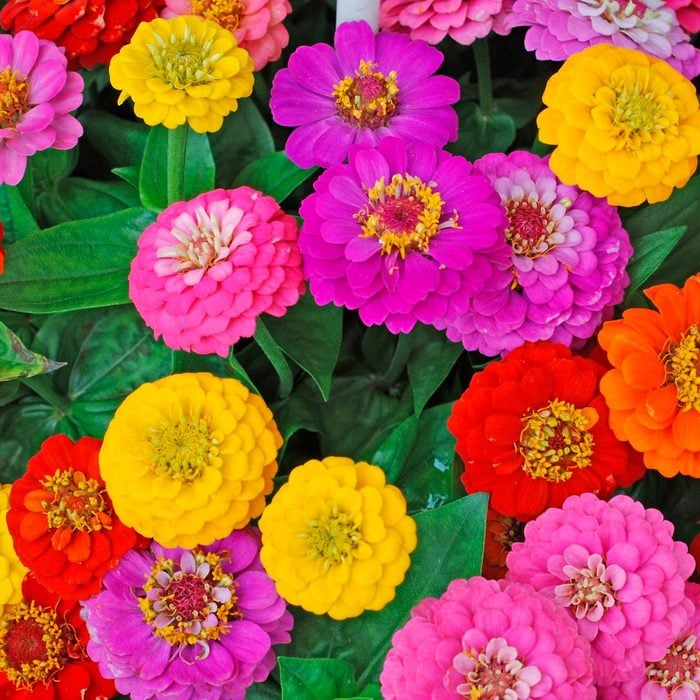
Best Pool Plant for Color: Zinnia
Take your pick, because these annual flowers come in colors ranging from yellow, orange and red to pink, purple, lavender and white. There’s even green!
Zinnias are super easy to grow — from seed or transplanted as nursery plants. Plus, they bloom all summer and attract tons of butterflies. Use one- to three-foot bedding zinnias as edging plants or taller three- to five-foot zinnias as pool garden centerpieces.
9
/
10
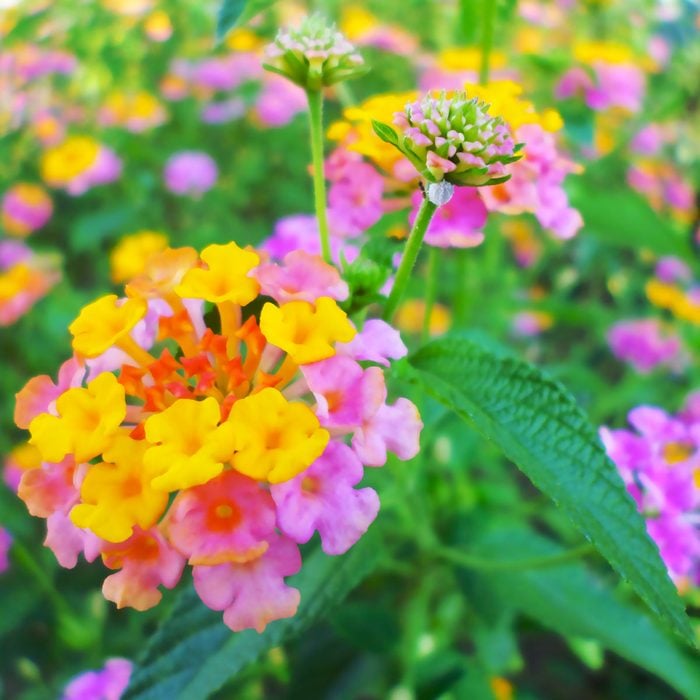
Best Pool Plant for a Container: Lantana
Here’s another double-duty plant, because lantana not only looks great in a pot, but lends bright color and intriguing fragrance to its surroundings. A vigorous perennial or even shrub in warm climates, lantana is grown as an annual in the North, where clusters of butterfly- and hummingbird-attracting flowers cover it all summer.
It comes in a range of bright colors — yellow, orange, pink, red, white, purple — and blushing multicolors. Grow in Zones 8-11.
10
/
10
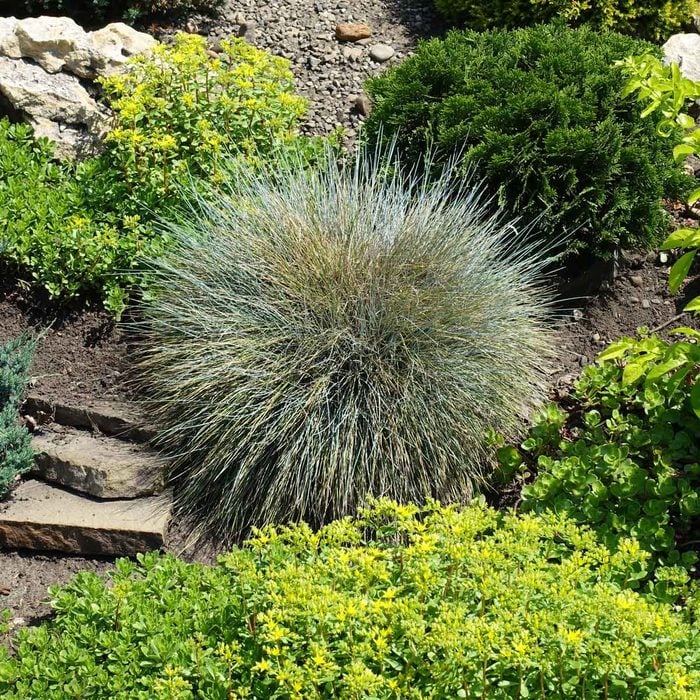
Best Pool Plant for Edging: Dwarf Blue Fescue
At less than a foot tall, ‘Elijah Blue’ is one of the shortest ornamental grasses, so it makes a good edging plant. Its blue-gray foliage, mounding habit and buff-colored plumes make it especially attractive when massed. And it’s a great companion for colorful perennials like Rudbeckia, Echinacea, daylily and salvia. It’s also drought tolerant. Grow in Zones 4-11.
