


Whether you're taking a walk in the park or simply admiring your neighbor's landscape, it's nice to be able to identify different tree species. Who knows? You might want to plant a few of them in your own yard. If you're ready for some fun sleuth work, here's what to look for.
How to Identify Different Types of Trees
1
/
12
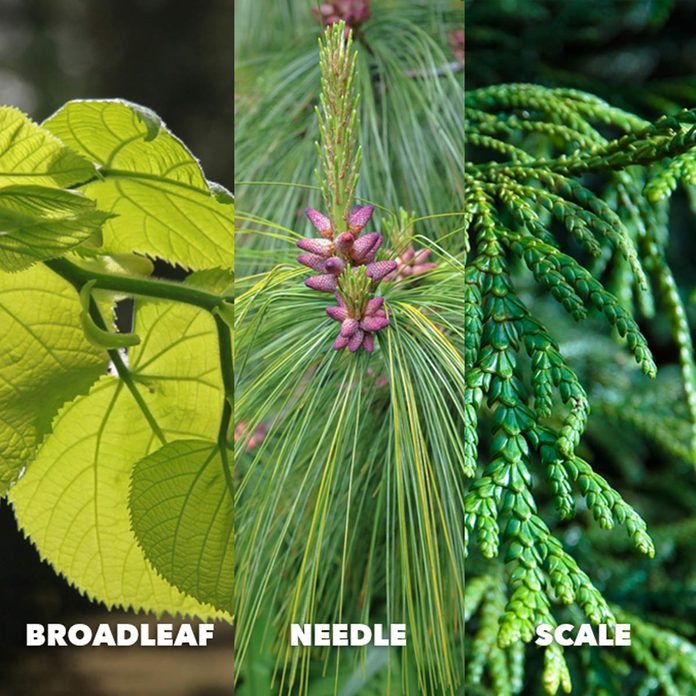
Leaf Identification Type
The starting point for most people when identifying trees species is the leaves. There are three basic leaf types: needles, scales and broadleaf. Most evergreens have needles or scales, while most broadleaf trees are deciduous, meaning they drop their leaves when dormant. However, there are exceptions. Larch has green needles that turn color in fall and drop off the tree. Live oak is an evergreen tree with broad, elliptical leaves.
Try the Arbor Day Foundation’s online tree identification tool.
2
/
12
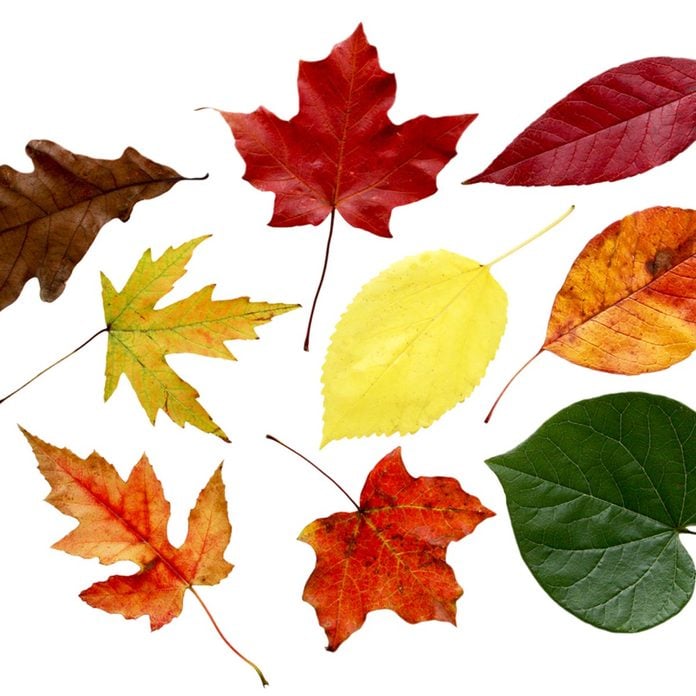
How to Identify Trees By Leaf Shape
The shape of a leaf can also give clues when identifying broadleaf tree species. Common leaf identification shapes include ovate (egg shaped), lanceolate (long and narrow), deltoid (triangular), obicular (round) and cordate (heart shaped). There is also the palm-shaped maple leaf and the lobed oak leaf, two of our most recognizable leaf shapes.
3
/
12
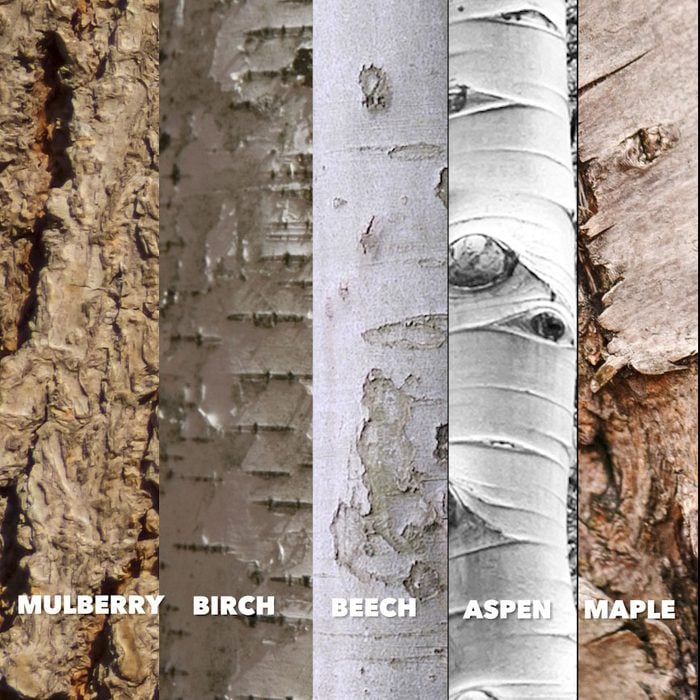
How to Identify Trees By Bark Color
Ask most people to describe a tree’s bark and they’ll say “gray” or “brown” and leave it at that. While many tree species indeed have gray bark, some have bark that is cinnamon (mulberry), pure white (birch), silver (beech), greenish white (aspen) or copper (paperbark maple) in color.
4
/
12
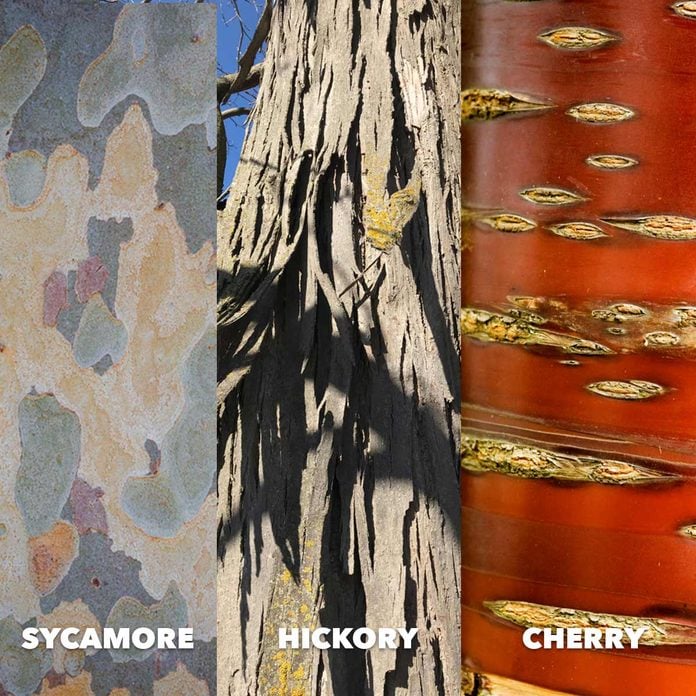
How to Identify Trees By Bark Texture
There are many variations in texture between different tree species, as well. Bark can be furrowed (cottonwood), scaly (sycamore), peeling (hickory), smooth (beech), shiny (cherry), papery (birch) or warty (hackberry).
5
/
12
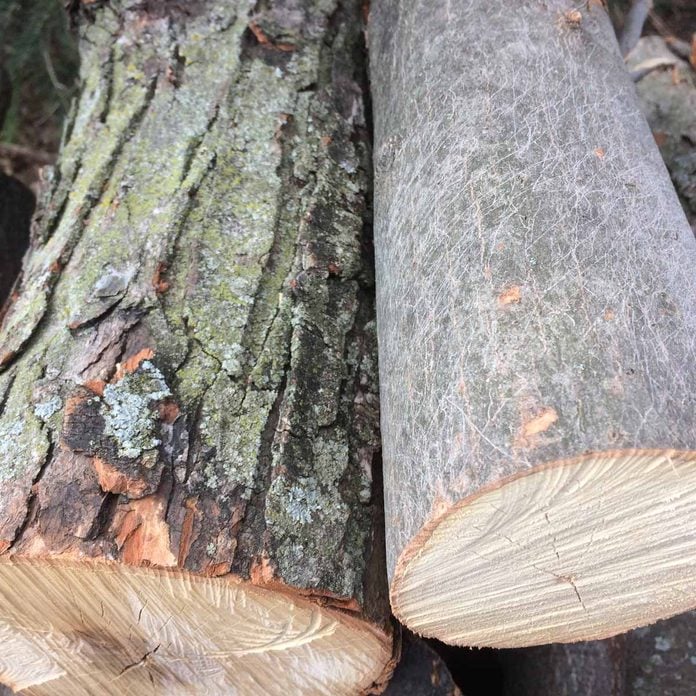
Bark Variations With Age
Often the color and texture of the bark change as the tree matures. This is most noticeable on the trunk—the oldest part of the tree. Silver maple, for example, will go from smooth and silver to furrowed and gray and black as it grows older, as the photo shows.
6
/
12
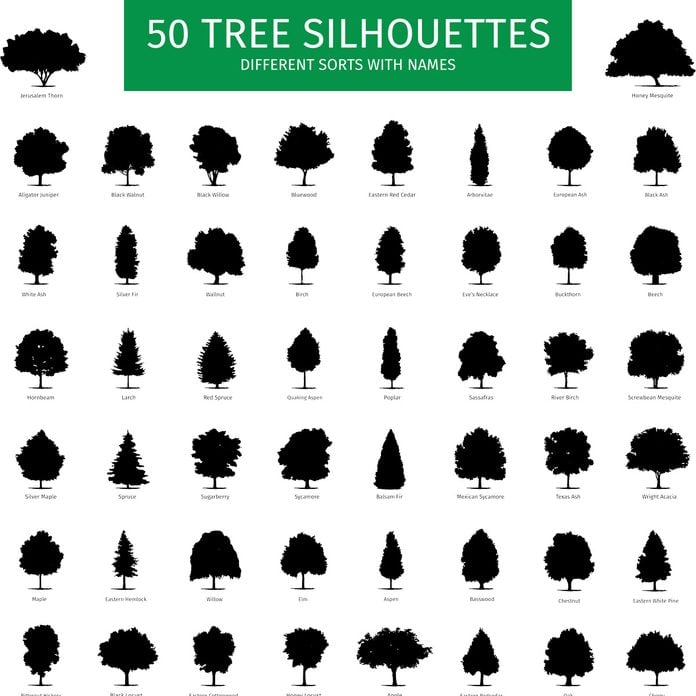
How to Identify Trees By Tree Shape
Some trees have a distinctive shape. Think of the vaselike habit of an American elm tree or the pyramid silhouette of a sweet gum. In some cases, the habit changes as the tree matures—often becoming more rounded or irregular—but shape can help with identifying younger trees that are grown in open space (as opposed to a wooded setting, which encourages taller, narrower growth).
You can train a tree’s shape to your liking. See our tree pruning techniques.
7
/
12
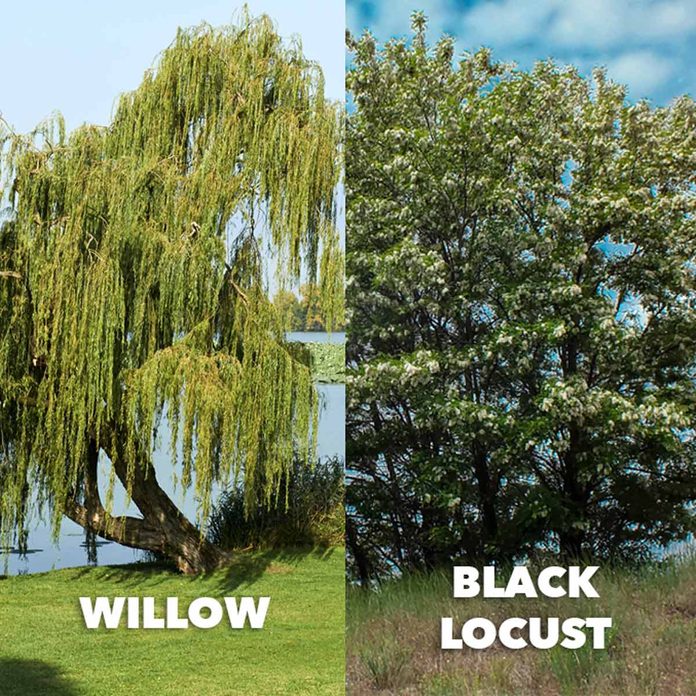
Tree Size and Location: What tree is this?
If you’re trying to identify trees species in a natural setting, you can study the site. Nature knows what it’s doing, distributing trees where they will thrive. Some species, such as willow, are more likely to grow near water. While others, such as black locust, are more upland tree species. A mature tree’s size can also help you whittle down the possibilities. If it’s 60 feet tall and 40 feet wide, you know it’s more apt to be an oak than a dogwood.
8
/
12
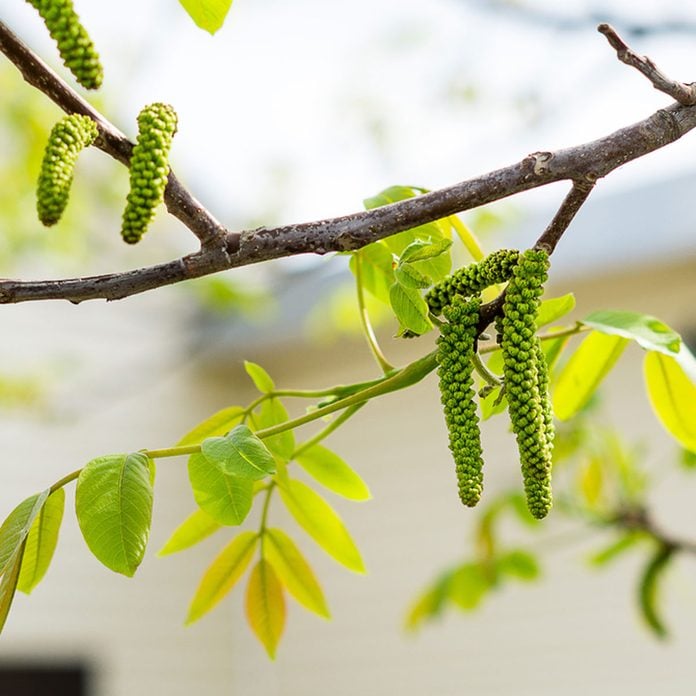
How to Identify Trees By Flowers
While there’s a whole class known as flowering trees (everything from crabapples to magnolias), other tree species have inconspicuous flowers. Either way, flowers can help with identification. First, consider the color (although this isn’t a fail-safe method, since plant breeders have expanded the color palette in the cultivars they have developed). More helpful is to consider when the flower appears and what it looks like. Flower types include single blooms, clustered blooms or catkins (pictured), which are dense hanging spikes that look like tassels. Many trees bloom in spring, but some flower in summer or even early fall, helping you eliminate certain tree species as you investigate.
9
/
12
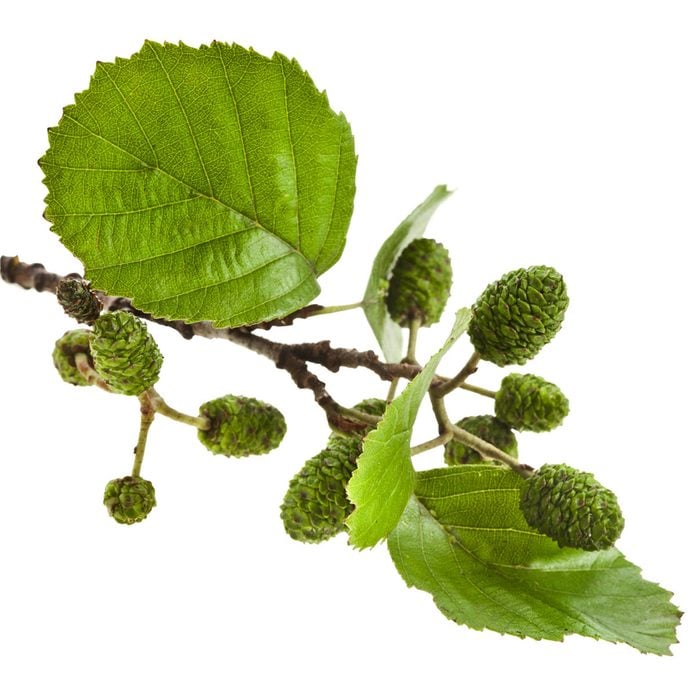
How to Identify Trees By Fruit Type
When you think of fruit, you probably think of larger fleshy fruits with seeds inside (apples, pears). But fruit is just a seed dispersal mechanism, so there are other variations to consider. Think of the papery winged fruits of maple, the nuts of chestnut, the acorns of oak, the catkins of willow, the berries of hawthorn and the cones of alder (pictured). All can help you pinpoint a tree species.
10
/
12
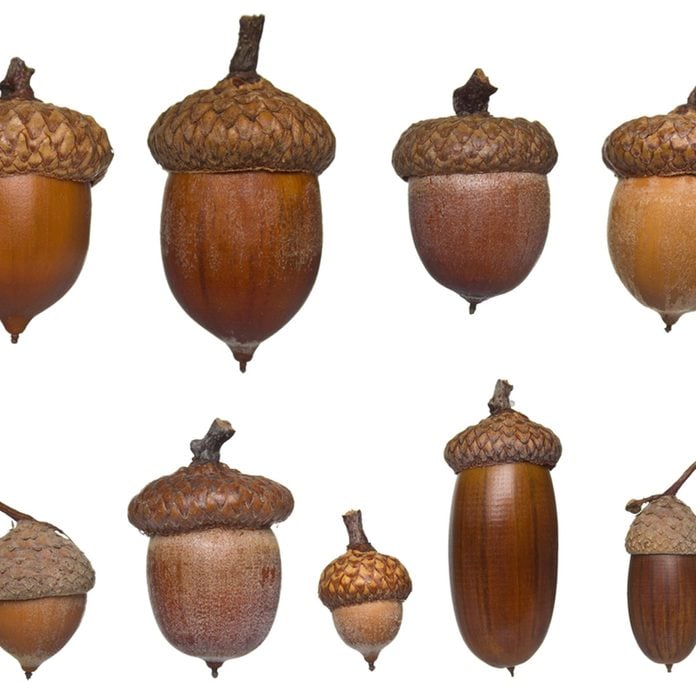
How to Identify Trees By Seed Comparison
The seeds themselves can help with more specific identification. Say you have an oak tree but you’re not sure what kind. Leaf shape is highly variable on oaks, even on the same specimen. A better indicator may be the acorns. Get your hands on a good guide such as The Audubon Society Field Guide to North American Trees (a mainstay in bookstores for decades). Then compare the acorns to what’s pictured in the guide. You’ll find that acorns can be small (black oak), big (bur oak), oblong (English oak) or barrel shaped (red oak). Some are even striped (pin oak). The cap that partially encases an acorn is also unique in size, shape and texture.
11
/
12
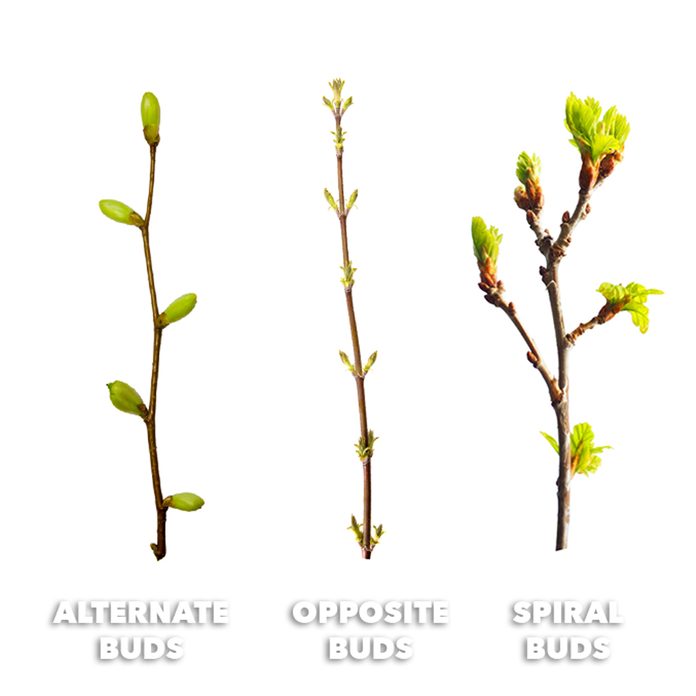
How to Identify Trees By Leaf Bud Arrangement
Buds can be helpful in identifying tree species in winter, when deciduous trees are without foliage. Those at the end of a twig are called terminal buds, while those growing along the twig are lateral buds. The arrangement of these lateral buds can help establish a tree’s identity. Alternate buds, found on elms, are arranged in alternating pairs on opposite sides of the stem. The opposite buds of maple are directly facing each other on the stem. And spiral buds whorl alternately around the stem, as seen on oaks.
12
/
12
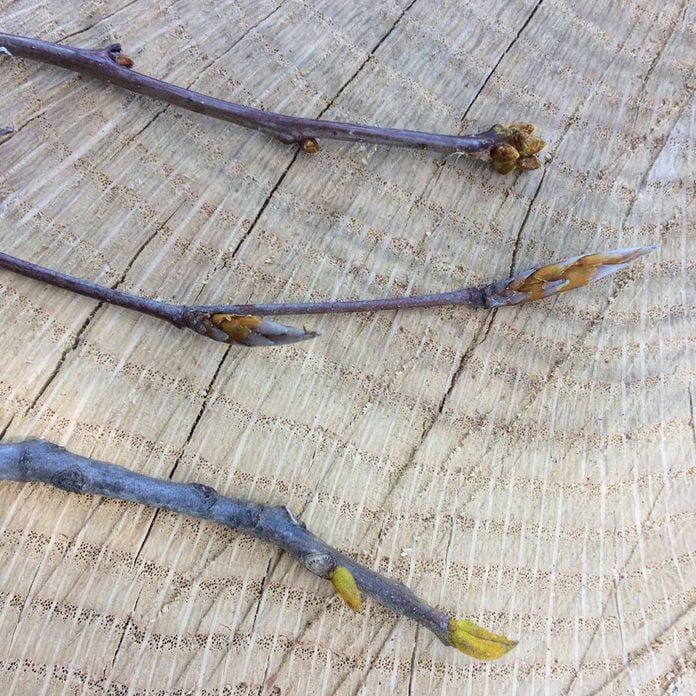
How to Identify Trees By Leaf Bud Appearance
Some trees have distinctive buds, such as the sharply pointed buds of beech and the small, clustered buds of oak, which are covered by protective scales. Bitternut hickory is hard to miss—just look for the sulfur-yellow buds when the tree is dormant.
Thinking of planting a tree? Don’t make these tree-planting mistakes.
