


Stapling shingles may be an easy roofing solution, but is not the most effective way to attach shingles to a roof. Learn more about the problems here.
Can You Staple Shingles to Your Roof?
While it used to be common practice to use staples to attach asphalt shingles to a roof, this has been a prohibited method of attachment in Minnesota since 2003. Today, staples are considered an inferior method of attaching shingles to a roof, but it’s easy to understand why roofers like staples.
- Staple guns are smaller and better balanced. Coil nail guns are literally fed with a coil of nails, and the holder for the nails makes the gun much bulkier.
- Staples are far less prone to jamming up in a gun than nails.
- Staples cost less money.
- Staples are much more compact; a roofer can hold a bunch of sticks of staples in their pocket and reload their gun very quickly. Nail coils take up a lot more space, they take more time to reload, and they need to be treated carefully; if a coil of nails gets dropped or stepped on, it deforms the coil and makes it much more prone to jamming in the gun.
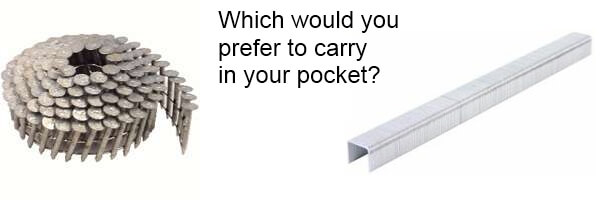
Staples are used because they make the roofer’s job easier; they don’t equate to a better installation.
The problem with stapled shingles is that they have a much greater chance of coming loose or blowing off the roof because staples are so easy to install improperly. When a roofer holds a staple gun and fastens a shingle, the staples will have a tendency to be driven at an improper angle.
Staples are often improperly installed because it’s somewhat awkward to hold a staple gun completely perpendicular to the shingle. For someone who is right handed, it’s much easier to shoot the staples on the left side of their body at an angle similar to a forward slash, and the staples on the right side at an angle similar to a backward slash. The two super-crude diagrams below should help to illustrate what I’m talking about.
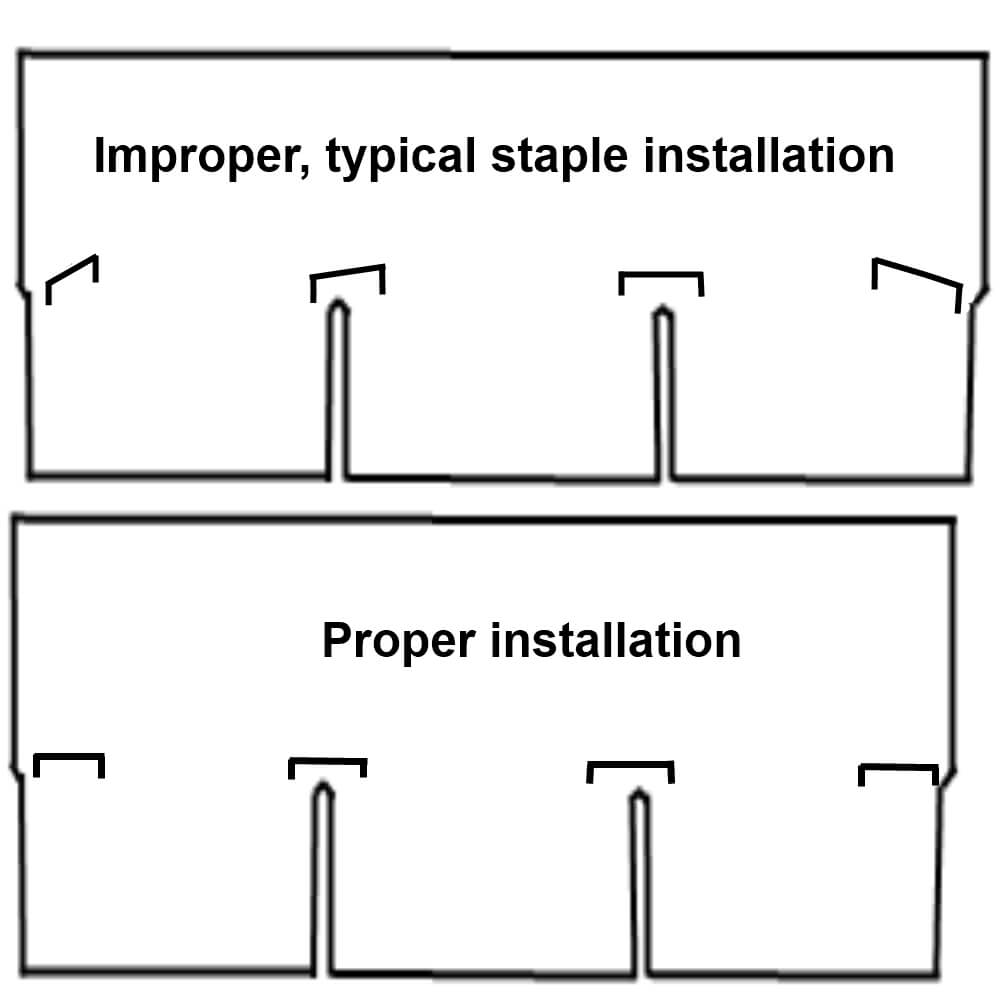
When staples are installed properly, they work fine, but they’re just too easy to install wrong. This issue doesn’t happen with nails, because they have a round head; as long as a nail is driven in to a shingle straight, it doesn’t matter which way the nail gun is turned. To know if a roof has been installed with staples, you can sometimes see the outline of the staples pushing through the shingle above.
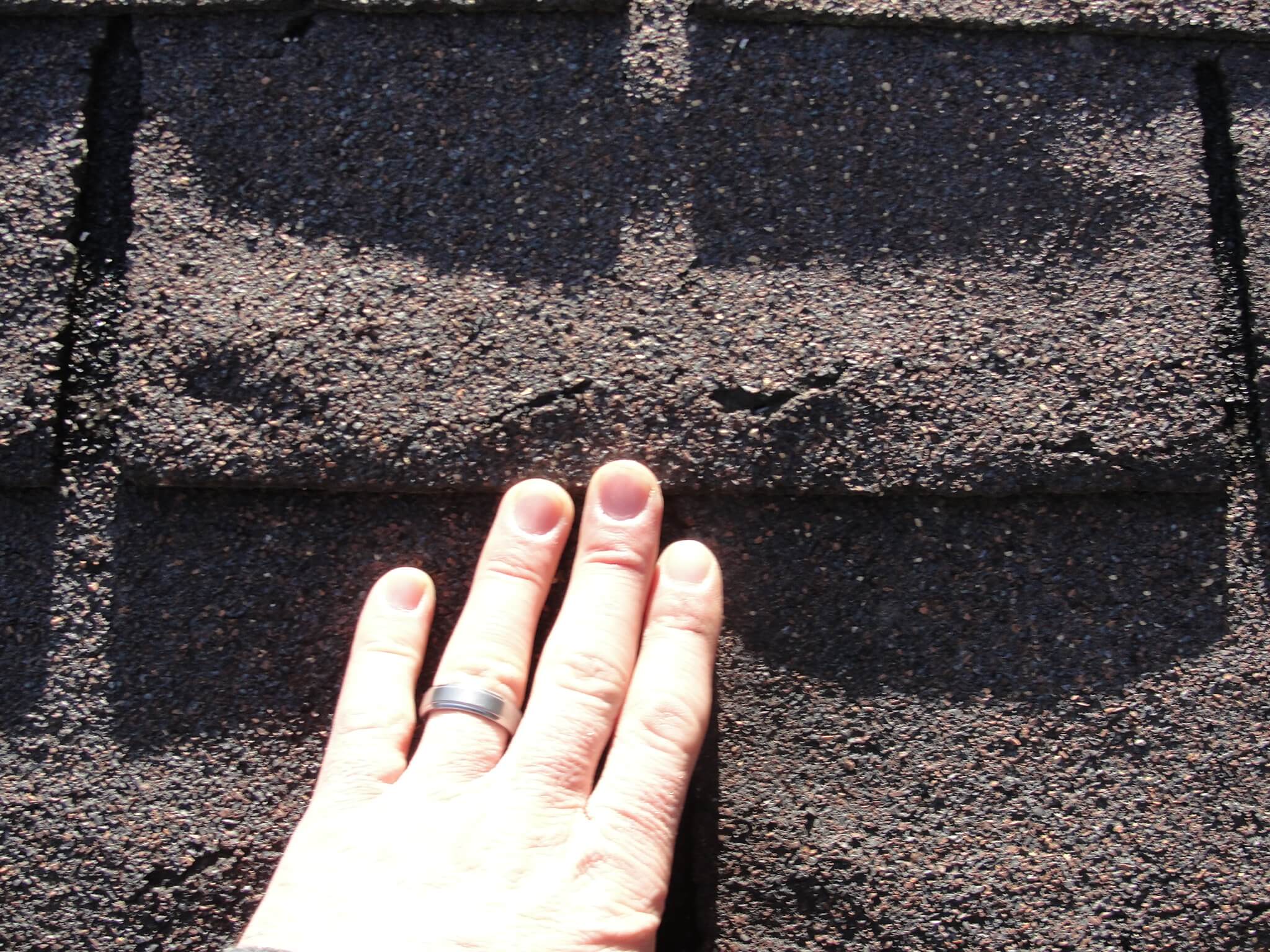
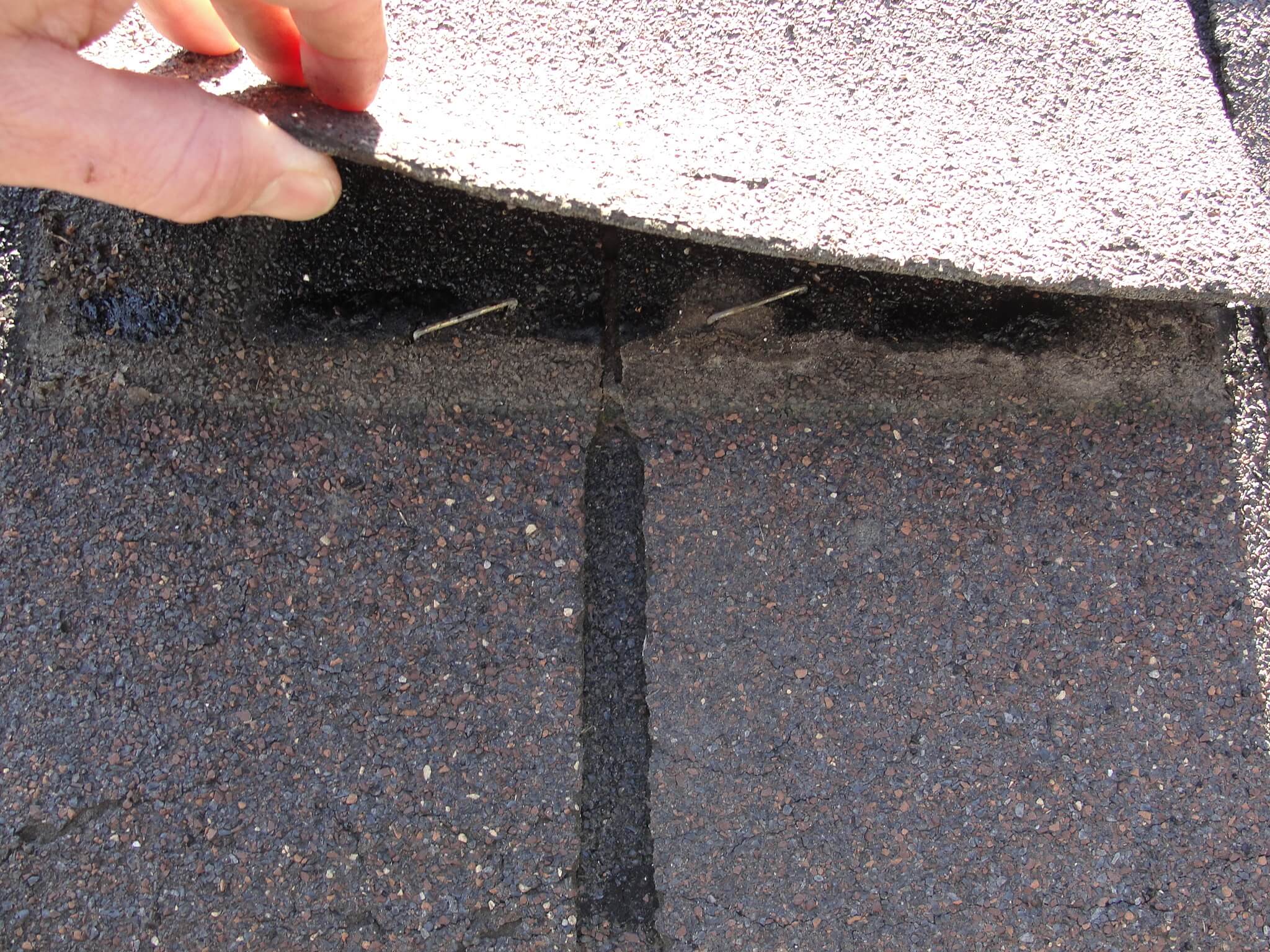
Also notice, these staples aren’t perpendicular to the shingle. This is the installation problem that typically happens with staples.
If you have a roof that’s been installed with staples, is it a defective installation? If it was installed after 2003, technically yes, because staples aren’t allowed any more. If every staple was perfectly installed, the installation would work just as well as perfectly installed nails, but I’ve found improperly installed staples at every stapled roof I’ve inspected. If you have a roof with stapled shingles, you don’t need to replace the shingles as a rule of thumb, but you’re taking on some risk. If shingles start blowing off on a regular basis, you’ll probably want to have the roof covering replaced. This will be less costly and less of a hassle in the long run than having to deal with constant roof repairs.
When I inspect a house with shingles that have been improperly installed, I tell the same thing to my buyers; the shingles don’t need to be replaced, but they might cause some headaches. If shingles have already started coming loose and obvious repairs have been made, I typically recommend replacement of the roof covering.
P.S. – Special thanks to roof guru and fellow home inspector Mike Moser for always knowing the answer to any technical roofing question right off the top of his head.
Reuben Saltzman is the President of Structure Tech Home Inspections
