Planning the ideal garden could be stressful. The quest for perfection may overwhelm beginning gardeners, from deciding the precise requirements of every plant to choosing matching colors. Of course, you want a gorgeous array of seasonal flowers, but isn’t gardening supposed to be fun?

To keep the joyful spirit of gardening alive, many TikTok plant lovers are turning to chaos gardening—a carefree, creative, and minimalist gardening practice that embraces imperfection. This viral trend skips rigid plans in favor of scattering mixed seeds and letting nature do the work, often resulting in a vibrant, low-maintenance space that supports biodiversity in gardens and mimics wild garden design.

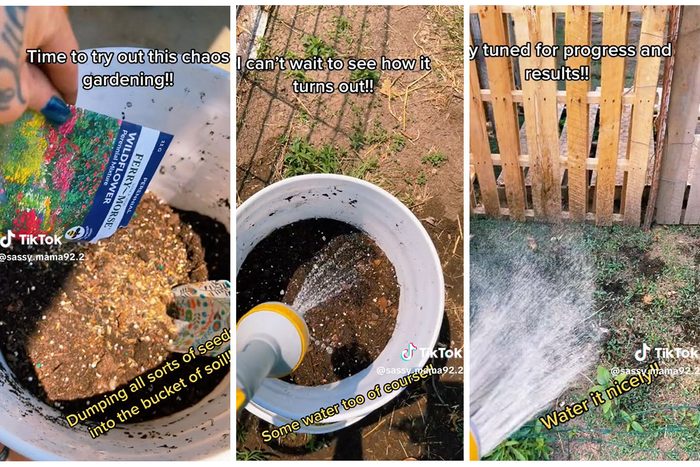
The term was popularized by TikToker Sassy Mama (@sassy.mama92.2), whose video introducing this natural gardening tip has racked up nearly 3 million views. Check it out for yourself below—then learn how to start your own beautiful chaos garden.

What Is Chaos Gardening?

A Black Rubber Hose With A Bright Yellow Nozzle Randomly Coiled Across Terracotta Outdoor Tiles And Grass
Kara Knight/Getty Images

Chaos gardening is basically the practice of creating your own flower seed mix and strewing it in your garden. In her video, Sugar Mama adds potting soil to a bucket, then pours in full seed packets of various flowers, including wildflower mixes, a pollinator-attracting mix, blue tansy, cosmos, zinnias and sunflowers.

Many chaos gardeners also prioritize native plants, which help support local ecosystems and promote biodiversity in gardens. From there, Sugar Mama simply stirs the seeds together to randomize their placement—a key aspect of this relaxed, natural gardening method that favors spontaneity over structure.

Importantly, chaos gardening differs from guerrilla gardening. While both approaches use random assortments of flowers and share similarities with seed bombing, chaos gardening is typically done on one’s own property. And although the inclusion of native plants isn’t a strict requirement, it’s a widely encouraged practice within this wild garden design philosophy.

What Does a Chaos Garden Look Like?

Chaos gardening yields a fun, surprising and dynamic garden. Wildflower enthusiasts and fans of the English country garden may be particularly drawn to this method of gardening, as it mimics the natural appearance of wildflower or country garden patches.

One of the unexpected perks of chaos gardening is the potential for hybrid flowers to emerge. For intermediate gardeners wishing to play with plant combinations and produce their own floral variations, this element of surprise makes it an interesting option. Still, this basic gardening technique is ideal for novices, given its simplicity and spontaneity. You need not be an expert to appreciate the vivid, natural beauty—or the diversity that chaos gardening adds to your outside area.

How Can I Start Chaos Gardening?

Getting started with chaos gardening is refreshingly simple. Really, all you need is a range of seeds, a bucket, and some potting soil. Sassy Mama’s method is to combine the soil and seeds, then scatter spoonfuls of the mixture throughout your garden. Water frequently and pat down the soil gently. That’s all!

To get better outcomes, try choosing seed types with comparable soil and sunlight requirements. Depending on the state of your area, for instance, choose all full-sun or all partial-sun flowers. Another excellent approach to help your chaotic garden flourish with least effort is to use tough, low-maintenance plants.

Above all, keep an open mind. Let go of strict expectations as chaos gardening is a playful and experimental kind of minimalist gardening. Whether your goal is to draw pollinators, increase biodiversity in your garden or just appreciate the surprise of what grows, this approach honors the happiness of trial and error.

Considerations for Chaos Gardening

While chaos gardening is low-effort by design, a few thoughtful considerations can help you strike the right balance between wild beauty and long-term success. Before throwing those seeds, consider these natural gardening tips:

  • Know your light and soil conditions: Even in a free-form garden, it is beneficial to match plants with comparable sun and soil needs. Choose sun-loving flowers such as cosmos, zinnias or poppies if your garden receives full sun. Species like nasturtiums or calendula are better suited for shadier settings.
  • Choose native and pollinator-friendly plants: Choosing native species increases local pollinators’ survival and promotes biodiversity in your garden. For a genuinely self-sustaining area, combine wildflowers and naturally reseeding plants.
  • Don’t overcrowd your seeds: While too many seeds might fight for resources, it’s easy to spread widely. Follow standard spacing guidelines, even when using this minimalist planting technique, to prevent slowing growth.
  • Embrace the unexpected: Your garden will be unique, which is the goal. Every season will bring something fresh. Some plants may flourish while others wither. Release control and enjoy the changing, untamed garden design that develops.
  • Maintenance without micromanaging: Though chaos gardening calls for minimal maintenance, little sporadic weeding or pruning could retain airflow and stop invasive species from dominating. Consider it as a mild direction instead of rigorous control.

Top Plants for Successful Chaos Gardening

These great plant selections will enable your chaotic garden to thrive:

Self-seeding annuals

Perfect for maintaining the wild, spontaneous mood of a chaos garden, these plants easily shed seeds and sprout on their own every season.

  • Cosmos: Tall, dainty flowers that draw butterflies and flourish in full sun.
  • Calendula: Cheery orange blooms that reseed readily and are easy to grow.
  • Nasturtiums: Delightfully spreading edible flowers with trailing vines.
  • Zinnias: Bright, colorful flowers that bloom all summer and invite pollinators.

Pollinator-friendly flowers

Natural gardening depends on helping bees, butterflies, and other helpful insects. These flowers are environmentally aware and lovely.

  • Echinacea (Coneflower): Hardy native perennials with nectar-rich flowers.
  • Black-eyed susan: These golden flowers draw a wide range of insects and are resilient and drought-tolerant.
  • Blue tansy: A unique, aromatic flower that attracts pollinators and looks great in mixed plantings.
  • Borage: Not only do bees love it, but its edible blue flowers also add a unique touch.

Grasses and wildflowers

These enhance the “untamed” impression of a wild garden design and offer structure and seasonal interest.

  • Yarrow: It has feathery foliage, flat-topped blooms, and a high resistance to drought.
  • Coreopsis: A cheerful wildflower with long blooming cycles.
  • Lupine: Naturally fixes nitrogen in the soil and adds vertical interest.
  • Native ornamental grasses: Promote habitat diversity while adding movement and texture.

Edible and functional plants

Including some herbs or veggies will help your chaotic garden to be both lovely and useful.

  • Dill: Draws pollinators and provides a feathery texture.
  • Chard: Vibrant stems provide visual interest.
  • Arugula and lettuce: They are fast-growing greens that add leafy variety and reseed readily.

FAQ

Is chaos gardening good for the environment?

Yes, chaos gardening is inherently eco-friendly. Choosing native species and pollinator-friendly plants will enable you to promote biodiversity in your garden, attract bees, butterflies and birds, and lower the demand for synthetic inputs such as fertilizers or pesticides.

Sources:

Missouri Botanical Garden: “Sustainable Gardening”