A How-To Guide on Anode Rod Replacement
Updated: May 26, 2023Double the life of your water heater with this simple repair
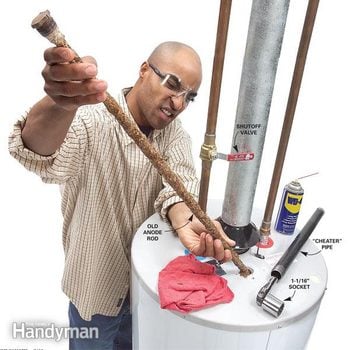






Remove the old anode rod
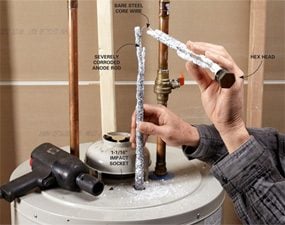
Most water heater tanks are steel with a thin glass lining to protect the metal from corrosion. Since the lining eventually cracks, tanks have a second line of defense against rust: a long metal “anode rod” that attracts corrosive elements in the water. When the rod itself becomes so corroded that it can no longer do its job, the tank soon rusts out, leaks and needs replacement. However, if you replace your water heater anode rod before it fails, about every five years, you can double the life of your water heater.
Rods are made from magnesium, aluminum or aluminum/zinc alloy. Aluminum replacement rods are sold at home centers. In most cases, the hexagonal head of the rod is visible on the top of the water heater. If you don’t see the hex head, check your owner’s manual. The rod may be under the water heater’s sheet metal top or connected to the hot water outlet nipple. (A few newer plastic-lined tanks have no anode rods to replace.)
Before you get started, close the shutoff valve, turn on the hot water at a faucet to relieve pressure, and turn off the electricity or gas to the heater. Open the drain valve near the bottom of the tank and drain out several gallons of water. Caution: The water is hot!
Drain some water from the tank to check for rust. It’s time for a new water heater if you see rusty flakes (not just orange water, which can come from corroded pipes or well water). If the water is clean, remove the rod to check its condition.
To loosen the rod, you’ll need an air compressor, a 1/2-in.-drive impact wrench and a 1-1/16-in. socket. If you don’t have an impact wrench, go buy a cheap one for about $30. Even with a breaker bar, it can be nearly impossible to break the anode rod free.
Turn off the power or gas. Then close the cold-water valve at the top of the tank and drain off several gallons. Loosen the hex head with the impact wrench, but unscrew it the rest of the way by hand.
Hint: The hex head may be under a plastic cap. Uncover it, then pull it up and out to check its condition (Photo 1).
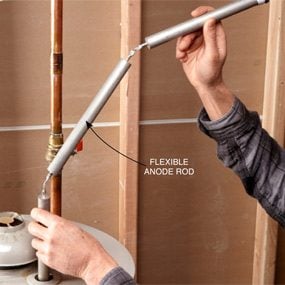
Buy a new anode rod at a home center or online (see sources below). Install a flexible rod if you have less than 44 in. of clearance above your heater (Photo 2). Turn on the water, the power or gas, and burp the air from the system. Check the condition of your anode rod every three years.
If the hex head is set below the top of the heater, you’ll need a 1-1/16-in. socket to reach it. If it protrudes above the top, you can use any type of wrench. Chances are your old anode rod will be frozen in place by corrosion. Douse the head with a spray lubricant such as WD-40 and give it a few minutes to penetrate. You may also have to slip a “cheater” pipe over the wrench handle to increase your torque. The weight of the water in the tank is usually enough to keep the entire heater from turning. But if it begins to move, have a helper (or two) hold it in place.
When the threads break free, stop turning and look for water around the hex head. If you see leakage, drain the tank further. If you don’t have enough overhead clearance to pull the rod out of the tank, bend it as you remove it. Then when you buy a new rod, choose a flexible, “segmented” version. Smear Teflon pipe thread sealant on the threads of the new rod before you install it. Don’t use tape, since it can reduce the effectiveness of the rod. Before you turn on the water and electricity or gas, drain another gallon out of the tank to flush out any remaining debris.
Tips for buying an anode rod
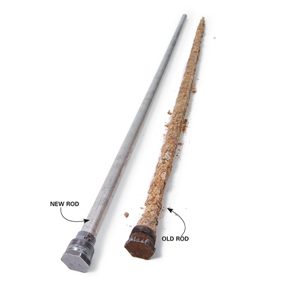
- A magnesium water heater anode rod protects your tank better but doesn’t last as long as an aluminum/ zinc rod.
- Aluminum/zinc rods anode are cheaper and are recommended if you have smelly water. But consult a water treatment specialist before switching to an aluminum rod.
Required Tools for this Project
Have the necessary tools for this DIY project lined up before you start—you’ll save time and frustration.
- Air compressor
- Bucket
- Impact Wench
- Rags
- Socket/ratchet set
Required Materials for this Project
Avoid last-minute shopping trips by having all your materials ready ahead of time. Here’s a list.
- Anode rod
- Cheater pipe (steel pipe that fits over socket wrench handle to increase torque)
- Spray lubricant
- Teflon pipe thread sealant