

Stop Leaks in Plumbing Joints
Updated: Apr. 02, 2024
Foolproof methods for connecting valves, faucets and sinks, and drain parts.






Introduction
The best time to fix a plumbing leak is before it happens, by properly connecting water supply and waste line fittings. Learn the tricks that pros use to make leakproof connections.Tools Required
- Adjustable wrench
- Slip joint pliers
- Wrench set
Materials Required
- Flexible supply tubes
- Teflon pipe joint compound
- Teflon tape
Project step-by-step (11)
Use two types of Teflon pipe joint compound on threaded joints
Wrap threads with plumbers tape
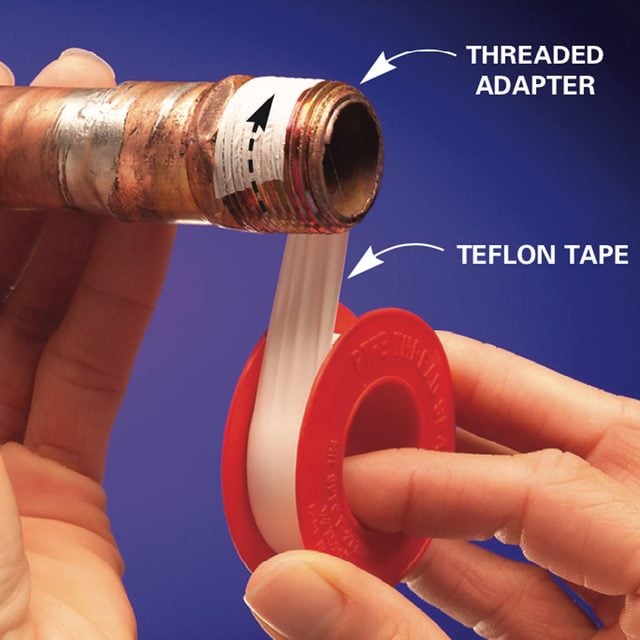
Wrap the plumbers tape around the pipe clockwise.
Add pipe joint compound
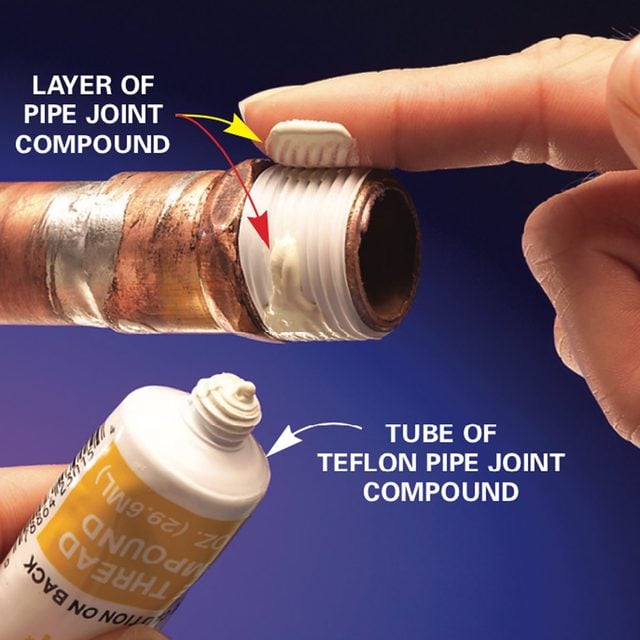
Smear a little pipe joint compound on the plumbers tape.

Tighten the connection
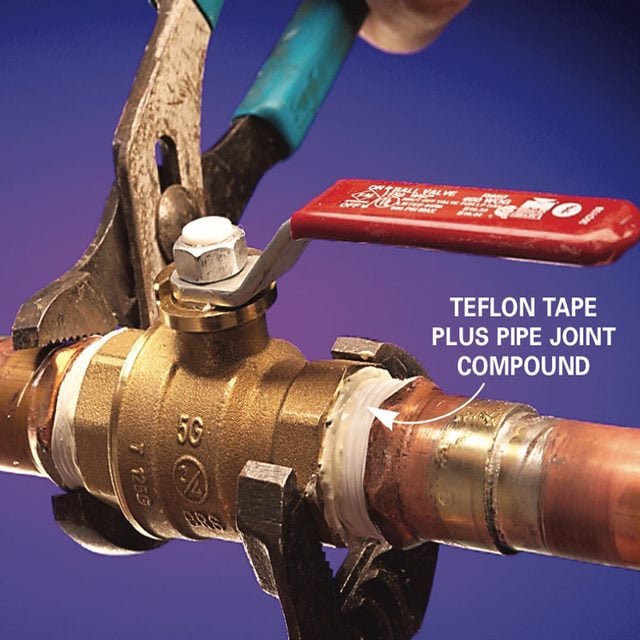
Using two wrenches, tighten the connection over the joint compound and plumbers tape.
Why use plumbers tape and pipe joint compound
Connections that rely on threaded pipes and fittings are prone to leaks if they’re not sealed with either Teflon tape or Teflon pipe joint compound. Careful plumbers use both pipe joint compound and teflon on every joint for extra security. They don’t want to come back.
Start by wrapping the male threads with Teflon tape (Photo 1). With the end of the threaded pipe facing you as shown, wrap the plumbers tape clockwise. Usually three layers is enough. Once in a while, you’ll run into a loose fitting that requires four or five wraps. Stretch and tear the tape to complete the wrap.
Spread a thin layer of Teflon pipe joint compound over the tape (Photo 2). If you’re working with plastic pipe, choose Teflon pipe joint compound that’s compatible with it. Then start the threads by hand before tightening the connection with wrenches (Photo 3). Wipe away the excess pipe joint compound.
Lubricate the ferrule on compression joints
Wipe pipe joint compound
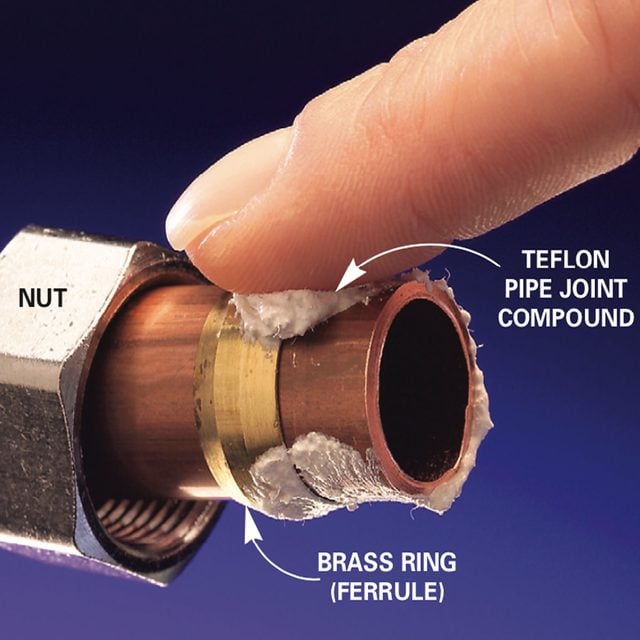
Lubricate the ferrule and brass ring with pipe joint compound.
Thread on valve pipe joint compound
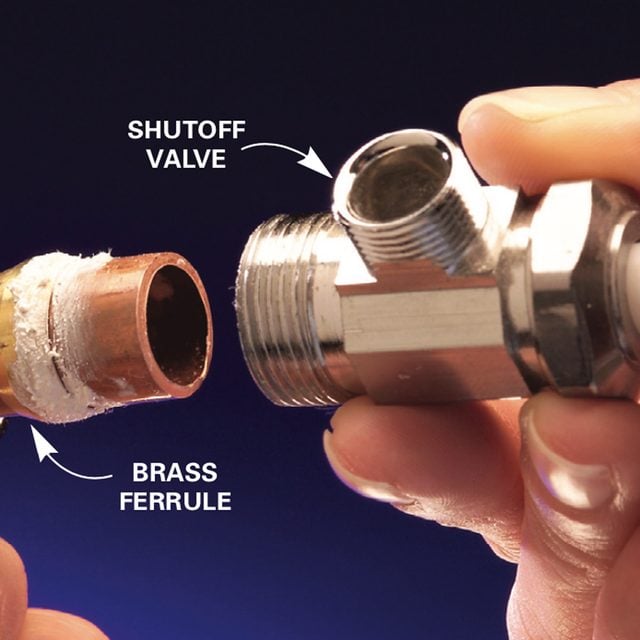
Pipe joint compound helps the brass ferrule seal to the valve.
Tighten the fitting
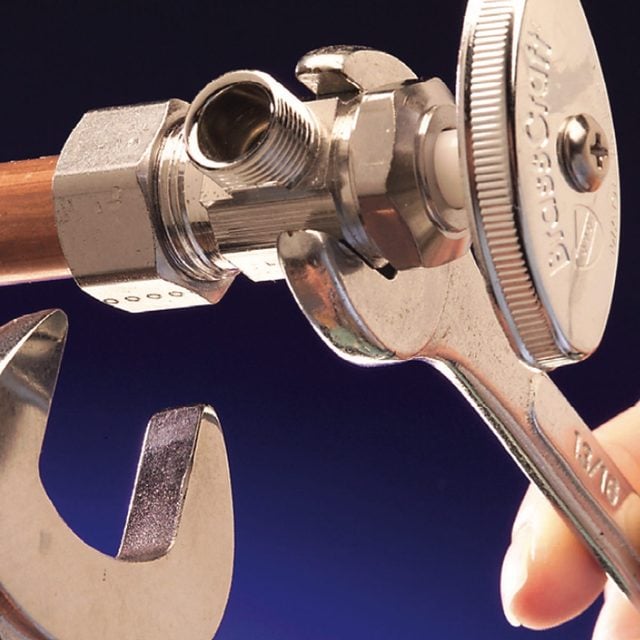
Tighten the compression fitting. The pipe joint compound provides a greater margin of safety. Compression joints are most common on shutoff valves, although you find them on other fittings as well. They have a brass or plastic ring (ferrule) that’s compressed into a recess when you tighten the nut, forming a seal. Lubricating the pipe and the ferrule with a bit of Teflon pipe joint compound (Photo 1) helps the ferrule slide along the pipe and squeeze tightly into the recessed fitting with less wrench pressure (Photo 2). Tighten compression fittings firmly with two wrenches to crimp the ferrule onto the pipe (Photo 3). Also make sure the pipe or tube goes straight into the fitting. Misalignment will cause a leak. If the fitting leaks after you turn on the water, try tightening the nut an additional one-quarter turn. This usually stops the leak.
Align slip joints precisely for a tight seal
Lubricate pipe
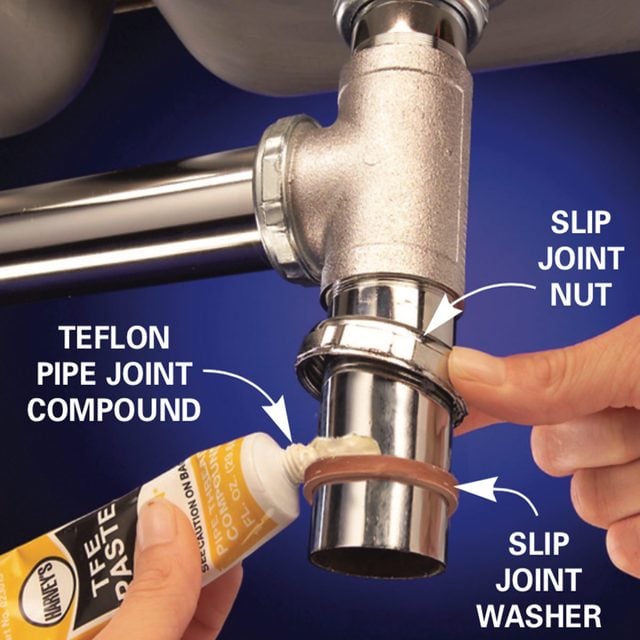
Pipe joint compound helps lubricate and seal waste line connections.
Assemble and align
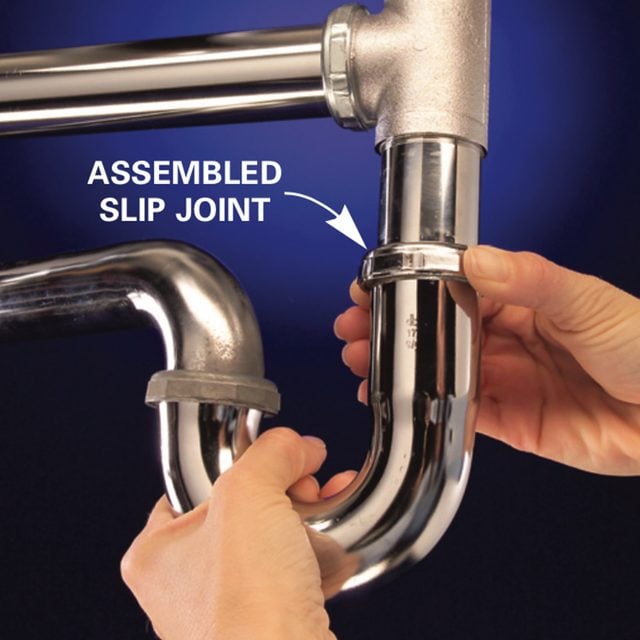
Hand-tighten all the joints, then align and lock the pipes in position with a slip joint pliers
Joints on chrome trap assemblies rely on rubber slip joint washers for the seal, which often leak. If you’re reassembling a chrome trap, buy new slip joint washers and nuts. However, new washers sometimes stick to the pipe, causing them to twist or distort as you push them tight with the slip joint nut. To avoid this, lubricate the drain tubing and slip joint with a little pipe joint compound (Photo 1). The compound helps the washer slide smoothly and creates a tighter seal.
Start the slip joint nut by hand, and twist it on until the threads are engaged correctly. Hand-tighten all joints first (Photo 2). Then adjust the trap parts until they’re aligned and pitched slightly for drainage. This is key; a misaligned joint will leak, even with new washers. Finally, use a large slip joint pliers to tighten the nuts an additional half turn.
Plastic trap parts use hard plastic slip joint washers for a seal. Make sure the flat part is against the nut with the tapered side facing the fitting.
Choose flexible supply tubes
Solid copper supply lines
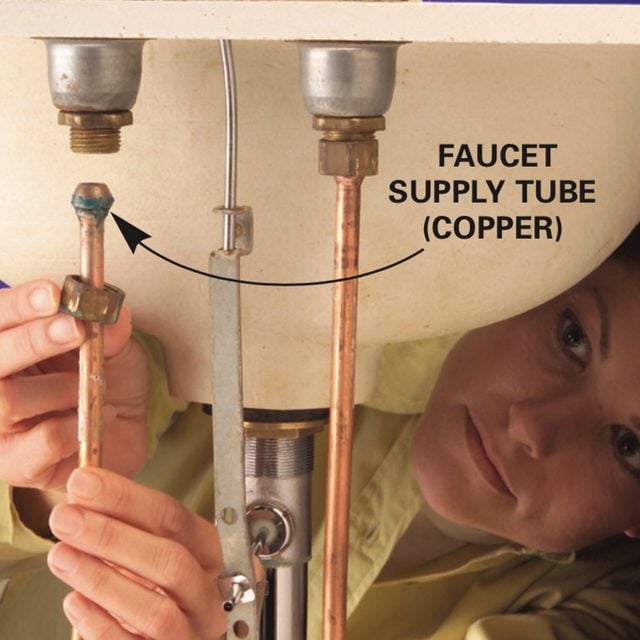
Avoid solid copper or chrome supply lines. They’re difficult to get right unless you’ve had lots of experience with them.
Flexible lines
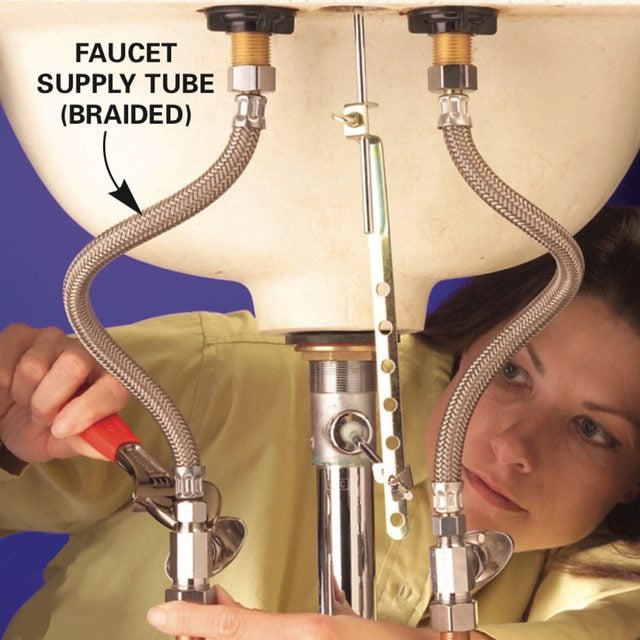
Braided, flexible supply lines are almost foolproof and don’t require any measuring and cutting.
Close-up of gasket
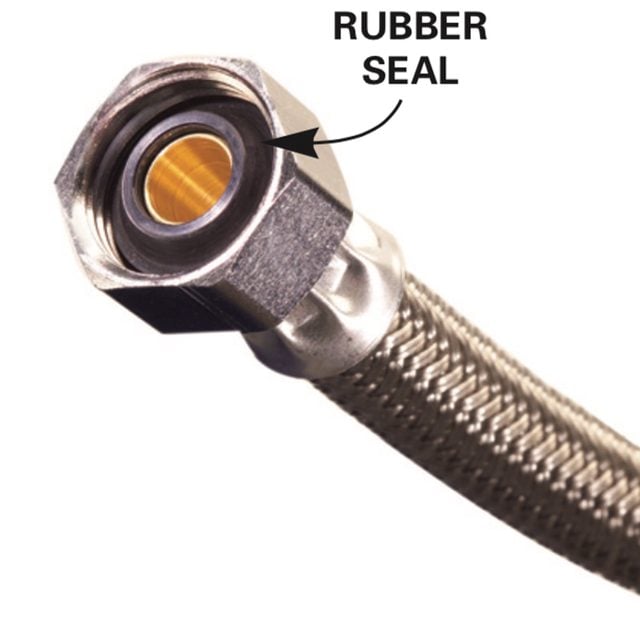
Flexible supply lines use rubber gaskets to seal the connections, and usually just need hand-tightening plus half a turn with a wrench
The skinny copper or chrome supply tubes used to connect faucets and toilets are tricky to cut, bend and align. But you don’t have to put up with them. When you’re replacing a faucet or toilet, use flexible supply hoses with a braided covering instead. They have rubber gaskets at each end and don’t require much force to seal. They’re available in many lengths and are flexible enough to fit almost any configuration. The only trick is to buy a connector with the correct size nuts on the ends. Take your old tubing and the nuts on each end along with you to the store to be sure of an exact match. Make sure you purchase a water supply line with metal or reinforced plastic nuts on each end to prevent disfiguring or breaking them when tightening.
Start the nuts carefully and hand-tighten. Then tighten an additional half turn . Avoid overtightening. It’s easy to tighten the nuts a little more if the joint leaks. Find and repair hidden plumbing leaks.
