Log in to enjoy membership benefits from The Family Handyman.
Sign up today for FREE and become part of The Family Handyman community of DIYers.
Member benefits:
Use these simple tips to make your workshop work smarter, cleaner, more efficient and more comfortable. Most of these tips use materials you have on hand and take less than 10 minutes to implement.
A double layer of foam carpet pad makes a luxurious but inexpensive anti-fatigue mat beside workbenches and power tools. Cut the pad to size with a utility knife, scissors or tin snips. To avoid tripping and to keep the edges from curling, tape down the perimeter with packing or duct tape.
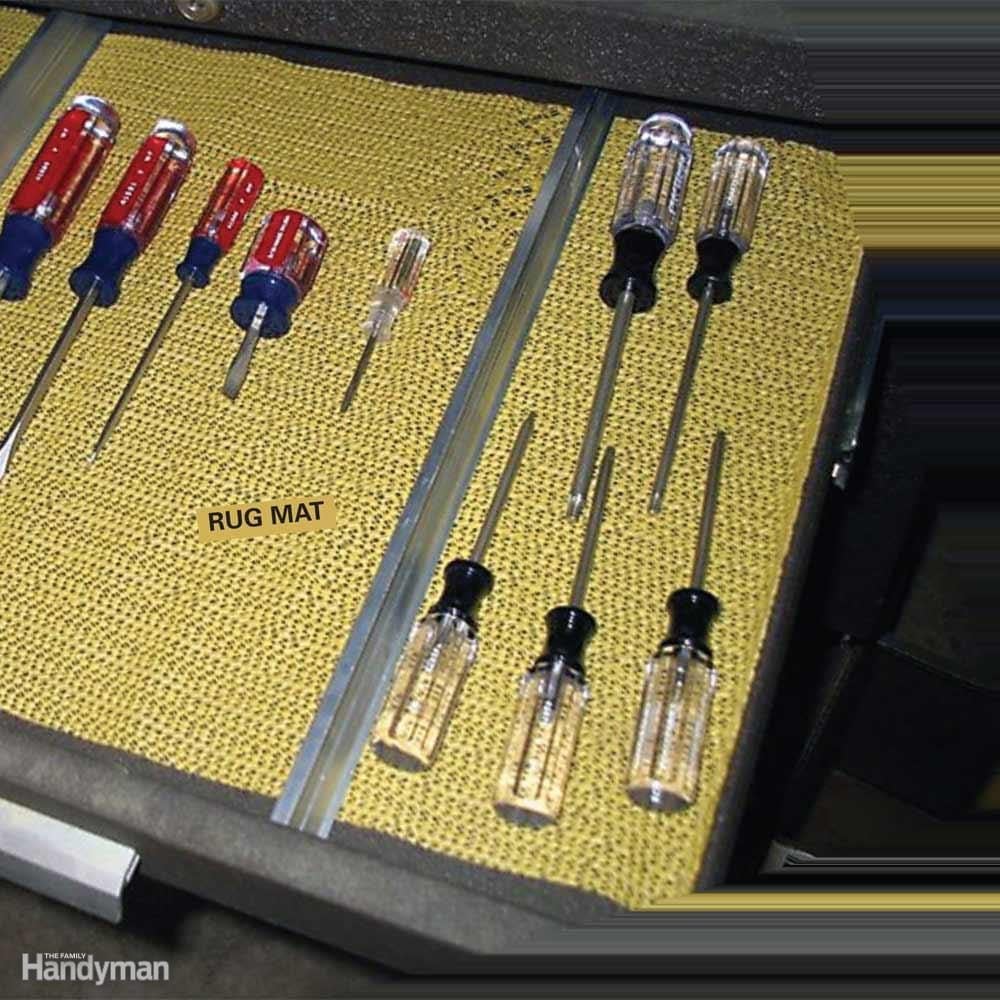
Rubbery shelf liner works great in toolboxes, but there's a cheaper alternative. Cut a nonslip rug mat (at discount stores) to fit any size drawer and keep tools from sliding around.
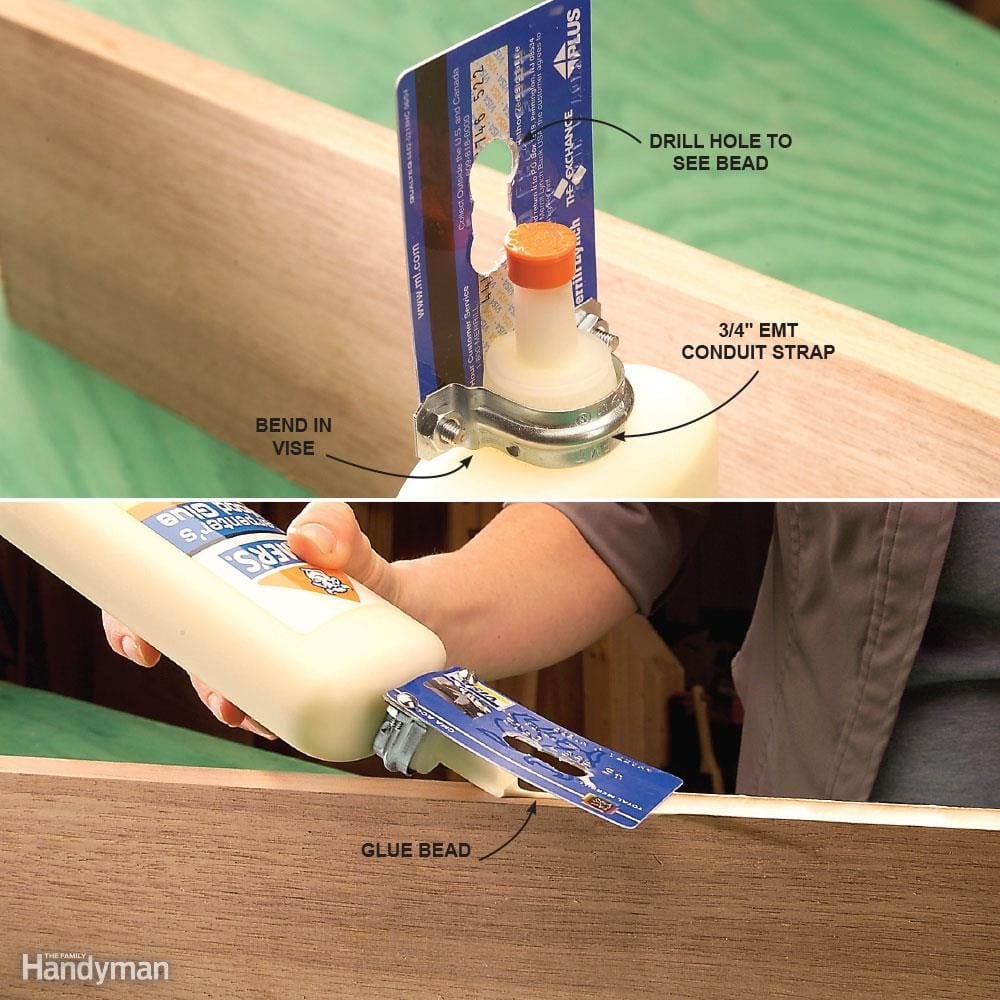
To make spreading glue less messy, all you need is an old credit card, a 3/4-in. two-hole EMT conduit strap and two 1/8-in. nuts and bolts. Crook the conduit strap in a vise to level the conduit strap wings with the bottle cap. This way the credit card stays flat when you bolt it on. Drill a couple of window holes in the middle of the credit card so you can monitor the size of the glue bead, then drill bolt holes in the end of the card, snap the conduit strap onto the bottle cap and bolt on the card.
Practice applying glue on a scrap board and in a few minutes you'll get it down. Be sure to use fresh glue—the lightly bending card will spread it like butter.
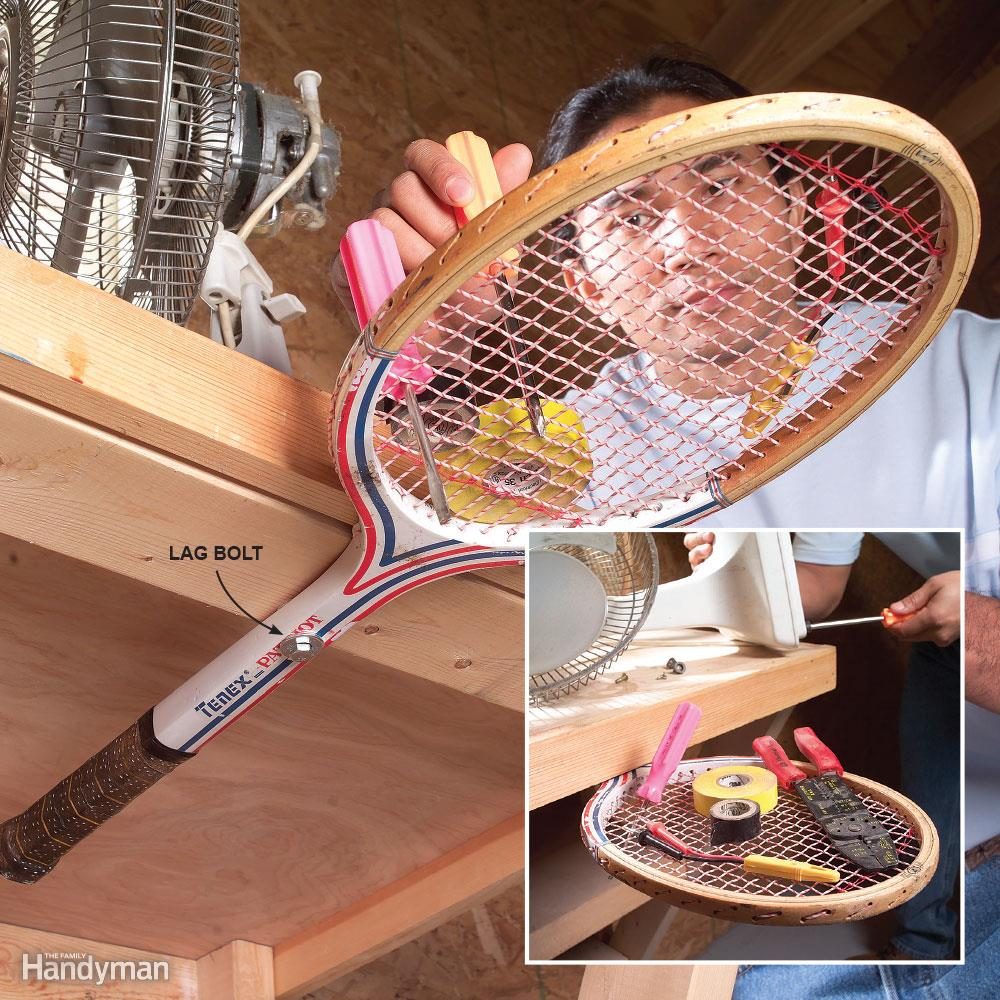
Here's a slick use for that old wooden tennis racquet that's gathering dust in the garage. Drill a hole in the handle and screw it to the underside of a workbench. Position the racquet so it can swing in and out from under the table. Use it to hold tools, parts or other small items.
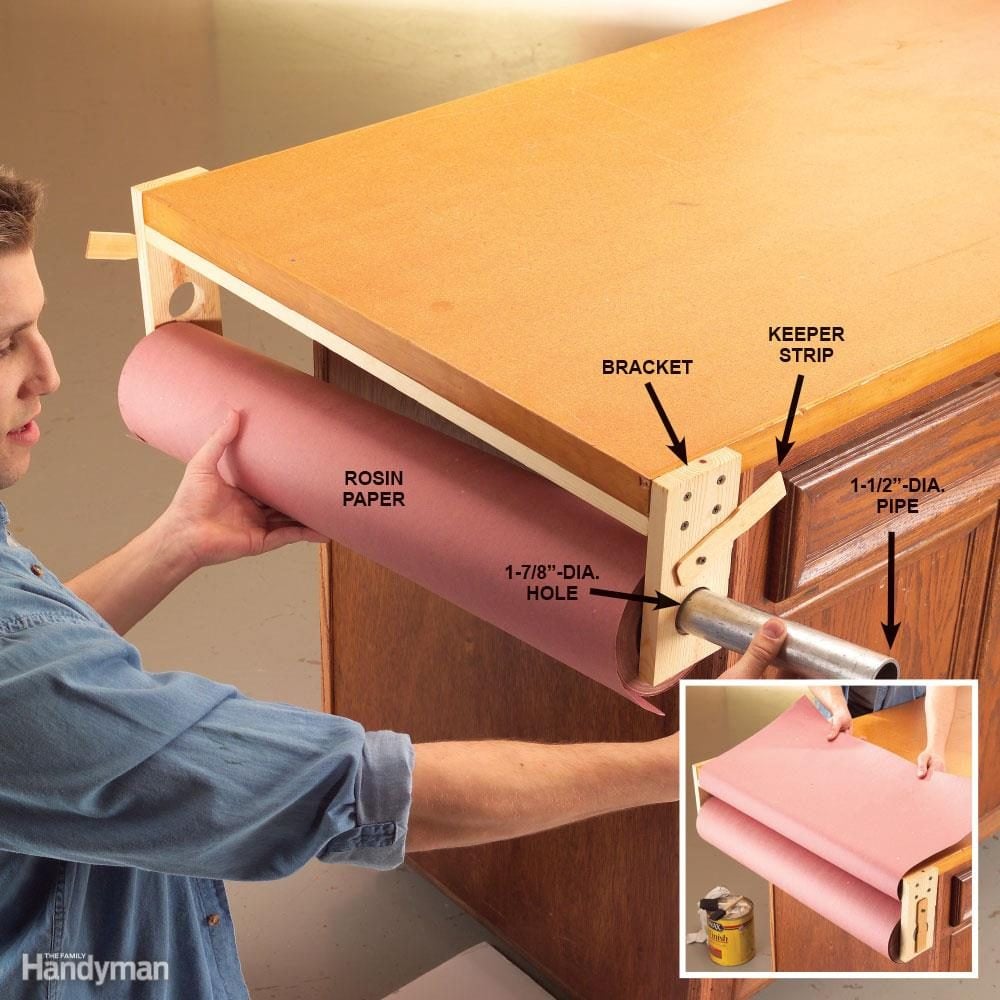
Here's instant protection for any kind of messy job. Before you start, just unroll enough rosin paper from this jumbo paper towel holder to protect your workbench. The thick paper absorbs all the glue or finish. When the paper gets too dirty, tear it off and throw it away. A roll of rosin paper is 170 ft. long, so one will last a long time.
Here's how to build your paper holder: Buy a roll of rosin paper and a length of 1-1/2-in. pipe at a home center. Round up some scrap lumber and get ready to do a little bit of head scratching to customize a bracket arrangement that works with your bench design. Bore 1-7/8-in. holes in the scrap wood brackets. Screw keeper strips over the holes to keep the pipe from falling out as you unroll the paper. Use a handsaw to cut the paper roll and a hacksaw to cut the pipe to match the width of your bench. Then load the roll and start dripping stuff all over it.
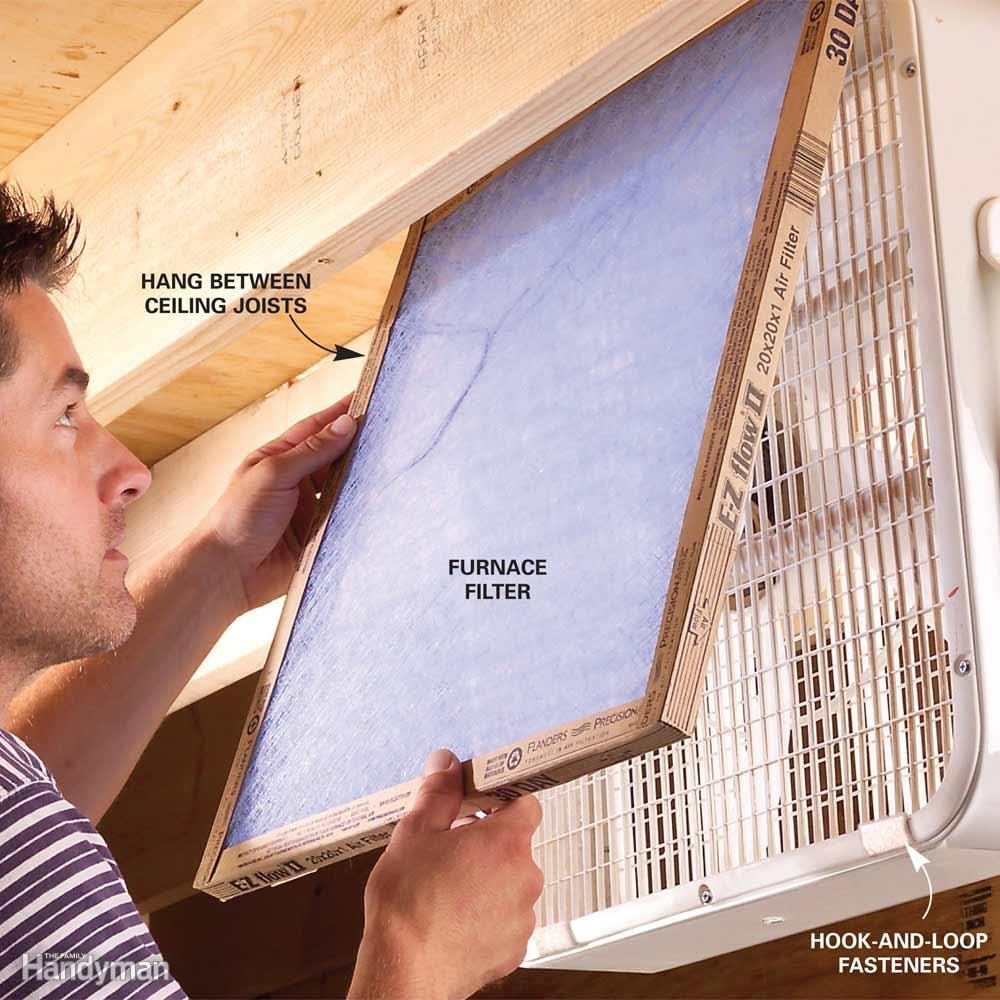
Can't afford an air cleaner for those dusty woodworking jobs on the weekend? Think again. Attach a furnace filter with hook-and-loop tabs to the air intake side of a box fan and hang the fan between the ceiling joists so you won't hit your head on it while you work. Just switch it on and fine dust particles from sanding and sawing will be drawn into the filter by the vacuum created by the fan.
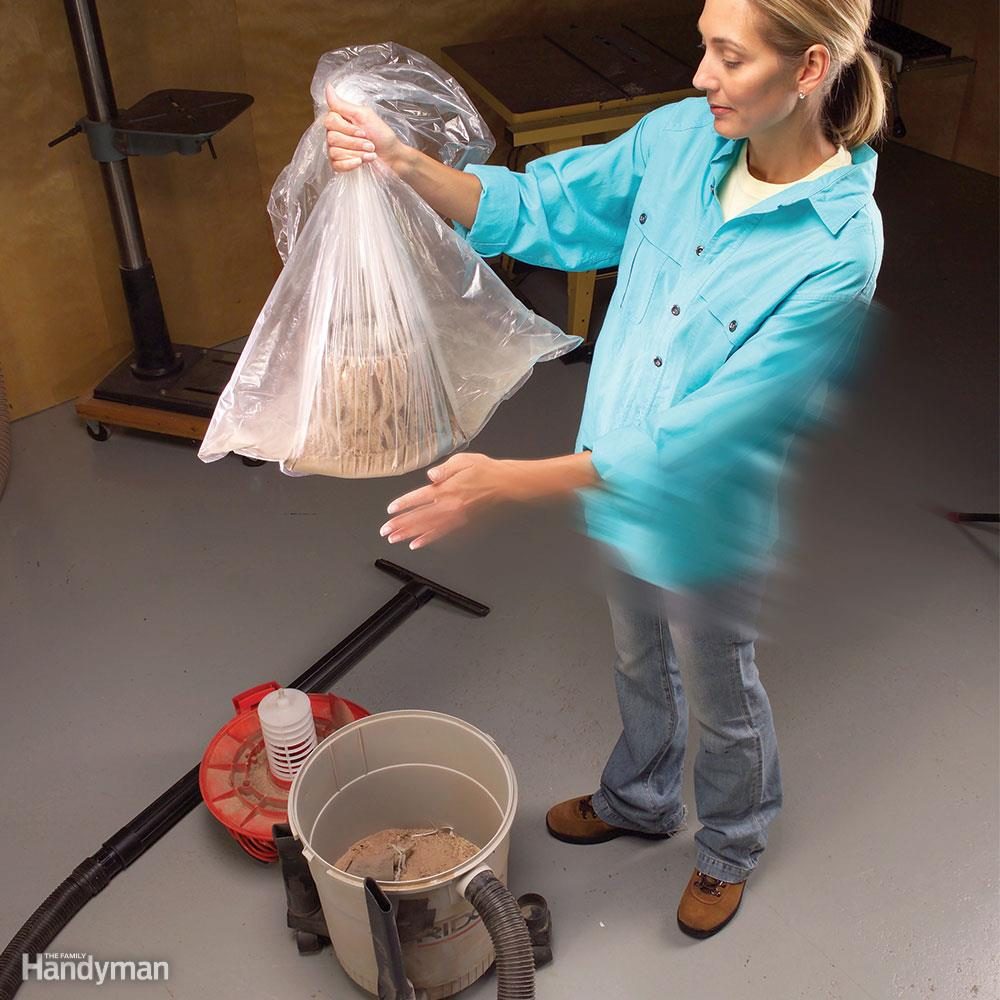
Here's how to clean your shop vacuum filter without filling the backyard (and your lungs) with a month's worth of shop dust. Stick it in a plastic garbage bag, knot or grip the bag's open end, then gently hit the filter to dislodge the dust. Set the bag down, wait for the dust to settle, then remove the filter and dispose of the bag.
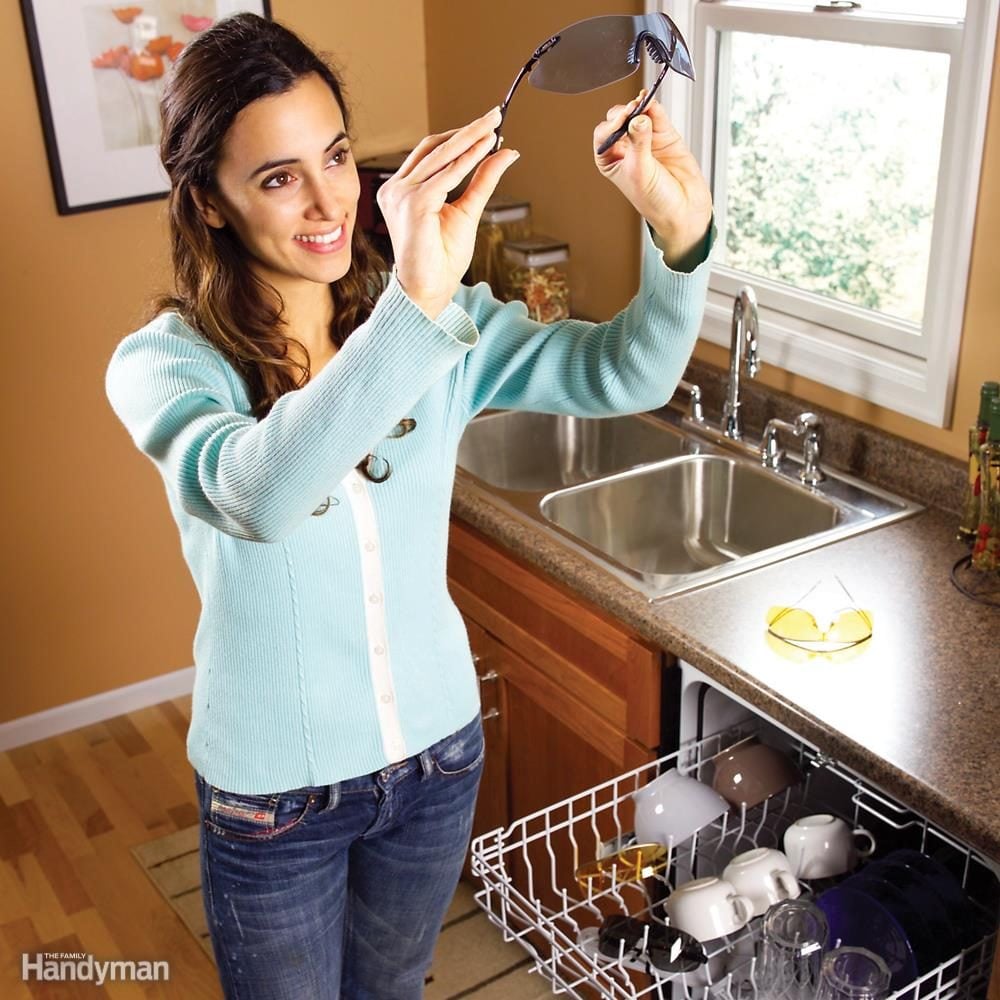
Toss your safety glasses into the top rack of your dishwasher after a messy project. Smudges, sunscreen and sweat will disappear with no effort.
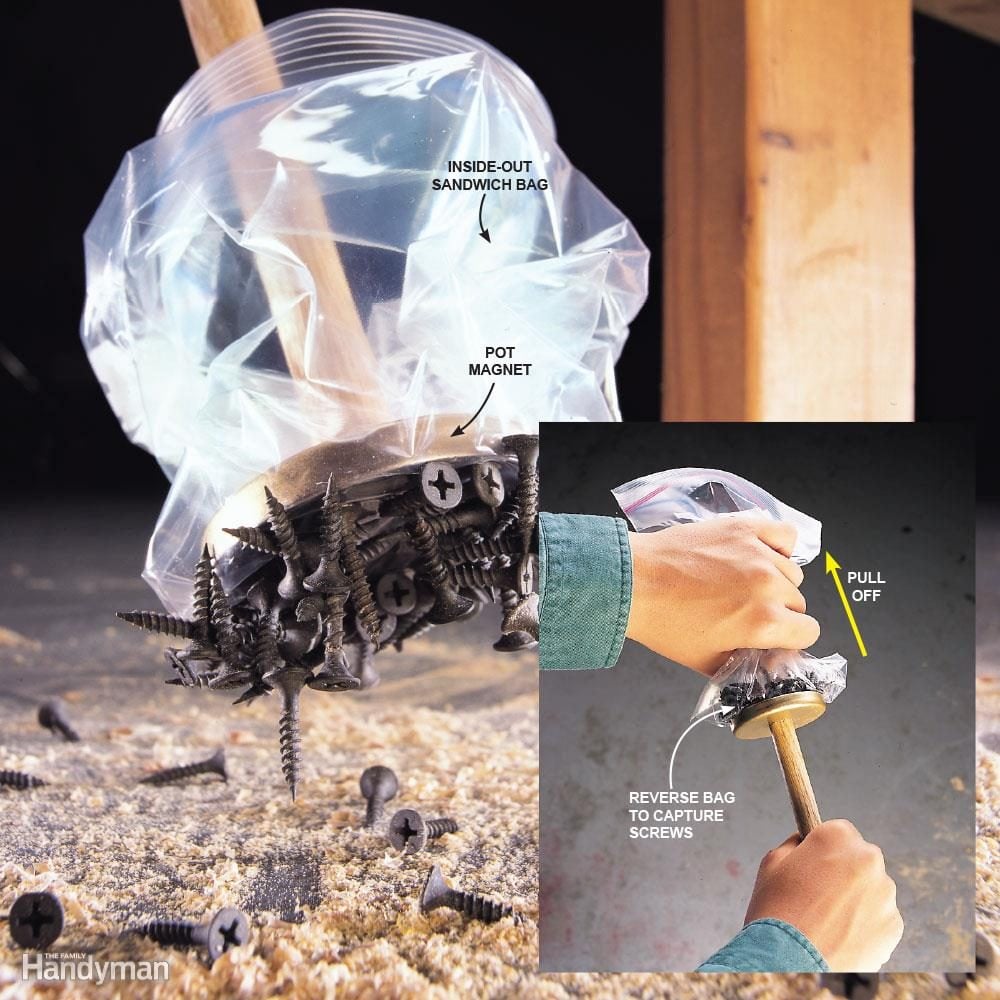
When you spill screws, nails, brads or other small metal parts on a dusty shop floor, pick them up in seconds, minus the dust. Screw a 3-in.-dia. pot magnet (at most home centers) on the end of a wood dowel to create your “picker-upper.” To use this tool, place an inside-out sandwich bag over the magnet and start sweeping the area. The hardware will leap up to the powerful magnet as you “sweeprdquo; the floor. To unload and bag the metal pieces in one quick step, just pull the bag off the magnet.
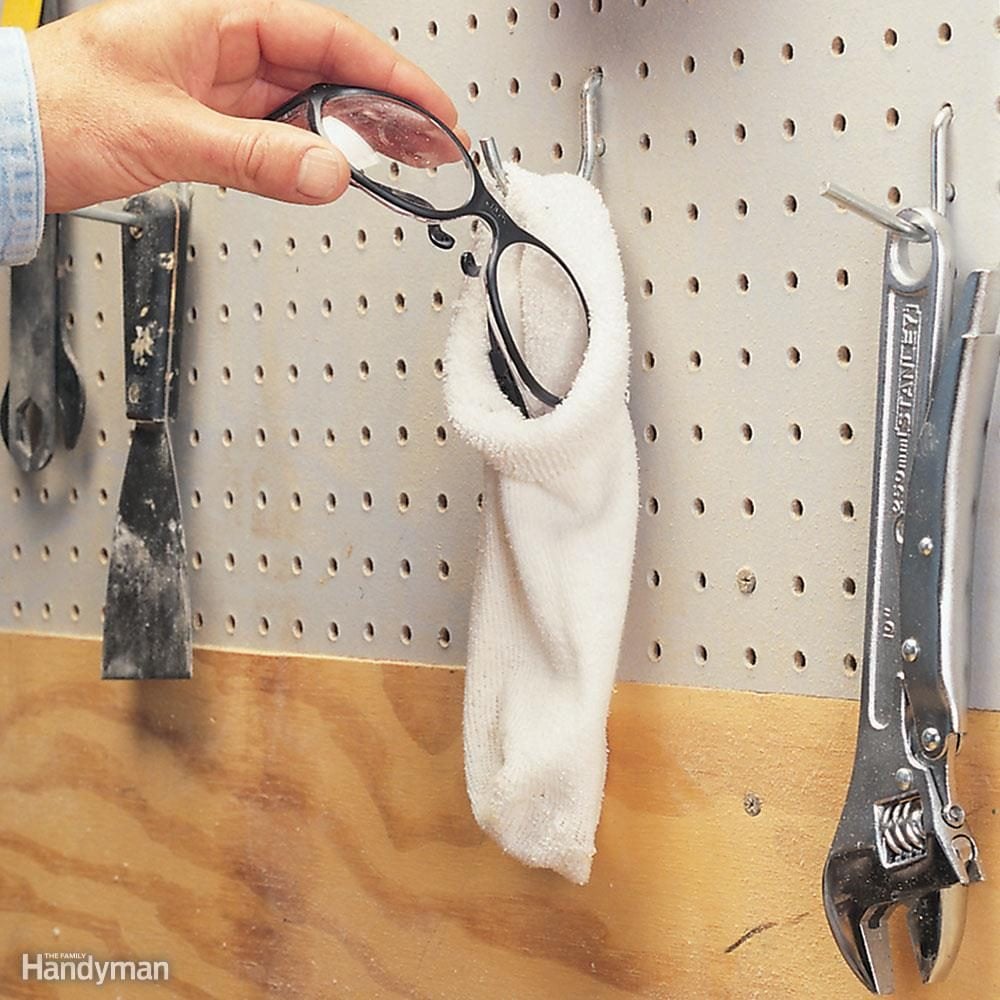
Protect safety glasses by storing them in an old sock. Hang the sock on the wall in your workshop, and they’ll remain scratch-free, dust-free and easy to find.
Share what's on your mind and see what other DIYers are thinking about.
December 21, 3:38 AM [GMT -5]
the sock for the safety glasses what a tip
November 15, 7:09 PM [GMT -5]
As far as the floor mat goes, you could also use double-sided carpet tape if you don't want to see the duct tape around the edges.
November 03, 2:18 PM [GMT -5]
Cheap yoga mats (about $5 at the discount stores) also make excellent tool drawer liners. With a choice of colors, you can coordinate it with the toolbox!
November 01, 4:08 PM [GMT -5]
The ideas are interesting. I would like to see the tool drawer after a month. The liner is nice if you can only have a few tools to a drawer. I have tried the filter in the bag, My filter is evidently more impacted with the sawdust as it does not work for me. I have also tried a small bucket with a hole big enough for the vacuum hose which just fills the new filter. I have put pantyhose over the filter which works nice but there is a noticeable loss of suction power.
Hello ScreenName My Account (Log Out)
Hello Log in or Join us
Get timely DIY projects for your home and yard, plus a dream project for your wish list!