Installing Basement Carpet Padding In a Finished Basement
Updated: Feb. 15, 2023Choosing the right pad makes all the difference
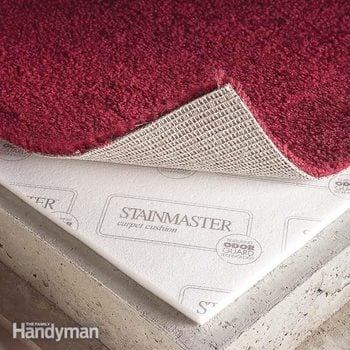






Choosing a carpet pad
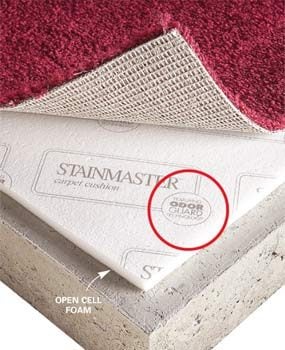
Any carpet that can be used in other areas of the house can be used in the basement. But as a precaution against moisture, use an open cell pad to allow the concrete to “breathe.” Nearly all pads are open cell pads, which provide better insulation and are less expensive than closed cell pads. In addition, some pads have a film barrier or odor guard (see photo) that helps eliminate odors that sometimes come from basement floors. These pads cost $1 to $2 more per square yard than traditional pads and are available at carpet stores.
Rubber pads (which are closed cell) are also available for carpet (think a waterproof carpet pad) installed below grade, but most professionals don’t recommend them because they can trap moisture between the pad and the concrete. This may cause moisture to move up the walls and get into the drywall.
The key is to think through and resolve any potential moisture problems in your basement before installing carpet. Once installed, carpets with open cell pads can withstand moderate wetting if you clean them with a wet/dry vacuum. But keep in mind that a flood of water will ruin both the carpet and pad, and you’ll have to replace them.
Look for a stamp or words on the pad that say it provides odor protection.
Required Materials for this Project
Avoid last-minute shopping trips by having all your materials ready ahead of time. Here’s a list.
- Carpet pad with odor resistance