How to Stabilize a Washing Machine
Updated: Nov. 30, 2018Get those bad vibrations under control






Quiet down your washing machine
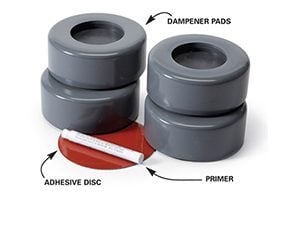
It seems counterintuitive, but if your washer still vibrates even after being leveled, the solution is not to bolt it to the floor. That’ll just make more noise. Instead of connecting the washer to the floor, you want to isolate it from the floor. The washer’s rubber feet are supposed to do that. Unfortunately, at high spin speeds, they don’t do a very good job.
That’s where vibration isolation/dampening pads come in. Installers use these heavy-duty rubber washer anti vibration pads under furnaces and blowers. One company makes a pad specifically for front-loading washing machines. The puck-shaped pads made by Good Vibrations Inc. get good reviews. You can buy a set of four from gviinc.net.
Installing the washer anti vibration pads is a three-step process, and you’ll need a helper for lifting the machine. Start by lifting each corner of the machine and slipping a pad under each foot. Mark each pad location on the floor. Then lift the washer out of the way so you can apply the adhesive discs and mount the pads to the floor as shown.
Required Tools for this Project
Have the necessary tools for this DIY project lined up before you start—you’ll save time and frustration.
- Rags
Required Materials for this Project
Avoid last-minute shopping trips by having all your materials ready ahead of time. Here’s a list.
- Household cleaner
- Vibration isolation/dampening pads