Build it yourself and save $151,900!
My neighbor, CT,
asked me to help
him build a bookcase he
found in an old Stickley furniture
catalog. I love Craftsman
furniture and CT is a great
neighbor. How could I refuse?
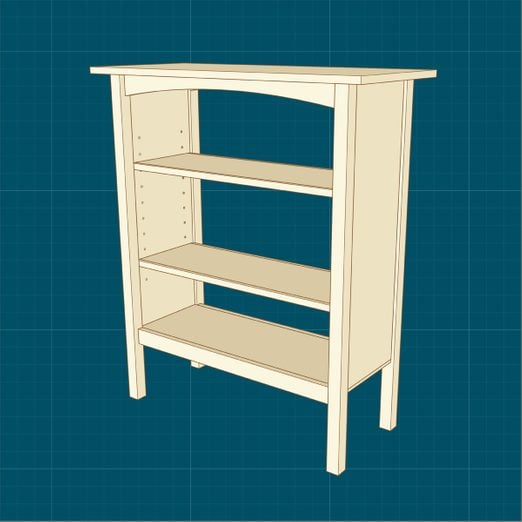
This bookcase is inspired by a Gustav Stickley model that sold
for $12 in 1910. One of the original Stickley models recently sold
for $152,000, but you can build ours for about $100.
Using the picture in the catalog as a start, we sat down to do a little
research and figure out the
details. CT wanted a slightly
larger bookcase, so we
stretched the width from 22
in. to 36.
I told CT we could build it in
his garage with nothing more
than a table saw, a drill and a
pocket hole jig. If you don’t
own a pocket hole jig, you
owe it to yourself to buy one.
Pocket screws aren’t as
strong as most other types of
joinery, but they are plenty
strong for this bookcase, and
you can’t beat their speed
and simplicity. CT agreed,
especially when he found out
that for $40 he could buy a
complete pocket hole system.
(For tips on using pocket
screws, see “How to Use Pocket Screws.” ) You’ll also
need at least four pipe
clamps for this project, which
will cost about $60
altogether.
Build this Craftsman-style bookcase with basic tools.
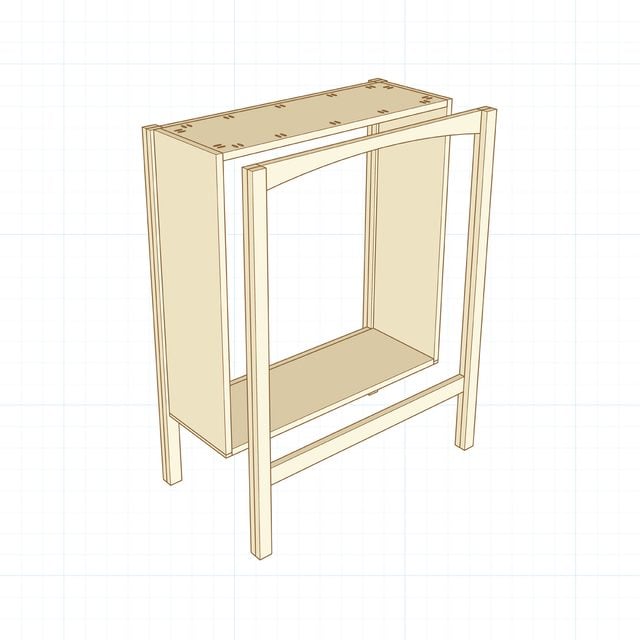
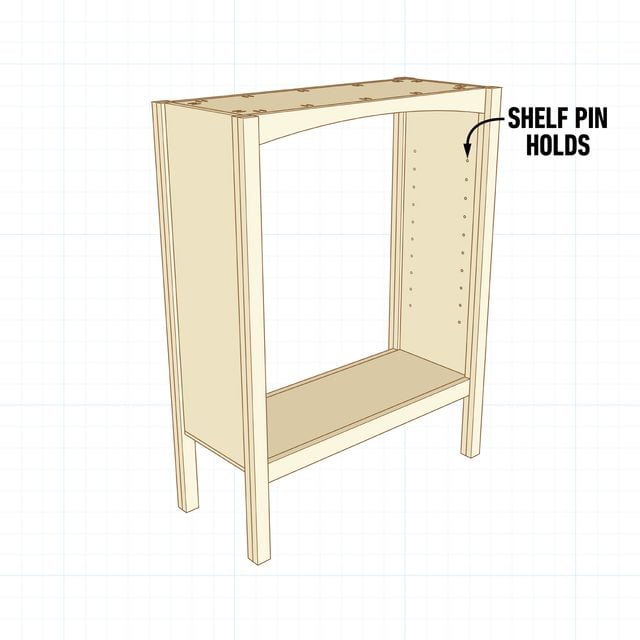
Figure A: Bookcase
This is the perfect first-time
furniture project—simple,
useful and satisfying.
Overall Dimensions: 36" wide, 16" deep, 42" tall. For Materials and Cutting List, see Additional Information.
Wood selection matters
At the home center, we took
our time picking through the
oak boards. We wanted
straight, flat boards, of
course, but we also looked
closely at grain pattern.
Novice woodworkers usually
skip this tedious process, but
they shouldn’t when building a bookcase. It has a big
impact on the final look of
the project. For the legs, we
examined the end grain and
chose boards with grain that
ran diagonally across the
ends (see Photo 4). This “rift
sawn” wood has straight
grain on both the face and
the edge of the board. (“Plain
sawn” boards typically have
wilder grain on the face.)
Straight grain will give the legs a look that suits the
Stickley style. Also, glue
joints disappear in straight
grain wood, so the legs—which are made from sandwiched
boards—look better.
For that same reason, we
chose boards with straight
grain along the edges to
form the bookcase top (see
Photo 11).
Build a box and add face frames
1 of 7
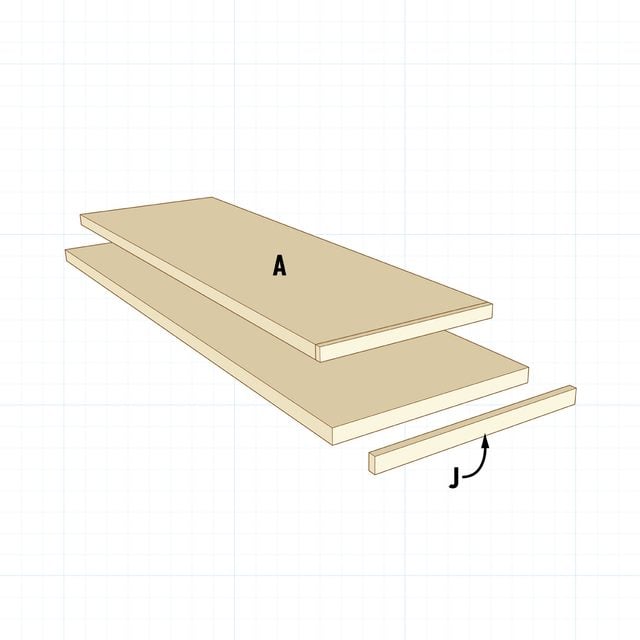
Photo 1: Add edging to the sides
Cut the plywood box
parts to size, then glue
strips of wood to the
bottom edges of the box
sides. This edging keeps
the plywood veneer from
chipping. Trim off the
excess edging with a
handsaw and sand it
flush with the plywood.
Take care not to sand
through the thin veneer.
2 of 7
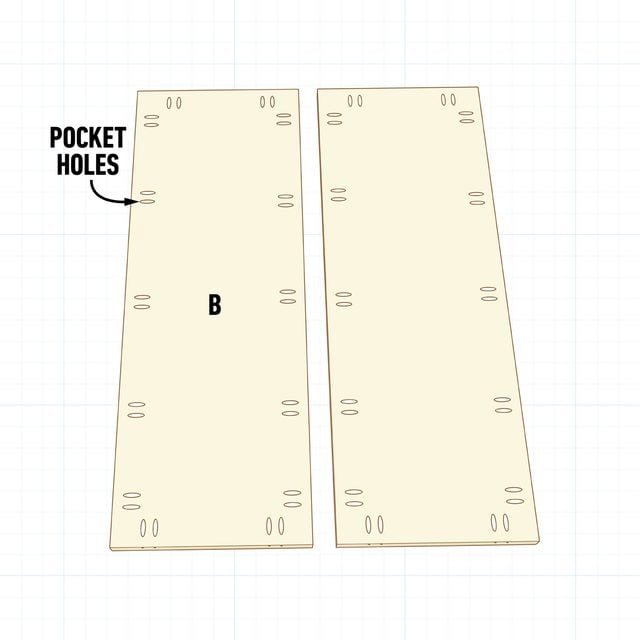
Photo 2: Drill pocket holes
Pocket hole jigs are super
easy to use: Place the jig
where you want the holes;
clamp and drill. The
stepped bit bores a pocket
hole and a pilot hole at the
same time. The holes on
the ends are for attaching
the top to the sides. The
holes along the front and
back are used to attach
the box to the face frame.
3 of 7
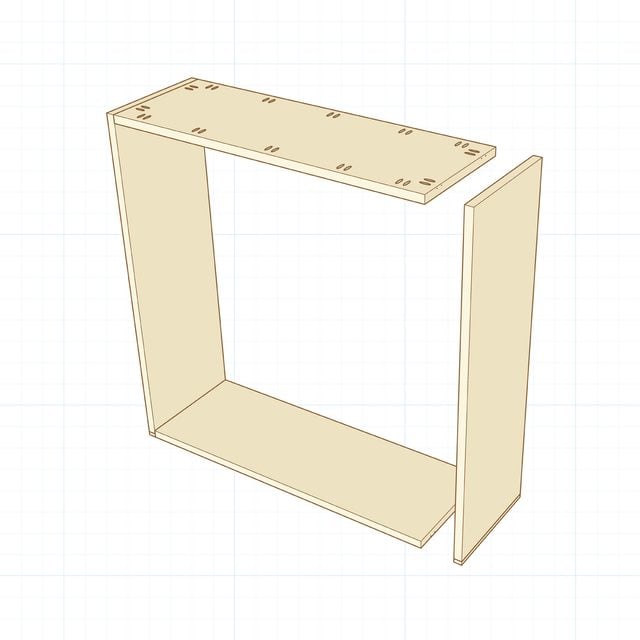
Photo 3: Assemble the box
Drive in the pocket screws with a drill. To avoid stripping the screws in plywood and
softwoods, switch to a screwdriver for the final tightening. Long clamps make assembly
easier, but they aren’t absolutely necessary.
4 of 7
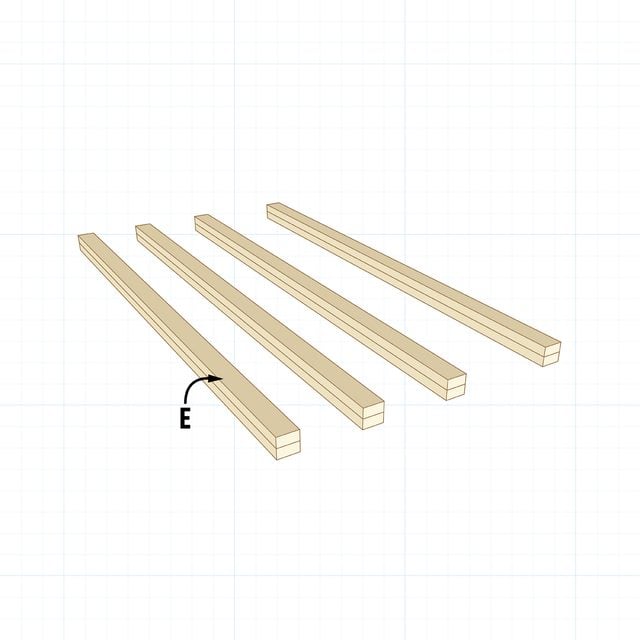
Photo 4: Glue up the leg blanks
Sandwich two 1x4s together and later cut the legs from this stock.
Use scrap wood “cauls” to distribute clamping pressure evenly.
5 of 7
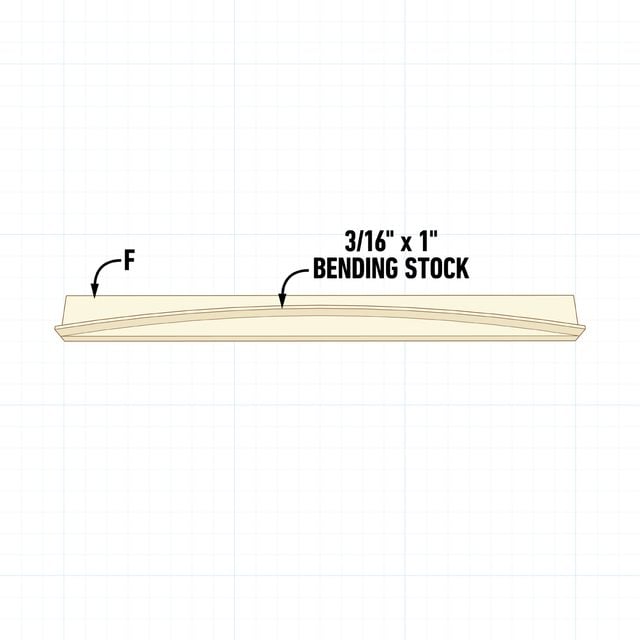
Photo 5: Mark the arches
Make an “arch bow”—simply a 3/16-in.-thick strip
of wood with slots cut into
both ends. Hook a knotted
string in one slot, tighten
the string to bend the bow
and tie off the other end.
6 of 7
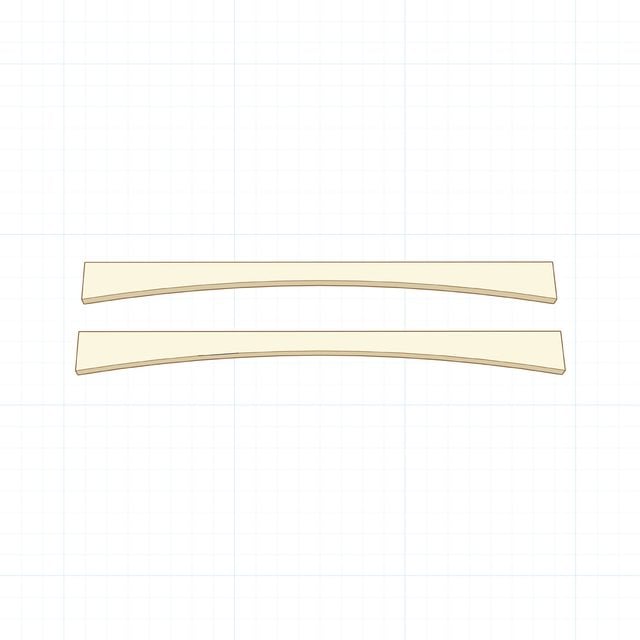
Photo 6: Cut the arches
For a smooth cut, use a fine-tooth blade and move
slowly, putting only light forward pressure on the saw. If your
saw is variable speed, cut at full speed. If the saw has orbital
action, switch it off.
7 of 7
Photo 7: Sand the arches
Smooth the arches with an orbital sander. Keep the
sander moving so you don't sand too deep in one spot
and create a wave in the curve.
After cutting the plywood
box parts to size (see the Materials and Cutting List in Additional Information), we added the
3/8-in.-thick edging (J) to
protect the bottom of the
cabinet sides (A; Photo 1).
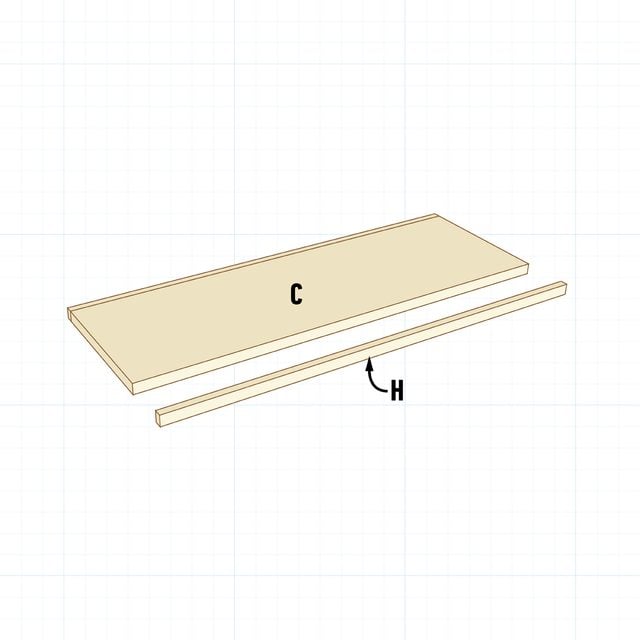
We applied the same edging
(H) to the plywood shelves
(C). Then we drilled the
pocket holes in the box top
and bottom (B; Photo 2).
After that, we drilled holes
for adjustable shelf supports
in the plywood sides and—finally—we assembled the
box (Photo 3).
With the box assembled,
we turned our attention to
building two identical face
frames. (Since the bookcase
has no back, it needed two
face frames.) Unlike a standard
face frame, which has
vertical stiles, our face frame
has legs (E) made from two
layers of 3/4-in.-thick boards.
We glued up the
leg blanks
(Photo 4), ripped
both blanks into
two legs and
sanded out the
saw marks.
Like many
other beginning
woodworkers,
CT figured that curves were complicated, so
he was a little intimidated by the arched upper
rails (F). But I showed him a neat trick for
marking out a shallow arch (Photo 5). His
curved cut (Photo 6) wasn’t perfect, but a little sanding smoothed it out (Photo 7).
Assemble the face frames
1 of 3
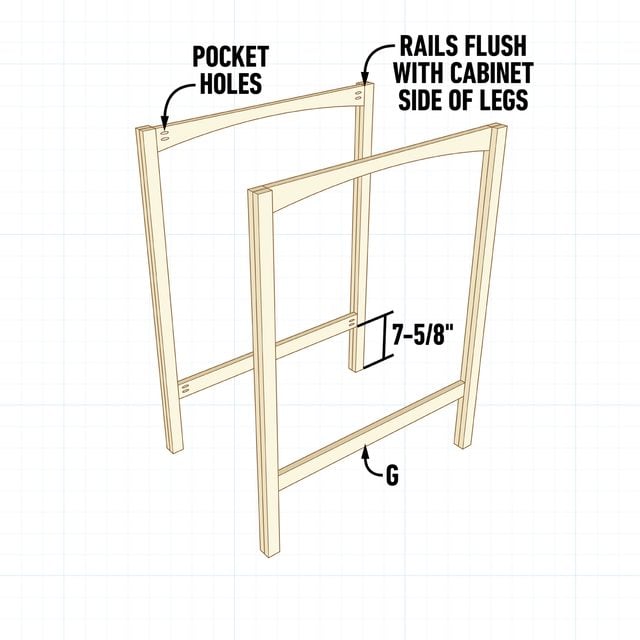
Photo 8: Assemble the face frame
Clamp the face frame together and drive in
pocket screws. Pocket screws rarely strip out in
hardwood, so you can skip the screwdriver and
use only a drill.
2 of 3
Photo 9: Dry-fit the face frames
Align the face frames, pocket-screw them to the box and check the
fit. If your alignment is a bit off, you can drill new pocket holes and
reattach the frames. If the fit is right, you're ready to remove the face
frames and add glue.
3 of 3
Photo 10: Glue on the face frames
Apply a light
bead of glue
over the box
edges and
screw on
the face
frames as
before.
There are
no screws
fastening
the legs to
the box
sides, so
you'll need
to clamp
them.
With the rails and legs complete, we were
ready to drill pocket holes in the rails and
assemble the face frames (Photo 8). It’s easy
to make mistakes during face frame assembly,
so—before driving any screws—we clamped
the frames together, then set them on the box
to make sure everything was aligned correctly. We used similar caution when we
finally attached the face frames
to the box: We dry-fitted the face
frames (Photo 9) before we
glued and clamped them into place (Photo 10).
Top it off and finish up
1 of 3
Photo 11: Glue up the top
Edge-glue the boards together to form the top.
Choose boards that have straight grain lines along one
edge and place those edges together. A glue joint with
straight grain on both sides is almost invisible.
2 of 3
Photo 12: Drill slotted screw holes
Drill screw holes in
the shelf box to
fasten the bookcase
top. Rock the bit
back and forth to
bore enlongated
slots that will allow
the top to swell with
changes in humidity.
3 of 3
Photo 13: Screw on the top from below
Drive the screws snug, but not so tight that they won't allow for
seasonal wood movement. Remove the top for sanding and finishing.
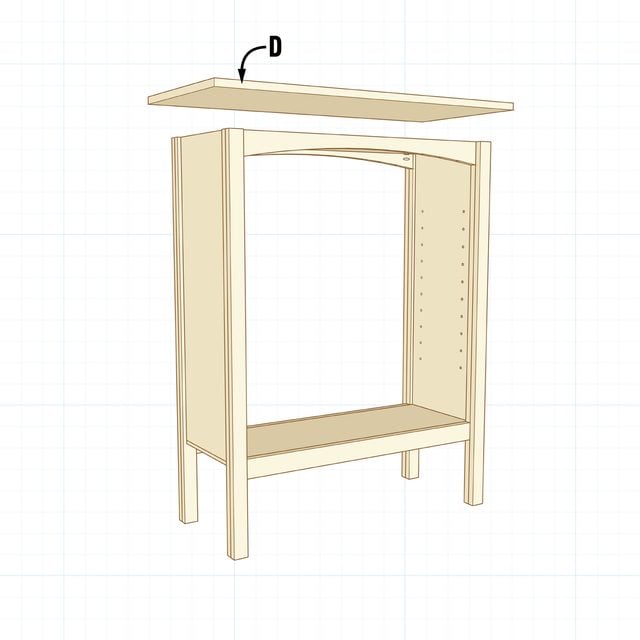
CT figured that making the top
(D) was a simple matter of edge-gluing
two boards together
(Photo 11). That’s mostly true,
but there are a few tricks that
make it easier. First, always do a
complete dry run by clamping up
the boards without glue. That will
alert you to any clamping or
alignment problems before it’s
too late. Second, start with
boards that are an inch or so
longer than the final top. It’s
much easier to trim the boards
later than to fuss with edge alignment
during glue-up. Finally, to
ensure that the tops of the
boards meet flat and flush, use
pocket screws on the underside
of the top. A couple of pocket
screws won’t provide enough
pressure to substitute for clamps,
but they will hold the board flush
while you crank on the clamps.
When the top was trimmed to
size and sanded, CT drilled elongated
holes (Photo 12) and
screwed on the top (Photo 13).
When I asked him to remove the
top, he gave me a look that said,
“What’s the point of that?” I had
two answers: Finishing is always
easier when furniture is disassembled,
and more important,
both sides of the top need to be
finished. Wood absorbs and
releases moisture as humidity
changes. Wood finishes slow that
process. So wood with a finish on
only one side will end up with differing
moisture levels in the finished
and unfinished sides. That
leads to warping.
So we finished both sides of
the top (and the rest of the bookcase)
with a coat of General
Finishes Mission stain ($14 a pint
at rockler.com) followed by polyurethane.
That’s it. Not bad for a
weekend of woodworking. I
wonder how much CT’s bookcase will be worth in a hundred years...
Back to Top