

How to Fix a Noisy Garage Door
Updated: Sep. 08, 2023
The key is simple maintenance for a garage door track






Introduction
Regular garage door maintenance is crucial for the safety, functionality, and longevity of your home's access point. Neglecting this essential task can lead to a host of problems, from inconvenient breakdowns to costly repairs. Routine inspections and lubrication of moving parts, like springs and rollers, ensure smooth operation and reduce wear and tear. Furthermore, addressing issues early on can prevent accidents and injuries, as malfunctioning garage doors can pose serious risks. Maintaining your garage door also enhances the curb appeal of your home, contributing to its overall value.Tools Required
- 4-in-1 screwdriver
- Adjustable wrench
- Impact driver
- Socket/ratchet set
- Stepladder
- Wrench set
Materials Required
- Fender washers
- Garage door lube
- Lag screws
- Nylon rollers
- Replacement hinges
- Rubber anti-vibration pads
Project step-by-step (9)
Tighten all parts
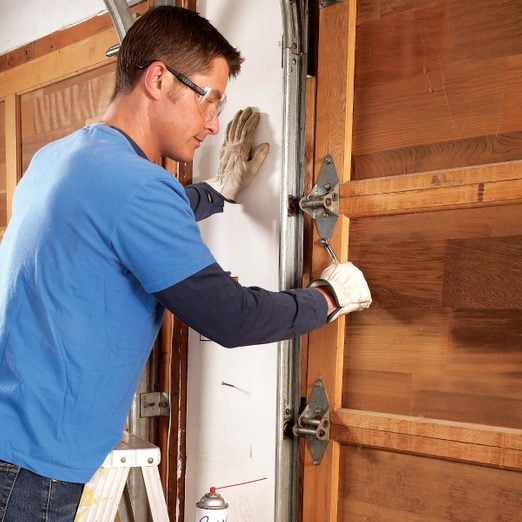
Snug up all the nuts and bolts on your garage door track and check for worn parts and replace where needed. Then spray all the moving components with garage door lubricant.
Replace worn rollers
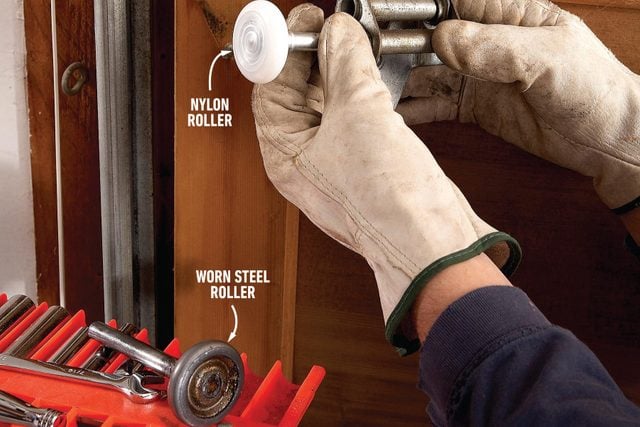
Replace the roller by unbolting the hinge and tilting the roller out of the garage door track. Swap out the rollers and reinstall the hinge.

Install new hinges
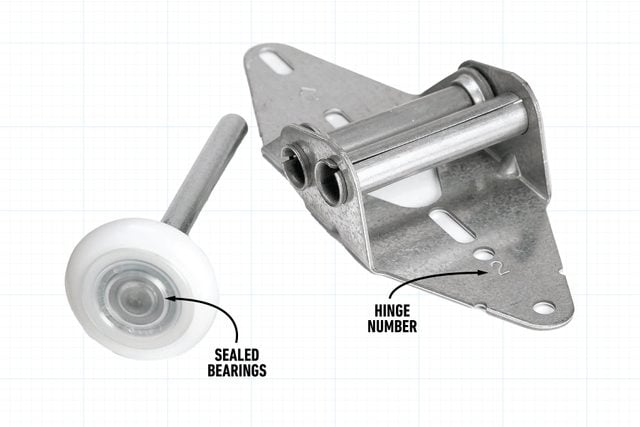
Write down the number that’s stamped into the hinge and pick up the same number replacement hinge at the hardware store. Or take the old hinge with you to match it up.
Grease the track
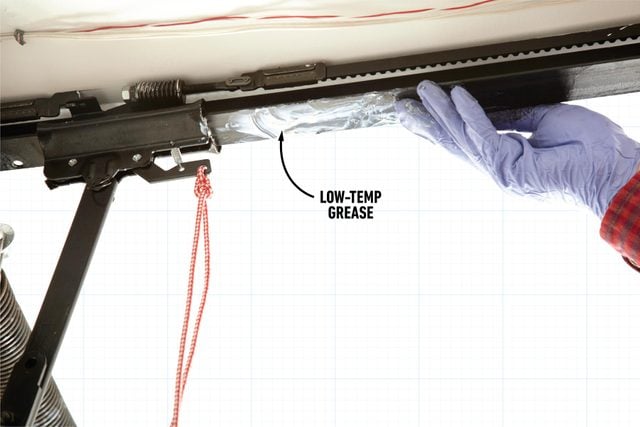
Squeeze a large dollop of grease onto your gloved hand and wipe it onto the garage door track. Operate the opener several times to spread the grease along the track and into the trolley.
Lube everything that moves with garage door lube
Spray the roller shafts and hinges first with garage door lube. Wipe off the drippy garage door lube excess. Then slip a piece of cardboard behind the torsion springs and soak them with garage door spring lubricant, too.
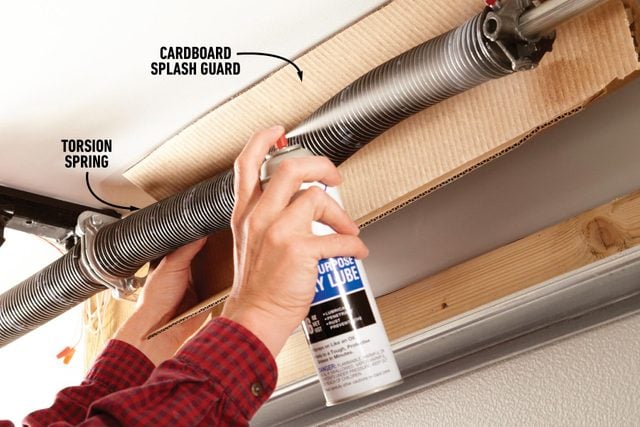
The fixes for a garage door that makes a racket when it opens and closes are fairly easy and will take less than an hour. Start by tightening all the door and track hardware. Use a deep socket and a ratchet on all the nuts to snug them up. But don’t overtighten—that can pull the carriage bolt heads right through the door skin or strip the lag screw holes.
Next, check for worn rollers and hinges. Many garage door track rollers have unsealed bearings that self-destruct after years of rolling around in a dirty environment. The wear can be so severe that the rollers actually wobble as the door operates. If your rollers are worn, consider replacing them with nylon rollers with sealed bearings (available at garage door suppliers or online). Nylon rollers are quieter and don’t require periodic oiling. But they are more expensive than steel.
Replace track rollers one at a time. If your door uses torsion springs mounted on the header above the door, do NOT attempt to replace the rollers in the bottom brackets. Those brackets are under constant spring tension and can cause serious injury if you unbolt them. That’s a job for a pro.
Worn hinges are less common than worn rollers. But sloppy hinges make a lot of noise and can cause the door to bind and wear out the tongue-and-groove joints at the door sections. Some play at the hinge is normal. But if you see an oblong hole where the tubular hinge pin mates with the hinge bracket, replace the hinge. Gray dust and metal filings around the hinge pin are early signs of wear.
Once you’ve replaced the worn door components, check the garage door opener chain. A loose garage door opener chain makes loud slapping sounds and causes jerky door movements that smack the rollers against the track. So start by tightening the chain (find the procedure in your owner’s manual). If you have a track drive opener, the next step is to lubricate the opener track with grease. If you have a screw drive opener, grease the threads.
Next, spray the hinges, roller bearings (unsealed style), and springs with a garage door lube like the Prime Flo garage door lubrication kit. Also hit the torsion bar bearings, and any other pivot points. The special garage door lube penetrates the parts as a liquid and dries to form a non-tacky grease that won’t attract dirt and dust, which can gum things up. Lubricate all moving parts every six months to reduce wear and keep the door quiet. Avoid other lubricants such as oil, grease, or spray lithium grease. They’re cheaper, but they don’t penetrate as well and tend to pick up dust and grit—just what you don’t want in garage door spring lubricant on moving parts.
Isolate the opener
Add anti-vibration pads
Slide one anti-vibration pad between the mounting bracket and the ceiling and the second pad under the bracket. Then slip a fender washer onto the new lag screw and drive it into the rafter with a socket wrench or impact driver.
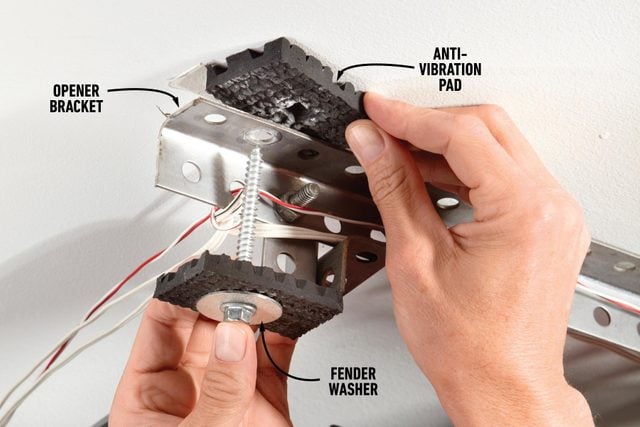
Fasten brackets to rafters
Bolt all four corners of the opener bracket to the rafters.
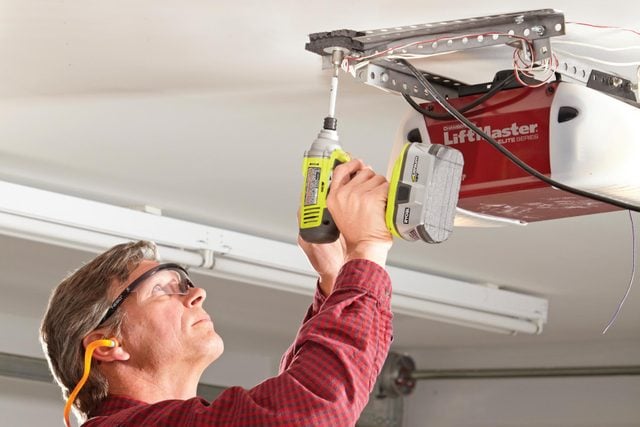
If you have an attached or tuck-under garage and your opener seems loud inside the house, try this step.
Mechanically isolate the opener from the garage rafters/trusses with rubber pads. Cut rubber pads out of an old tire, or buy specially made rubber/cork anti-vibration pads. You’ll be adding about an inch in thickness, so you’ll need four longer lag screws and four fender washers.
