How to Winterize With Garage Door Bottom Seal Replacement
Updated: Feb. 28, 2024
Prepare for the winter with garage door bottom seal replacement by installing new weather seals, replacing rotted trim and renewing a rusty track.
Our editors and experts handpick every product we feature. We may earn a commission from your purchases.






 Time
Time A half day
 Complexity
Beginner
 Cost
CostVaries
Introduction
Make weather-tight garage door seals, replace rotted trim with maintenance-free vinyl and clean up a rusty track. Do it yourself and save a bundle.Tools Required
- 4-in-1 screwdriver
- Drill/driver - cordless
- Hacksaw / oscillating tool / reciprocating saw
- Hammer
- Leather gloves
- Miter saw
- One-handed bar clamps
- Plastic gloves
- Pry bar
- Safety glasses
- Tape measure
- Utility knife
- Wire brush
Materials Required
- 10d galvanized casing nails
- 6d galvanized casing nails
- 8d galvanized casing nails
- Dish soap
- Door bottom gasket
- Metal spray paint
- PVC cement
- Solid vinyl trim
- Threshold gasket
- Weather seal
If you want to keep the heat in your garage this winter or retain the cooled air next summer, you’ll have to do more than just insulate the garage door. Most of the conditioned air escapes around and through all the cracks.
Here are four simple ways to seal your garage door as much as possible. You can do the whole garage door bottom panel replacement job in an afternoon for as little as $100, depending on the size of the door.
Project step-by-step (17)
Repair One: Weather-Seal Your Garage Door
How to measure garage door seal
For this garage door tune-up, start by measuring its width, height and thickness. You’ll need those measurements to buy a garage door stop with a built-in sealing lip and a new bottom seal.
While you’re at the home center, buy V-strip weather stripping, a tube of exterior caulk and a small can of wood sealer (if you have a wooden door). And for extra sealing power, buy a rubber threshold.
Remove the old garage door bottom seal
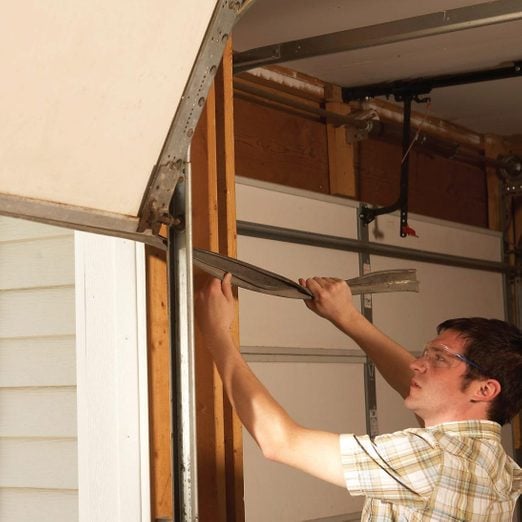
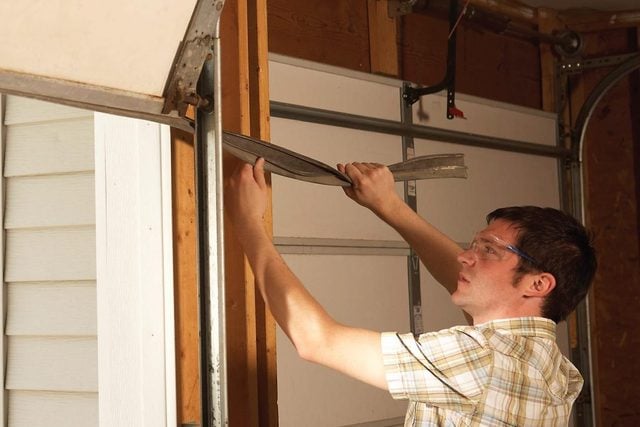
Use the garage door opener to lift the door just enough so the track doesn’t get in the way of the weather seal. Then slide out the old rubber bulb. You may need to pry the track ends open with a flat screwdriver if they’ve been crimped. If it’s especially stubborn, cut it and remove it in pieces.

Clean the track
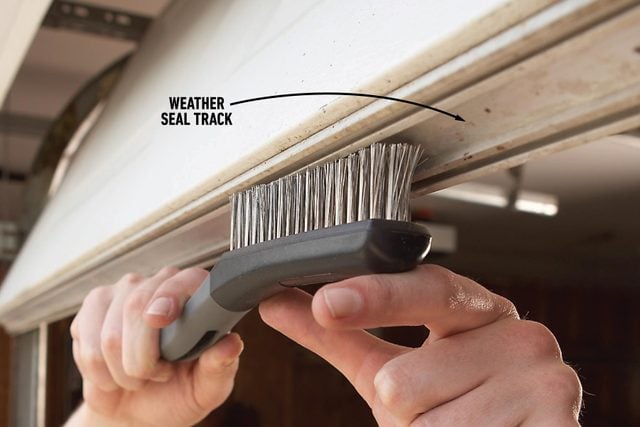
Some garage doors come with a metal track that holds a replaceable rubber seal. If that’s the case with your garage door, scrape dirt and corrosion out of the bottom seal track with a screwdriver and a stiff brush.
Install garage door bottom seal
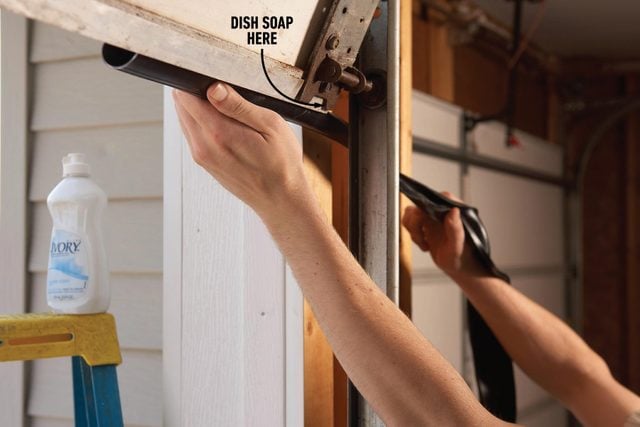
Cut the new rubber seal to length with a razor knife. Lubricate the rubber with a few drops of dish soap and thread the T-shaped edges into the weather seal track. Slide the seal across the door. Be patient; it takes a lot of pushing and pulling, even with a helper.
Fasten a new bottom seal to a wood garage door
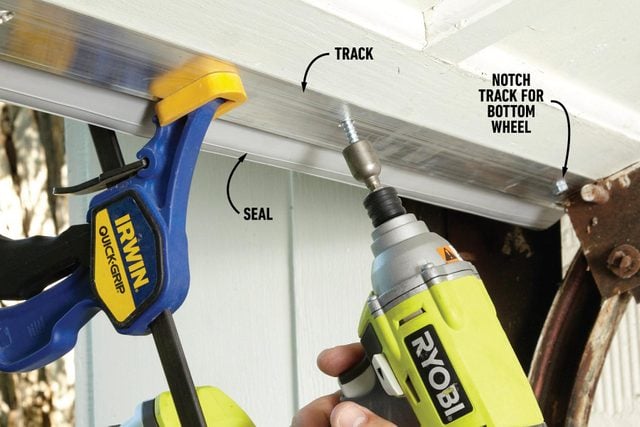
If you have a wooden garage door, rip off the nailed rubber seal, then apply wood sealer to where the rubber was attached. While the sealer dries, prepare the new aluminum track by cutting it to length and notching the ends so it fits around the bottom roller.
Next, lay down a thick bead of silicone caulk along the leading edge of the door. Push the track into wet caulk and tight against the door bottom. Clamp it into place. Then drill and screw the track to the back of the door using one-inch screws.
Install garage door weather stripping
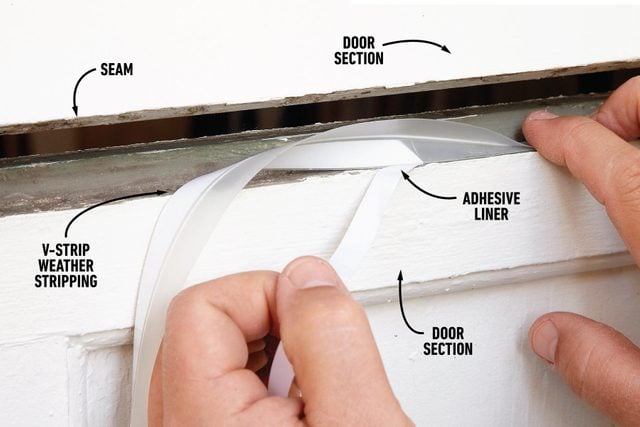
Cut the garage weather stripping into strips the width of the door. Prepare the areas between the door sections by cleaning them with a rag and household cleaner (be careful not to pinch any fingers). Then fold along the crease so the “V” faces the outside.
Insert the strip between the door sections, remove the adhesive backing and press it into place. Repeat for each section.
Install garage door threshold
Now move on to the threshold.
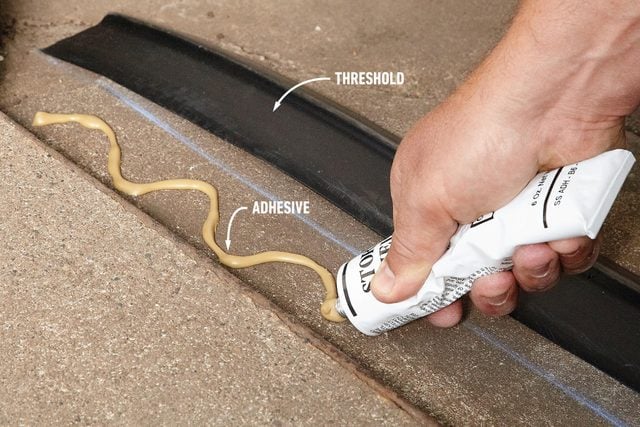
First, clean the garage floor with degreaser and water. Rinse and let dry. Then roll the threshold into place with the hump on the inside of the garage door and cut to the width of the opening. Mark the edge of the threshold on the floor at each end and snap a chalk line along your marks.
Squirt out a bead of threshold adhesive according to label directions. Then move the threshold into place and align it with the chalk line you made earlier. Gently close the door firmly against the threshold and leave it closed until the adhesive dries.
Install the stop
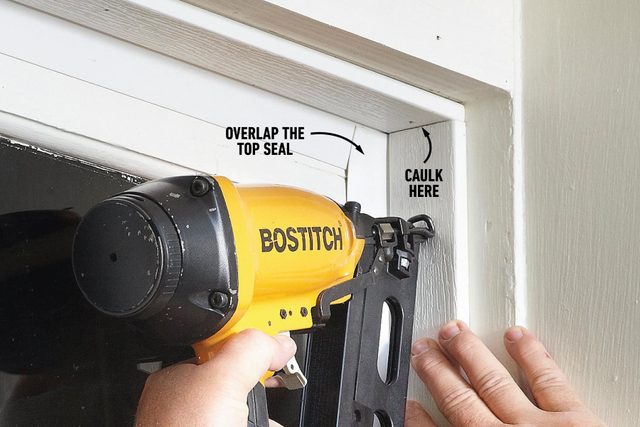
Pry off the old door stop and install new one with a sealing lip. Slide the stop against the garage door so the vinyl seal bends at about a 45-degree angle. Then nail the stop into place with galvanized or aluminum 1-1/2-inch nails.
How to fix gap at bottom of garage door
Here’s how to deal with gaps caused by an uneven bottom door panel or sunken concrete.
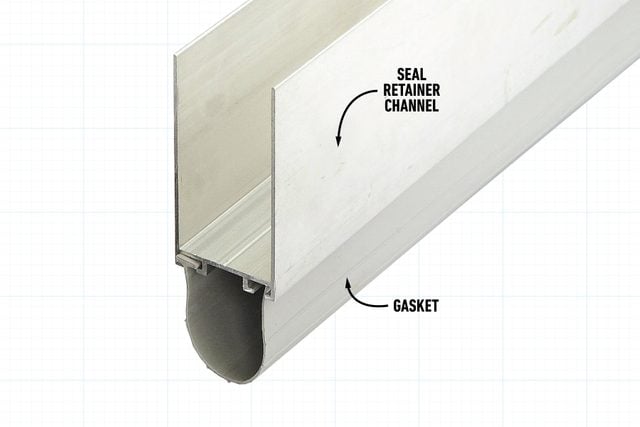
The easiest but least elegant method? Installing several pieces of bottom seal retainer and rubber gasket in the gap areas. Just measure the thickness of your bottom panel and buy sections of seal retainer and gasket from a garage parts supplier.
Mount the retainer to the bottom panel wherever there’s a gap. Finish the job by sealing the top edge of the retainer with caulk, then touch up the garage door paint as needed. This fix works on wood and metal doors.
If you have a wood door and want a cleaner look, remove the existing bottom seal and scribe/cut the bottom panel to match the contour of the concrete floor. Apply wood sealer to the freshly cut wood. Then remount the bottom seal.
Repair Two: Replace Rotting Garage Door Trim
Wood garage door jambs and trim often rot near the bottom, or get crunched by bumpers. For a good garage update, replace the wood jamb, brick mold trim and doorstop with long-lasting, paintable solid vinyl pieces that won’t crack or decay.
The vinyl can be cut, nailed and painted just like wood. It’s available in white, but you can order brown, bronze and tan.
Fill nail holes with white caulk or exterior wood filler, then if desired prime and paint with acrylic latex. Use a light paint color over white vinyl to keep it from overheating.
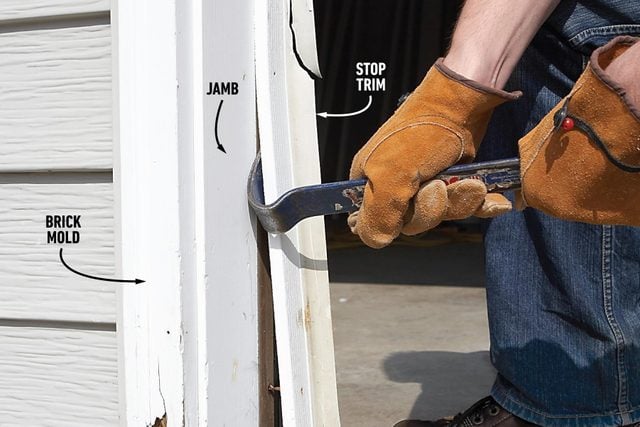
Remove the old garage door trim
Cut through any caulk lines with a utility knife, then pry off the old garage doorstop, brick mold and jamb.
Garage door jamb replacement
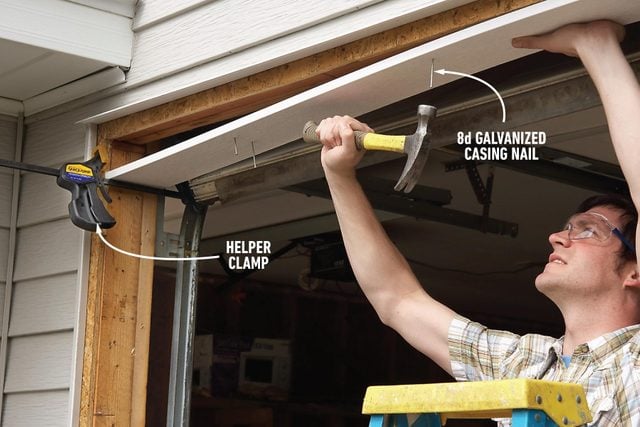
Use a clamp to hold up one end of the top jamb, then nail the jamb to the framing. Fasten every 12 to 16 inches with 8d galvanized nails or stainless steel trim screws. Once the top is secured, fasten the side jamb pieces in the same manner.
If the temperature drops below 40 degrees during installation, pre-drill nail holes and leave a 1/8-inch gap at the ends of the jamb for expansion.
Glue and nail brick mold
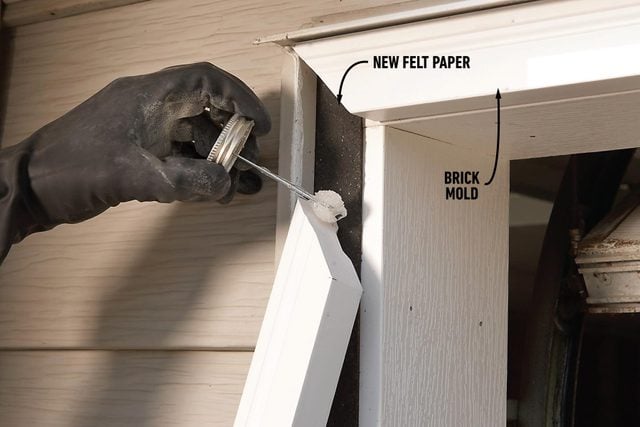
Precut the miters on the top piece of brick mold trim and nail it to the framing every 12 inches with 10d galvanized casing nails. Glue the brick mold corners with PVC cement, then nail them into place after the glue sets.
To avoid breaking the joint, wait at least an hour for the glue to fully cure before nailing within a foot of the corner. Splice long runs with glued butt joints.
Add stop molding
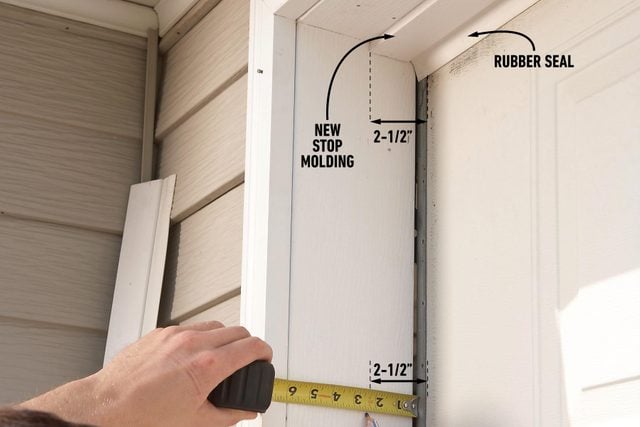
The edge of the vinyl stop molding should be 2-1/2-in. back from the garage door so the rubber seal fits loosely against the door. Mark the width of the trim piece at several points on the jamb, then nail it using 6d casing nails at the pre-marked points on the trim. Cut off any overlapping rubber seal at the corners with a utility knife.
Repair Three: Clean up a Rusty Door Track
Garage door tracks often rest directly on damp concrete floors, where they eventually rust. However, there’s no reason they can’t be slightly above the floor and stay dry. The garage trusses or rafters can carry the weight of the track and the angle brackets hold the track in place.
Trim the rusty end
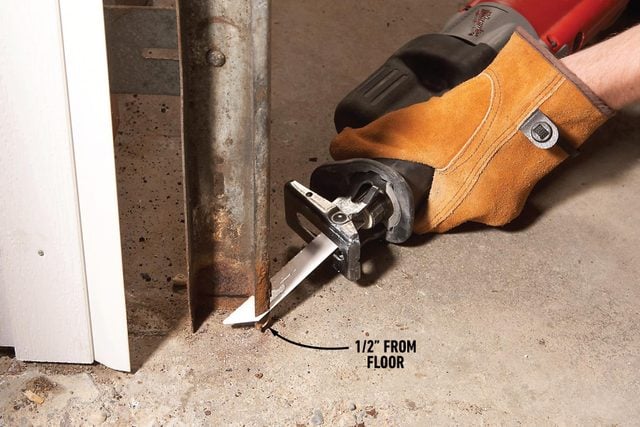
Make sure all the angle bracket bolts are tight. Then mark and cut a 1/2-in. of the track bottoms with a hacksaw, oscillating tool, or reciprocating saw outfitted with a metal cutting blade.
Clean and paint
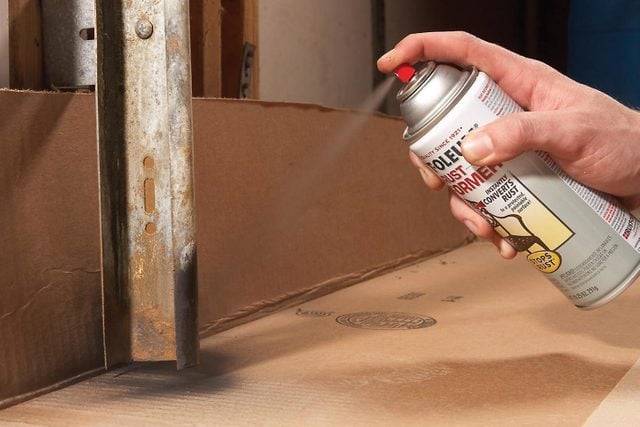
Use a rag dipped in mineral spirits to remove any lubricant on the first six inches of track, then scrape and wire-brush off as much rust as you can. Paint the bottom with a metal spray paint that’s formulated to bond to rusted areas such as Rust-Oleum Rust Reformer.
Finally, re-apply some lubricant to the track to keep the garage door working flawlessly.