

How to Maintain and Repair Your Chimney
Updated: Jul. 21, 2023
Make your chimney last for decades with a few hours of simple maintenance






 Time
Time A few hours
 Complexity
Intermediate
Introduction
Cracks and spalling in a brick chimney can get worse fast, but the fix is easy if you do it in time. Two pros share maintenance tips that will keep your chimney solid for the life of the house.Tools Required
- 4-in-1 screwdriver
- a canvas drop cloth
- a low-pressure garden sprayer
- Caulk gun
- Extension ladder
- Nylon brush
- Paintbrush
- Putty knife
- Roof harness
Materials Required
- Brushable crown sealer
- Chimney cap
- Disposable gloves
- Duct tape
- Water repellent
Chimney basics
Chimney inspection
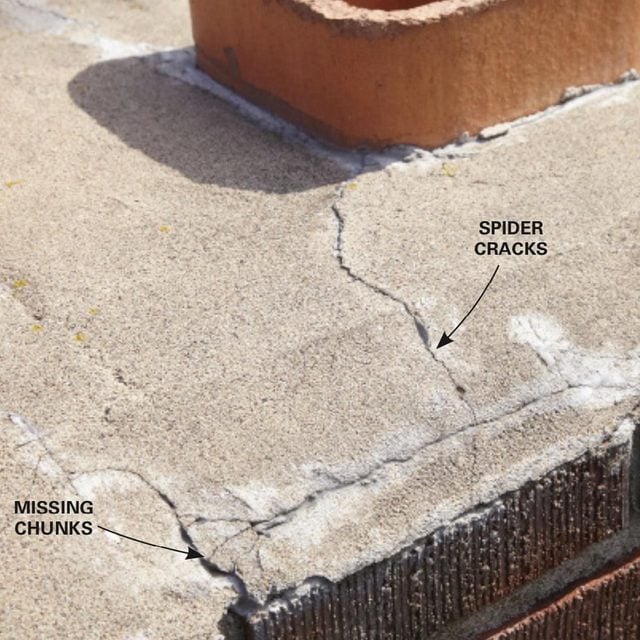
The cracks in this chimney crown have reached a critical point. If not sealed soon, they’ll destroy the crown and eventually the chimney.
Most homeowners never think about masonry chimney maintenance beyond the occasional flue cleaning. But ignoring your chimney can cost you big-time. A cracked chimney crown or spalling bricks can easily cost $1,000 to repair. And, if left untreated, the damage can accelerate quickly, and cost you upward of $3,000.
It doesn’t have to be that way. By simply sealing the bricks and the crown and adding a chimney cap, you’ll greatly extend your chimney’s life. The materials cost less than $300, and you can complete all three procedures in just a few hours. You’d pay a pro about $1,000 to do all three, so the savings is huge.
You’ll have to climb up on your roof twice (once to measure the flue liner to order the correct chimney cap and once to perform the procedures). And, you must be able to safely reach the chimney crown from your roof. If you can’t reach the chimney crown, have a very steep roof pitch or aren’t comfortable working on your roof, call a pro. If you decide you can handle the heights, make sure you wear a safety harness.
Meet the Pros

Jim Smart has owned Smart Sweep Chimney Service for 14 years. He and his son, Jesse, are certified professional chimney sweeps. Together, this father/son team inspects, cleans and repairs chimneys in the Minneapolis-St. Paul area. In addition to his chimney sweep certifications, Jim holds a certificate in forensic chimney fire analysis. In other words, Jim understands how chimneys work and fail. He’s a pro’s pro.
Project Details
Brushable crown sealer, $60
Chimney water repellent, $35
Garden pump sprayer, $35
Stainless steel chimney cap, $125
Tarps, duct tape, paintbrush
Project step-by-step (4)
Start at the chimney crown
Apply the first coat of chimney sealer by hand
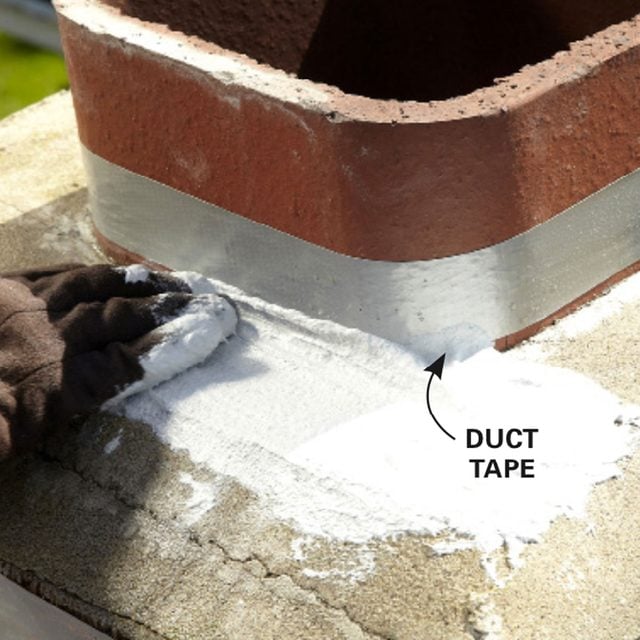
Scoop up a handful of the sealer and wipe it onto the crown. Force the sealant into the cracks and into the crown-to-brick seam.
Even out the chimney sealer
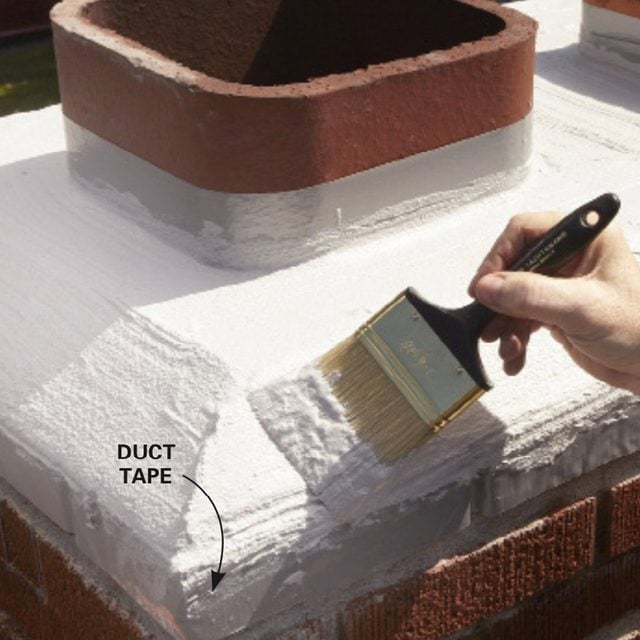
Stroke the wet sealant with a brush to level the high and low spots and create a smooth surface.
Masonry chimneys are capped with a mortar ‘crown’ to prevent water from getting behind the bricks and alongside the flue, and into the house. Over time, normal expansion and contraction cycles can cause cracks to form, as shown above. Sealing the chimney crown with crown sealer, a flexible elastomeric coating, is the best way to stop existing cracks from spreading and prevent new ones.
Choose a clear or overcast day for the project (no rain in the forecast for at least four hours). Prepare the crown by cleaning it with a stiff poly or nylon brush. Fill any large cracks with patching cement or 100 percent silicone caulk (they’ll cure even after you apply the crown sealer).
Next, wrap duct tape all around the crown about 1/4 in. below the edge of the crown-to-brick seam. Press the tape into the vertical brick joints. Then tape around each flue liner 1 in. above the crown. Lay canvas (not plastic) tarps around the base of the chimney to protect the shingles from crown sealer drips.
Our chimney repair expert applies crown sealer by hand so he can force it into cracks and get the first coat done faster. If you choose that method, just slip on a disposable glove and apply the sealer (Photo 1). (One brand is Chimney RX Brushable Crown Repair; sold by the gallon at saversystems.com) Cover the entire crown and then smooth it with a paintbrush (Photo 2). Wait until the sealer dries tacky to the touch, then apply a second coat with a brush. Clean up with water.

Seal the chimney bricks
Spray the brick with water repellent
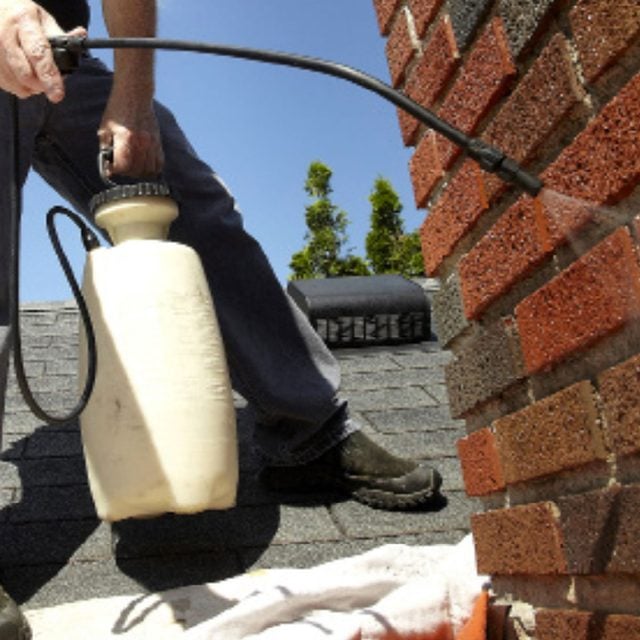
Start at the bottom of the chimney and spray the brick until the excess repellent runs down about 8 in. below the spray line. Work your way up to the top. Apply a second coat within five minutes using the same technique.
Once the crown sealer feels dry to the touch (30 to 60 minutes), remove the duct tape but leave the roof tarps in place. Then mask off any painted chimney flashings before applying the water repellent. Spray on the repellent (one brand is Chimney RX Masonry Chimney Water Repellent; sold at saversystems.com) with a low-pressure, garden pump sprayer (Photo 3).
Finish it off with a chimney cap
Install the cap
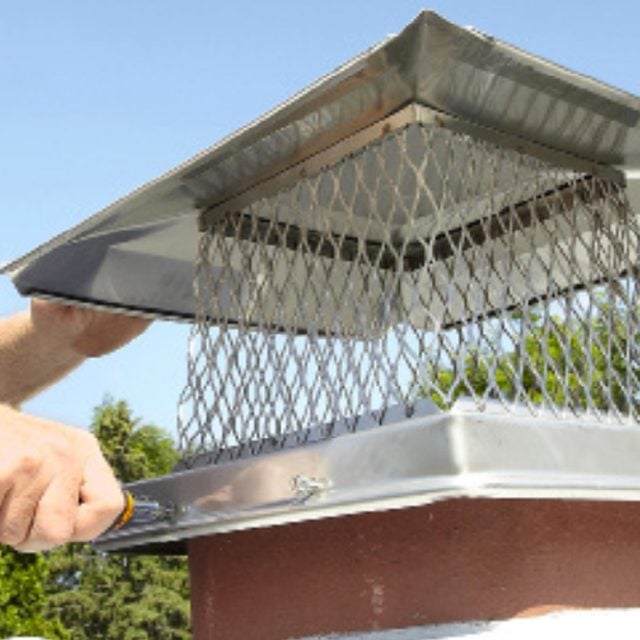
You don’t want animals getting into your chimney. Set the cap (see chimney cap cost above) over the flue liner and secure it with screws. Tighten until snug, but no more. Excessive pressure can crack the clay liner.
A chimney cap keeps water and critters out of your flue and extends flue life. Many codes require a mesh cap, so check before buying. Chimney expert Jim Smart recommends spending extra to get a stainless steel cap because it will last much longer than the galvanized type. One source for stainless steel caps is efireplacestore.com
You’ll need the outside dimensions of the flue liner to get the right size cap for your chimney. Then install it on the flue liner (Photo 4).
